

Operation Process and Working Principle of Pigment Granule Material Pneumatic Conveying Equipment
Shandong HeadPowder Engineering Co., Ltd., a leading manufacturer in the field of material handling equipment, specializes in the development and supply of advanced pneumatic conveying systems for pigment granule materials. HeadPowder, as the company is commonly known, is headquartered in Shandong, China, and has established itself as a trusted provider of reliable and efficient solutions for industrial material transport. The following content provides a detailed overview of the operation process and working principles of their pneumatic conveying equipment, highlighting the key components, operational steps, and benefits of using such systems for pigment granule handling.
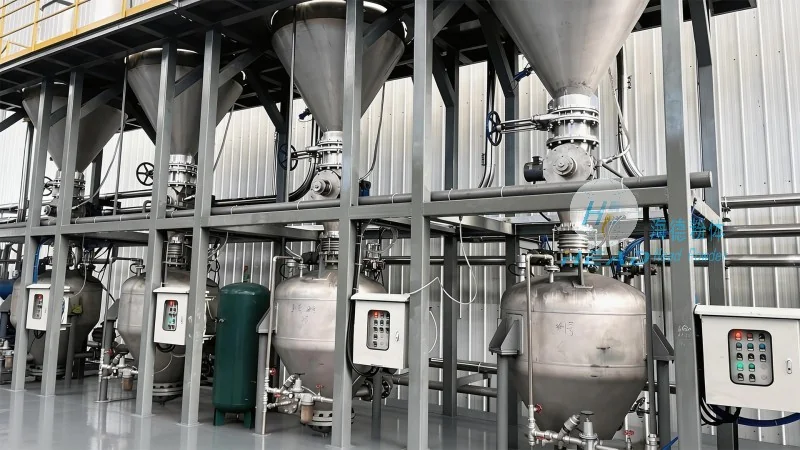
Key Components of the Pneumatic Conveying System
The pneumatic conveying equipment for pigment granules typically consists of several critical components that work in concert to achieve seamless material transport. These include the material hopper, which serves as the storage and feeding unit, equipped with a feeder mechanism to control the flow rate of granules. The feeder, often a rotary valve or screw feeder, ensures a consistent and regulated discharge of pigment granules into the conveying line. The conveying line itself is a sealed pipeline that transports the material using air pressure, with the air being supplied by a high-pressure blower or compressor. The system may also incorporate a filter or separator at the receiving end to remove any entrained air and collect the material efficiently. Additionally, a control panel is integrated to monitor and adjust operational parameters such as air pressure, flow rate, and system pressure, ensuring optimal performance and preventing system overload or blockages.
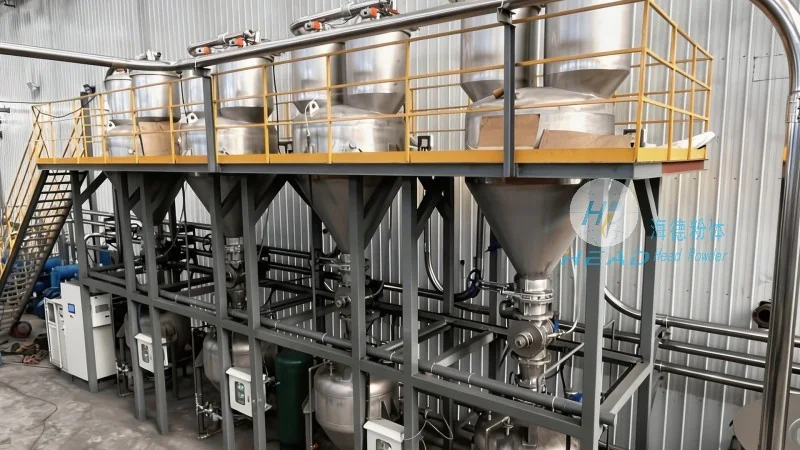
Operation Process of the Pneumatic Conveying Equipment
The operation of the pigment granule pneumatic conveying system begins with the loading of pigment granules into the material hopper. The feeder then starts to discharge the granules at a controlled rate, feeding them into the conveying line. Simultaneously, the blower or compressor generates high-pressure air, which is introduced into the conveying line. The air and granules are mixed in the pipeline, creating a slurry-like flow that propels the material forward. As the mixture travels through the conveying line, it passes through various sections, including bends and elbows, which are designed to maintain the flow integrity without causing material degradation or blockages. At the receiving end, the air and material are separated, with the air being filtered and exhausted, while the pigment granules are collected in a designated container. The control panel continuously monitors the system's pressure and flow rates, allowing for real-time adjustments to maintain stable operation. If any issues, such as blockages or pressure drops, are detected, the system can automatically shut down or adjust its parameters to prevent damage and ensure safe operation.
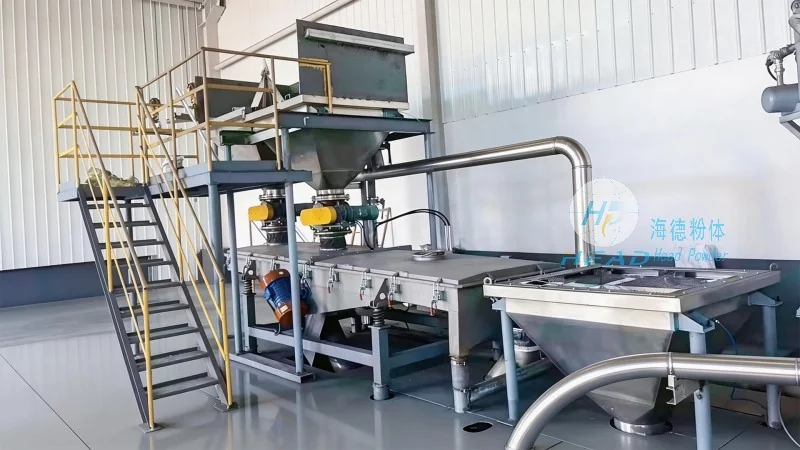
Working Principle of the Pneumatic Conveying System
The working principle of the pneumatic conveying equipment for pigment granules is based on the use of air pressure to transport solid materials. The system operates under positive pressure, where the air is forced through the conveying line at a high velocity, creating a pressure differential that moves the pigment granules along the pipeline. The key to efficient conveying is the balance between the air velocity and the material's particle size and density. Proper air velocity ensures that the granules are entrained and carried by the air flow without settling or causing blockages. The feeder plays a crucial role in maintaining a consistent flow rate, as fluctuations in feed rate can lead to uneven material transport or system instability. The blower or compressor provides the necessary air pressure and volume to maintain the conveying process, with the system's design ensuring that the air pressure is sufficient to overcome the resistance in the pipeline and any elevation changes. The filter or separator at the receiving end is essential for removing any fine particles or air bubbles from the material, ensuring that the delivered pigment granules are clean and free from contaminants. Overall, the working principle relies on the interaction between the air flow and the solid particles, leveraging the kinetic energy of the air to transport the material efficiently and reliably.
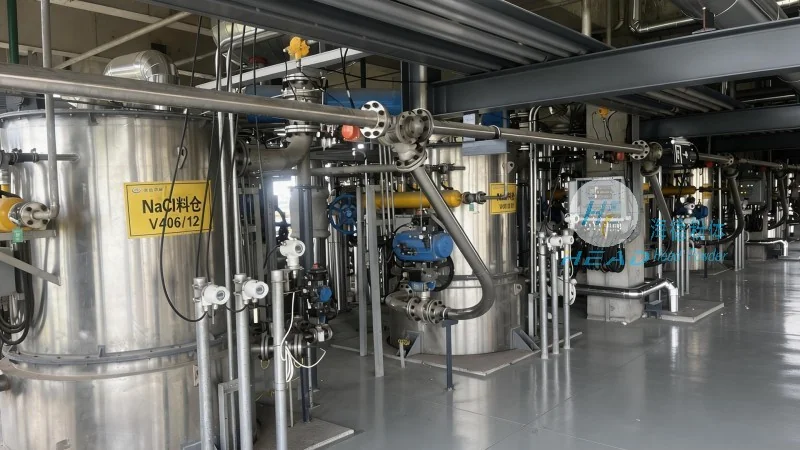
Advantages of Using Pneumatic Conveying for Pigment Granules
Employing pneumatic conveying systems for pigment granules offers several advantages over traditional mechanical conveying methods. One of the primary benefits is the ability to transport materials in a closed system, which minimizes dust emissions and improves workplace safety. This is particularly important for pigment granules, which can be fine and potentially hazardous if released into the air. The closed system also prevents contamination from external sources, ensuring the purity of the material. Additionally, pneumatic conveying allows for flexible and space-saving installation, as the conveying line can be routed around obstacles and in various configurations without the need for complex machinery or extensive infrastructure. The system is also capable of handling materials with varying particle sizes and densities, making it suitable for a wide range of pigment applications. Furthermore, the automated control features of the system enhance operational efficiency, reducing the need for manual intervention and minimizing the risk of human error. Overall, the advantages of pneumatic conveying make it an ideal solution for the industrial handling of pigment granules, providing reliable, safe, and efficient material transport.