Gray calcium powder, a critical raw material across multiple industrial sectors, demands efficient and reliable transportation solutions to maintain smooth production workflows. The pneumatic conveying system engineered for handling gray calcium powder represents a sophisticated technological approach that merges advanced engineering with practical application, offering substantial advantages over conventional methods. This article provides an overview of the gray calcium powder pneumatic conveying system, detailing its structural design and operational principles to help users comprehend its functionality and benefits.
Company Overview: Shandong HeadPowder Engineering Co., Ltd.
Shandong HeadPowder Engineering Co., Ltd., commonly known as headpowder, is a leading manufacturer specializing in the design, development, and production of pneumatic conveying systems. With a strong emphasis on innovation and customer-centric solutions, the company has established itself as a trusted partner in the industry. Headpowder's expertise lies in creating customized systems tailored to the specific requirements of clients, ensuring optimal performance and durability for handling gray calcium powder and other similar materials. The company's headquarters is located in Shandong, China, where its state-of-the-art facilities and skilled workforce contribute to the high-quality production of its products.
Understanding Gray Calcium Powder
Gray calcium powder, typically sourced from limestone or other calcium-rich minerals, is widely utilized in industries such as construction, automotive manufacturing, and chemical processing. Its fine particle size and dusty nature make it challenging to transport using traditional methods like trucks or conveyor belts, as these can lead to material loss, contamination, and operational inefficiencies. Pneumatic conveying systems address these challenges by utilizing air to transport the powder in a sealed environment, minimizing dust dispersion and preserving product integrity. The system's design is specifically optimized for the physical properties of gray calcium powder, including its density, flowability, and potential for agglomeration.
Structural Components of the Pneumatic Conveying System
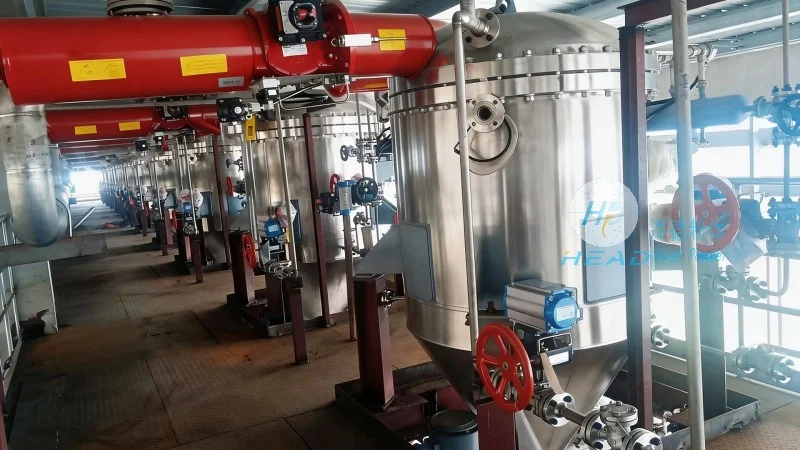
The gray calcium powder pneumatic conveying system comprises several key components that function in concert to achieve efficient material transport. The primary components include the hopper (serving as the storage and feeding unit), the air compressor or blower (generating necessary air pressure), the pipeline system (transporting the powder), and control valves/regulators (managing flow and pressure). Each component is meticulously engineered to handle the unique characteristics of gray calcium powder, ensuring consistent performance and minimal maintenance. The hopper features a sloped bottom and a feeding mechanism (e.g., rotary valve or screw feeder) to control powder discharge rate. The air compressor provides the required air volume and pressure (typically low to medium pressure, depending on system capacity and transport distance). The pipeline is constructed from corrosion-resistant materials like stainless steel or specialized coatings to prevent material buildup and ensure long-term durability. Control valves and regulators maintain stable pressure and flow, preventing over-pressurization and ensuring smooth operation.
Operational Principles and Working Mechanism
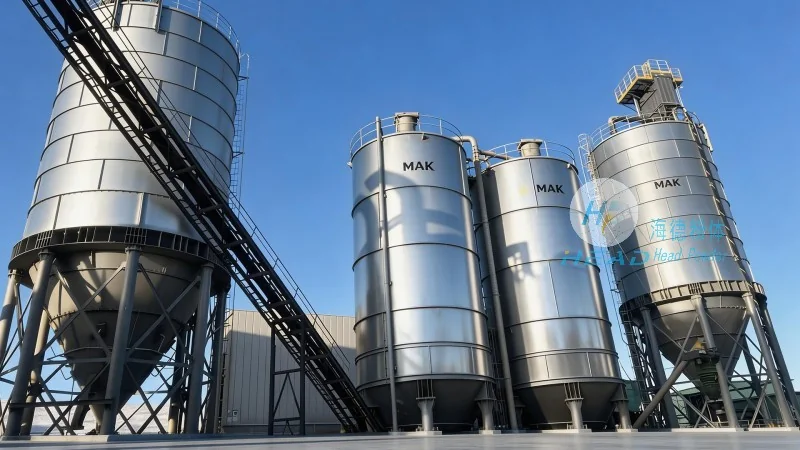
The system's operation follows a systematic process involving several stages. It begins with powder feeding from the hopper into the pipeline via the feeding mechanism (e.g., rotary valve), controlling the discharge rate. Simultaneously, the air compressor generates a flow of air introduced into the pipeline, creating a positive pressure environment. As air flows through the pipeline, it entrains gray calcium powder particles, forming a slurry-like mixture known as a "pneumatic stream." This stream is then transported to the destination point (e.g., storage silo or processing unit). The system's design ensures the air and powder mixture remains well-mixed throughout transport, preventing separation and ensuring uniform delivery. At the destination, air is separated from the powder via a cyclone or filter system, allowing the powder to be discharged while air is recirculated back to the compressor. This closed-loop system minimizes energy consumption and operational costs.
Advantages of the Gray Calcium Powder Pneumatic Conveying System
The use of a pneumatic conveying system for gray calcium powder offers numerous advantages over traditional methods. A key benefit is the reduction in dust dispersion, enhancing workplace safety and environmental compliance. The sealed system prevents fine particle release, protecting personnel and the environment. Additionally, the system maintains product integrity, minimizing contamination or degradation risks. It also improves efficiency and productivity by eliminating manual handling and reducing material loss. Automated operation ensures consistent flow rates and minimal downtime, boosting production capacity. The system's flexibility allows easy integration with existing production lines, making it a cost-effective solution for upgrades or expansions. Component durability (e.g., pipeline, hopper) ensures long-term reliability and reduces maintenance costs.
Applications and Use Cases
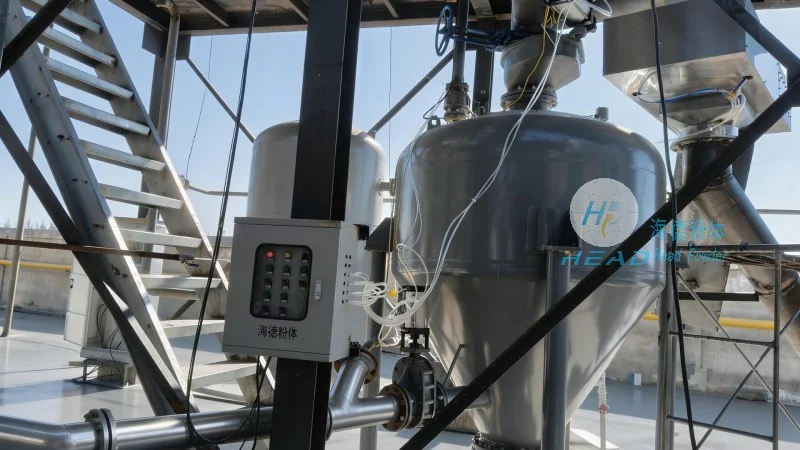
The gray calcium powder pneumatic conveying system is widely used in various industrial applications where efficient fine powder transport is critical. In construction, it transports gray calcium powder for concrete production, ensuring consistent quality and reducing manual handling needs. In automotive manufacturing, it's used in producing parts like brake pads or engine components. The chemical industry employs it for calcium-based chemical production (e.g., calcium carbonate, calcium chloride). The food and pharmaceutical sectors use it for calcium supplements or other calcium-based products, where purity and safety are paramount. The system's versatility suits small-scale operations to large industrial plants.
Maintenance and Troubleshooting
Proper maintenance is essential for optimal system performance and longevity. Regular tasks include cleaning the hopper and pipeline to prevent buildup, inspecting the air compressor and control valves for wear, and checking seals/gaskets for damage. Periodic inspections identify potential issues before they escalate. Common issues include air leaks (reducing efficiency and increasing energy use) and pipeline blockages (causing downtime). Air leaks are typically from worn seals or loose connections and are resolved by replacing parts. Blockages result from agglomerated powder or foreign objects and are addressed by cleaning the pipeline or adjusting feeding rates. Regular maintenance and prompt issue resolution ensure peak performance and minimize downtime.
Conclusion
The gray calcium powder pneumatic conveying system is a highly effective and efficient solution for transporting gray calcium powder across diverse industrial applications. Designed with gray calcium powder's specific characteristics in mind, the system offers advantages over traditional methods, including reduced dust dispersion, improved product integrity, and enhanced operational efficiency. Manufactured by Shandong HeadPowder Engineering Co., Ltd., a leading industry manufacturer, the system uses high-quality components and rigorous engineering standards for long-term reliability and performance. Its flexible design and ease of integration make it suitable for a wide range of applications, from small operations to large industrial plants. By understanding the system's structural components and operational principles, users can make informed decisions about implementation and maintenance, ensuring optimal performance and cost-effectiveness. The system's benefits extend beyond material transport, contributing to workplace safety, environmental compliance, and overall operational efficiency, making it a valuable investment for any industry reliant on gray calcium powder.




