Limestone and gypsum are widely used in various industrial processes, and efficient powder conveying is crucial for their transportation. The limestone and gypsum powder conveying line, as a specialized system, is designed to handle these fine powders with precision and reliability. This article explores the underlying principles of such systems and highlights the key working scene characteristics that make them indispensable in modern industrial applications.
Principle of Operation
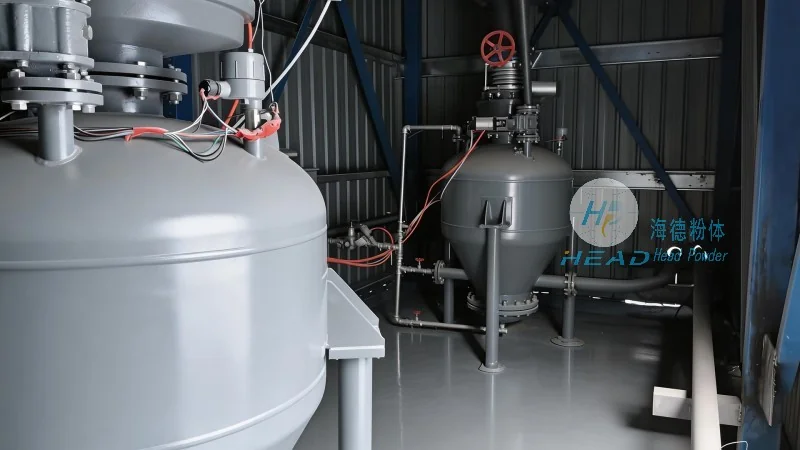
The core principle of limestone and gypsum powder conveying lines revolves around the use of advanced pneumatic or mechanical systems to transport dry powders. These systems typically consist of a hopper for material storage, a feeder to control the flow rate, a conveying pipeline, and a discharge device. The operation often involves creating a negative pressure or positive pressure environment within the pipeline to draw or push the powder particles through. For limestone and gypsum, which are often fine and can be prone to dusting, the system is engineered to minimize particle degradation and ensure consistent flow. The headpowder company, with its expertise in powder handling technology, has developed systems that optimize the conveying process by controlling air velocity, particle size distribution, and pipeline design. This ensures that the material is transported efficiently without clogging or loss, maintaining the quality and integrity of the limestone and gypsum throughout the process.
Key Working Scene Characteristics
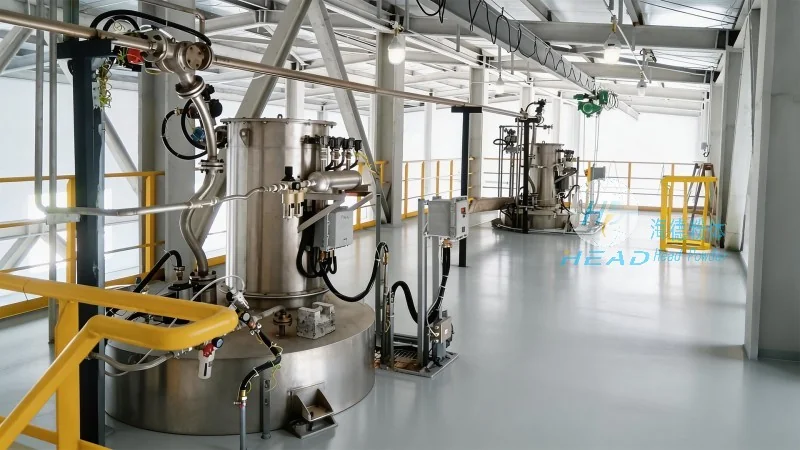
The working scene characteristics of limestone and gypsum powder conveying lines are tailored to meet the specific demands of different industrial environments. In cement production, for example, these systems are used to transport raw materials like limestone to the grinding mills. The high capacity and reliability of the conveying lines are critical here, as they need to handle large volumes of material continuously. In the construction industry, limestone and gypsum are used in plaster and dry-mix mortar production, where the conveying lines ensure that the powders are delivered to mixing plants without segregation or moisture absorption. The systems are also adapted for use in power plants, where limestone is used for flue gas desulfurization, requiring precise control over the powder flow to maintain the efficiency of the desulfurization process. Additionally, in the chemical industry, gypsum is processed into building materials, and the conveying lines play a vital role in moving the processed powder to packaging or storage areas. The versatility of these systems allows them to adapt to various working conditions, from high-temperature environments in cement kilns to controlled indoor settings in manufacturing facilities. The design considerations, such as material compatibility with the powder and the environment, are crucial to ensure the longevity and performance of the conveying lines in these diverse working scenes.
Technical Advantages and Application Scenarios
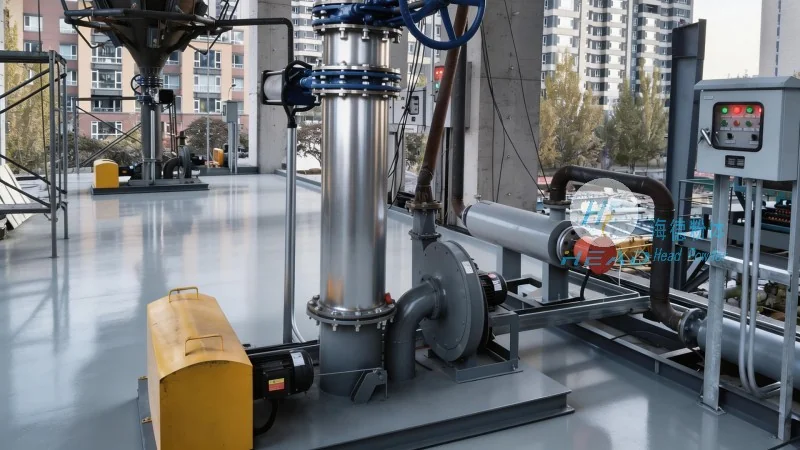
Headpowder Engineering Co., Ltd., based in Shandong, China, specializes in the design and manufacturing of limestone and gypsum powder conveying lines. The company’s systems offer several technical advantages that enhance their performance and reliability. One key advantage is the use of high-quality materials for the conveying pipeline, such as stainless steel or special alloys, which are resistant to corrosion and wear from limestone and gypsum particles. This ensures that the system can operate for extended periods without maintenance or replacement. Another advantage is the integration of advanced control systems that allow for real-time monitoring of the conveying process. Operators can adjust parameters like air pressure and flow rate to optimize performance and prevent issues like blockages or uneven material distribution. The company also focuses on energy efficiency, designing systems that minimize power consumption while maintaining high conveying capacity. In terms of application scenarios, these lines are used in a wide range of industries, including cement, construction, power generation, and chemicals. Each application requires specific customization to meet the unique requirements of the process. For instance, in cement production, the system may need to handle large volumes of limestone with high throughput, while in construction, it may focus on precise dosing for mixing. The adaptability of the headpowder systems makes them suitable for both large-scale industrial operations and smaller-scale manufacturing facilities. The company’s commitment to quality and innovation has made their limestone and gypsum powder conveying lines a trusted solution in the industry, providing reliable and efficient powder transportation solutions for various working scenes.




