

Principle and Classification Application of Desulfurizer Pneumatic Conveying
Desulfurizer pneumatic conveying is a key technology in industrial processes, particularly in power plants and chemical facilities where sulfur removal is critical. This method involves transporting desulfurizer materials, such as limestone or other alkaline substances, using air as the conveying medium. The process enhances efficiency and safety by eliminating the need for traditional mechanical conveyors, which can be prone to material degradation or blockages. Understanding the working principles and classification of pneumatic conveying systems is essential for optimizing desulfurization operations and ensuring consistent performance.
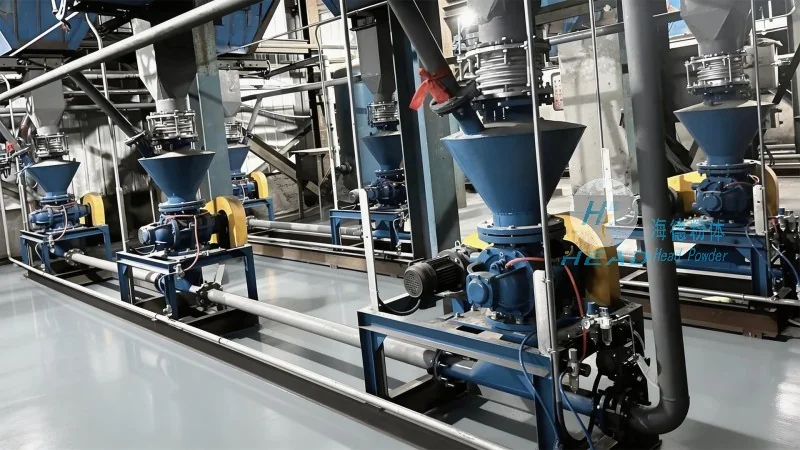
Working Principles of Desulfurizer Pneumatic Conveying
The core principle of pneumatic conveying for desulfurizers is the use of air to transport solid particles. The system typically consists of a feeding hopper, a conveying pipeline, a fan or blower to generate airflow, and a discharge point. The process begins with the desulfurizer material being fed into the hopper. As air is introduced, it creates a flow that lifts and transports the particles through the pipeline. The velocity of the air is carefully controlled to ensure that the particles remain suspended without settling or causing blockages. This suspension is achieved by maintaining an air velocity above the minimum fluidization velocity of the material, which varies based on particle size, density, and shape. The system may use either positive pressure (where air is blown into the pipeline) or negative pressure (where air is drawn out), with positive pressure being more common for desulfurizer applications due to its ability to handle larger particles and longer distances.
Classification of Desulfurizer Pneumatic Conveying Systems
Desulfurizer pneumatic conveying systems are classified based on several factors, including the pressure of the conveying air, the method of material feeding, and the type of pipeline configuration. The primary classifications are:
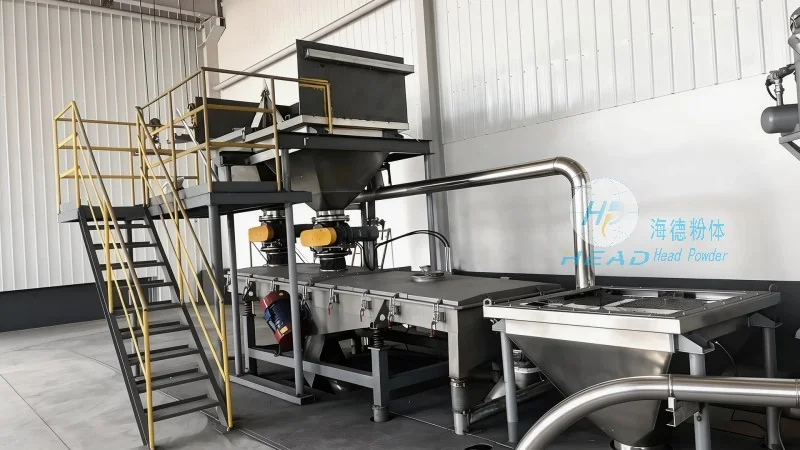
1. Positive Pressure Systems: These systems use a blower or fan to generate air pressure that pushes the material through the pipeline. They are suitable for transporting desulfurizer materials over longer distances and can handle larger particle sizes. The positive pressure helps maintain consistent airflow and prevents material degradation, making them ideal for industrial-scale desulfurization applications.
2. Negative Pressure (Vacuum) Systems: In these systems, a vacuum pump draws air and material from the pipeline, creating a suction effect. They are often used for shorter distances or when the material needs to be transported from a higher elevation to a lower one. Negative pressure systems are generally less suitable for large, heavy desulfurizer particles due to the risk of blockages and reduced efficiency.
3. Dilute Phase vs. Dense Phase Systems: Dilute phase systems operate at higher air velocities, keeping particles suspended in a thin stream. They are efficient for short to medium distances but may require higher air volumes. Dense phase systems, on the other hand, operate at lower velocities, causing particles to settle and form a slurry-like flow. This method is better for longer distances and can handle more abrasive or sticky desulfurizer materials, reducing wear on the pipeline and equipment.
Application Scenarios in Desulfurization Processes
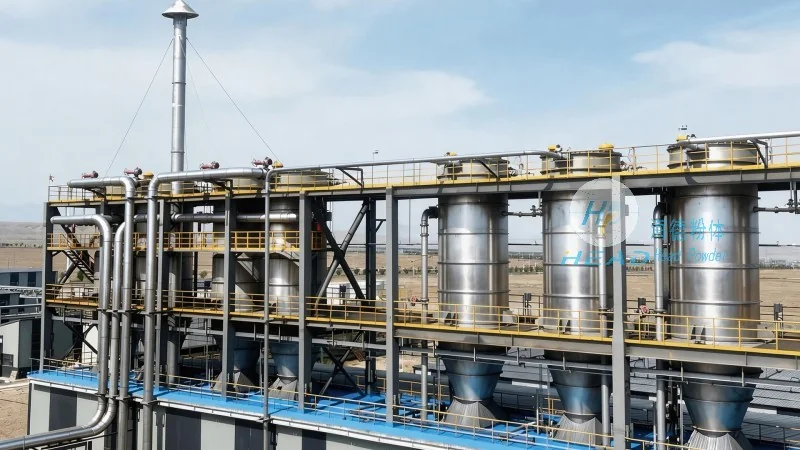
Desulfurizer pneumatic conveying is widely applied in various industrial settings, particularly in power generation and chemical manufacturing. The primary application is in flue gas desulfurization (FGD) systems, where limestone or other alkaline reagents are used to neutralize sulfur dioxide (SO₂) emissions. The system transports the desulfurizer from storage silos to the reaction tower, ensuring a continuous and controlled supply of reagents. This application is critical for meeting environmental regulations and reducing air pollution.
Another application is in the chemical industry, where desulfurizer materials are used in processes such as sulfur recovery or acid production. The pneumatic conveying system ensures that the materials are delivered to reactors or processing units without contamination or loss. The efficiency of the system is crucial in these applications, as it directly impacts production yields and operational costs.
Advantages of Pneumatic Conveying for Desulfurizers
Compared to traditional mechanical conveyors, pneumatic conveying offers several advantages for desulfurizer transport. First, it eliminates the risk of material degradation due to friction or impact, which is common in mechanical systems. This is particularly important for desulfurizer materials, which may be sensitive to moisture or temperature changes. Second, pneumatic systems can handle a wide range of particle sizes and shapes, including fine powders and coarse lumps, without requiring additional processing. Third, the system is less prone to blockages and can be easily cleaned, reducing downtime and maintenance costs. Additionally, pneumatic conveying is more flexible in terms of layout, allowing for changes in pipeline configuration without major modifications to the system.
Challenges and Mitigation Strategies
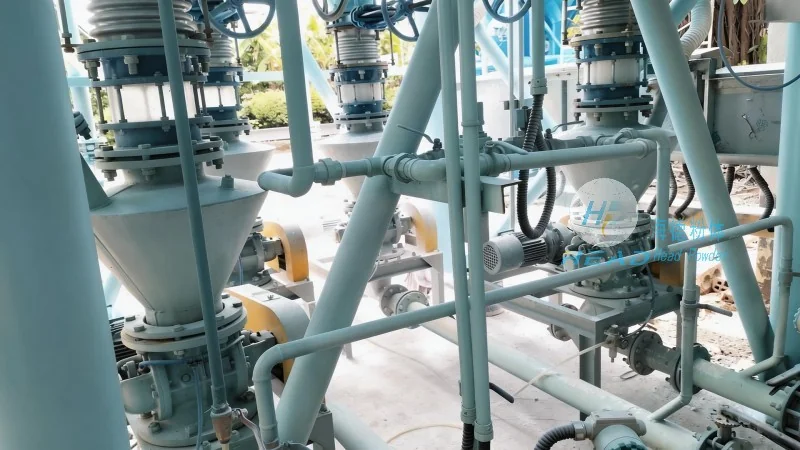
Despite its advantages, pneumatic conveying of desulfurizers also presents challenges. One of the main issues is the risk of material segregation, where different particle sizes or densities separate during transport, leading to uneven distribution in the reaction tower. To mitigate this, manufacturers use specialized feeding equipment, such as rotary valves or screw feeders, to ensure a consistent flow of material. Another challenge is the wear and corrosion of the pipeline and equipment due to abrasive desulfurizer particles. This is addressed by using high-quality materials, such as stainless steel or special coatings, and regular maintenance to prevent damage.
Energy consumption is another consideration, as pneumatic systems require significant air volume and pressure. However, advancements in fan technology and system design have improved energy efficiency, reducing operational costs. Additionally, the system's ability to handle long distances and multiple transfer points makes it more cost-effective than other methods, especially for large-scale desulfurization plants.