Pneumatic conveying lines are critical in industrial applications for transporting fine powders like glass fiber cellulose. This material, known for its high purity and specific surface area, often presents challenges in handling due to its tendency to agglomerate or create dust. A well-designed pneumatic conveying system efficiently addresses these issues by utilizing air pressure to move the powder through a sealed pipeline system. The process ensures minimal product degradation, maintains hygiene standards, and optimizes material flow in manufacturing environments.
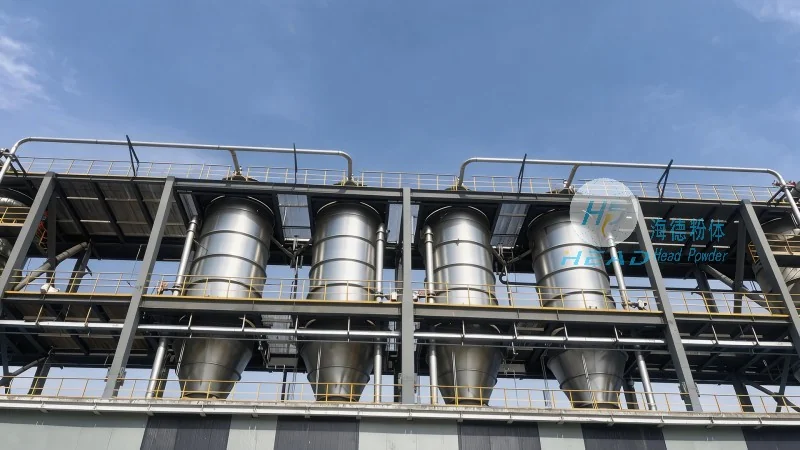
Key Components of the Pneumatic Conveying Line
The glass fiber cellulose powder pneumatic conveying line typically consists of several essential components. The primary unit is the feed hopper, which stores the raw material and regulates the flow into the system. A rotary valve or screw feeder is often integrated to control the discharge rate, ensuring consistent material input. The air compressor provides the necessary pressure and volume of air to drive the powder. The conveying pipeline, usually made of stainless steel or other corrosion-resistant materials, transports the material from the feed point to the destination. At the receiving end, a separator or cyclone is used to separate the powder from the air stream, and a receiver tank collects the processed material. Additionally, a filter system may be included to capture any fine particles that escape the separator, maintaining air quality and compliance with environmental regulations.
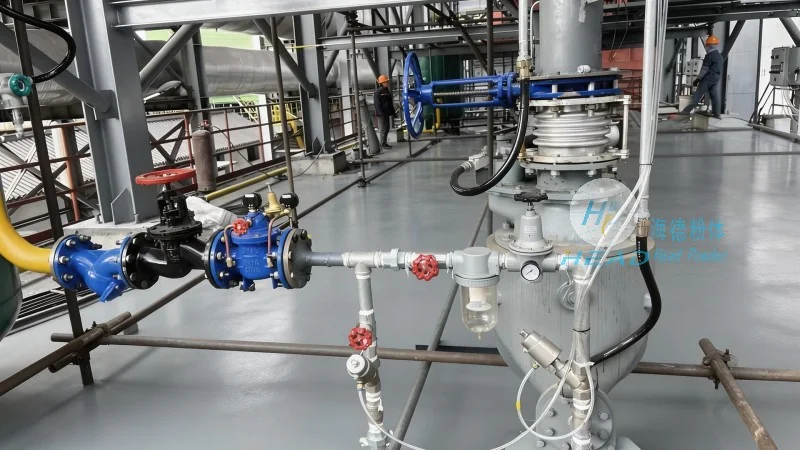
Operation Process of the Glass Fiber Cellulose Powder Pneumatic Conveying Line
The operation of the system begins with the loading of glass fiber cellulose powder into the feed hopper. The rotary valve or screw feeder then meters the material at a controlled rate, preventing overloading or underflow. Simultaneously, the air compressor starts, generating compressed air that is directed into the pipeline. The air pressure creates a flow that entrains the powder particles, forming a dense phase or dilute phase conveying stream depending on the system design. As the mixture travels through the pipeline, it reaches the receiving end where the separator begins to operate. The centrifugal force in the cyclone separates the powder from the air, causing the powder to fall into the receiver tank while the air is discharged through a filter. The process is continuous, with the air compressor maintaining a steady pressure to ensure uninterrupted material transport. The entire system operates efficiently, minimizing downtime and maximizing throughput for glass fiber cellulose powder handling.
Working Principle of the Pneumatic Conveying System
The working principle of the pneumatic conveying system relies on the interaction between air and solid particles. In a dense phase conveying system, the air velocity is kept low, and the powder is carried in a slurry-like state, reducing particle degradation and wear on the pipeline. This method is ideal for fragile materials like glass fiber cellulose, as it minimizes impact and friction. The air pressure in the pipeline is carefully controlled to maintain a consistent flow rate, preventing blockages or air leakage. The system uses differential pressure to move the material from the source to the destination, with the pressure drop across the pipeline and components indicating the efficiency of the conveying process. The separator at the end of the line operates on the principle of centrifugal separation, where the heavier powder particles are forced outward by the rotating air stream, while the lighter air is directed upward and out of the system. This separation process is crucial for maintaining the purity of the glass fiber cellulose powder and preventing contamination from air or other particles.
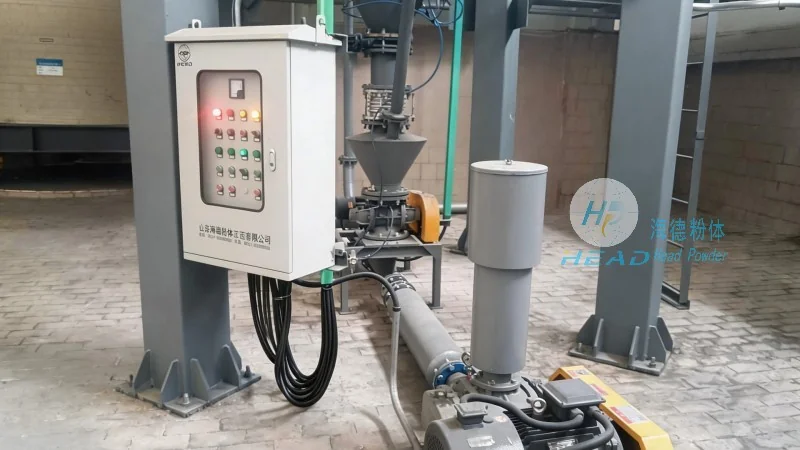
Company Profile: Shandong HeadPowder Engineering Co., Ltd.
Shandong HeadPowder Engineering Co., Ltd., commonly known as headpowder, is a leading manufacturer and supplier of advanced pneumatic conveying systems tailored for industrial applications. With a focus on precision engineering and customer-specific solutions, the company has established itself as a trusted partner in the powder handling industry. Headpowder specializes in designing and installing customized glass fiber cellulose powder pneumatic conveying lines that meet the unique requirements of clients, including those in the pharmaceutical, food, and chemical sectors. The company’s facilities are located in Shandong, China, where it leverages local manufacturing expertise and resources to deliver high-quality equipment. By combining innovative technology with rigorous quality control, headpowder ensures that its pneumatic conveying systems provide reliable, efficient, and cost-effective solutions for transporting fine powders like glass fiber cellulose. The company’s commitment to excellence and customer satisfaction has earned it a reputation for delivering durable and long-lasting equipment that enhances operational efficiency and product quality.




