When designing a pneumatic conveying system for calcium carbonate limestone powder, several critical factors must be considered to ensure efficient, reliable, and cost-effective operation. This article outlines key design considerations tailored to the unique properties of calcium carbonate limestone powder, with a focus on system selection, equipment specification, and process optimization.
System Selection: Dilute Phase vs. Dense Phase Conveying
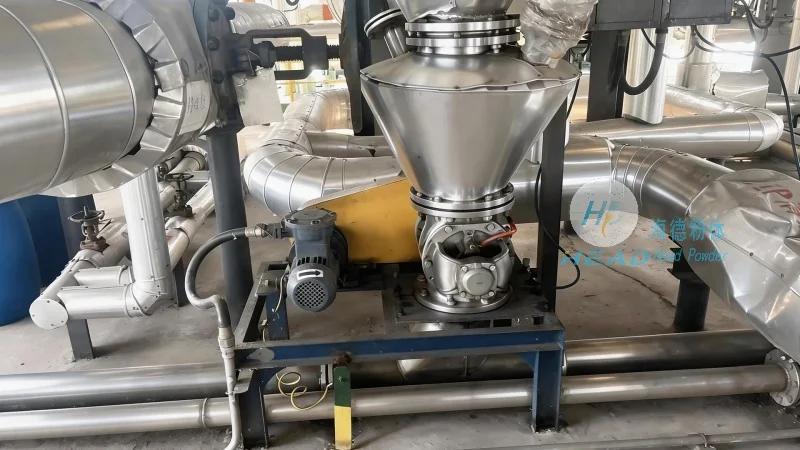
Choosing the appropriate conveying mode is the first critical decision in system design. For calcium carbonate limestone powder, dilute phase pneumatic conveying is often preferred for long-distance transport due to its lower energy consumption and simpler system configuration. However, dense phase conveying may be necessary for short distances or when handling highly abrasive materials to reduce wear on equipment. The selection depends on factors such as material characteristics, distance, and desired flow rate. Dilute phase systems typically use positive pressure, where air is introduced at the material inlet to create a suspension, while dense phase systems use negative pressure or pressure pulses to move material in a slurry-like state.
Equipment Specification: Material Handling and Wear Resistance
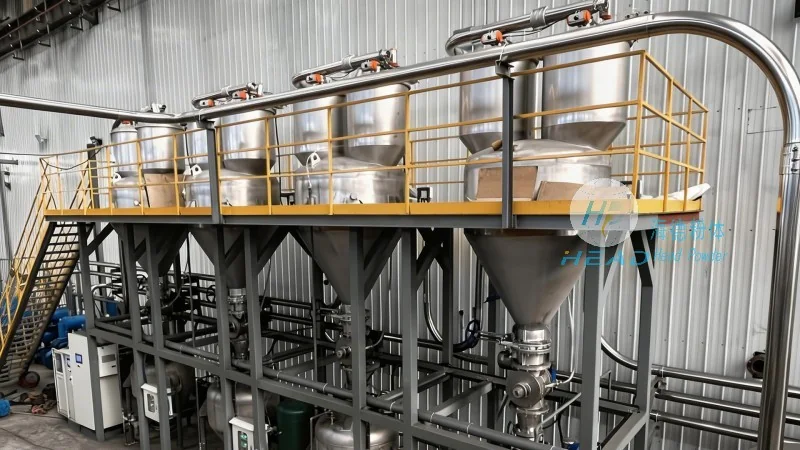
Equipment selection is crucial for maintaining system efficiency and longevity. For calcium carbonate limestone powder, which can be abrasive, high-wear components such as feeders, cyclones, and pipelines must be constructed from durable materials like stainless steel or special alloys. The feed hopper and rotary valve must be designed to handle the material's bulk density and flow characteristics without bridging or segregation. Cyclones and filters are essential for separating the powder from the air stream, and their design must account for the powder's particle size distribution and moisture content to prevent clogging. The pipeline system should be sized appropriately to maintain the desired air velocity, typically between 20-30 m/s for dilute phase systems, to ensure proper suspension and prevent particle deposition.
Process Flow Design: From Inlet to Outlet
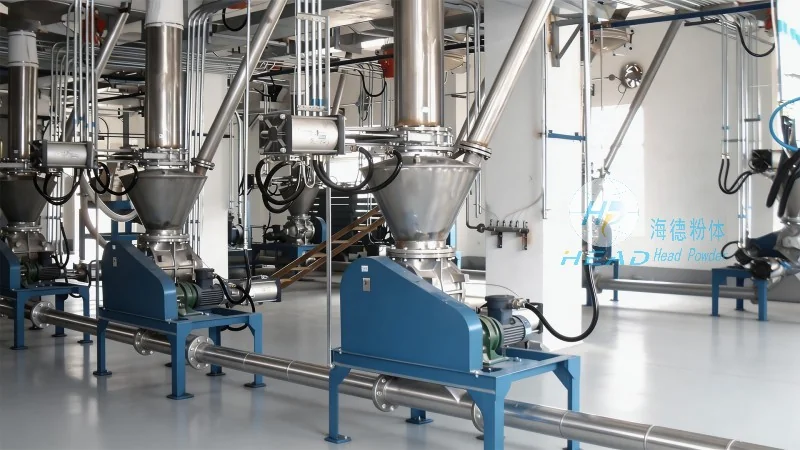
The overall process flow design should be optimized to minimize energy consumption and maximize material throughput. The system typically starts with a material storage silo, where the calcium carbonate limestone powder is stored under controlled conditions to prevent moisture absorption. A rotary valve or screw feeder then feeds the material into the conveying line. The air is introduced at the inlet, creating a suspension that travels through the pipeline to the destination silo or processing unit. At the receiving end, a cyclone or filter separates the powder from the air, and the powder is collected in a receiving hopper. The air is then filtered and discharged or recirculated, depending on the system design. Proper sealing and maintenance of all connections are essential to prevent material loss and ensure system efficiency.
Control and Monitoring Systems: Ensuring System Reliability
Advanced control and monitoring systems are vital for maintaining optimal operation and detecting potential issues early. Sensors such as pressure transducers, flow meters, and particle size analyzers can provide real-time data on system performance. Automated control systems can adjust air pressure, flow rate, and material feed rate based on process conditions, ensuring consistent material delivery. Regular maintenance schedules and predictive maintenance programs help to minimize downtime and extend equipment life. For calcium carbonate limestone powder systems, monitoring for wear, clogging, and air leakage is particularly important due to the material's abrasive nature and potential for moisture-related issues.
Case Study: Successful Implementation by Shandong HeadPowder Engineering Co., Ltd.
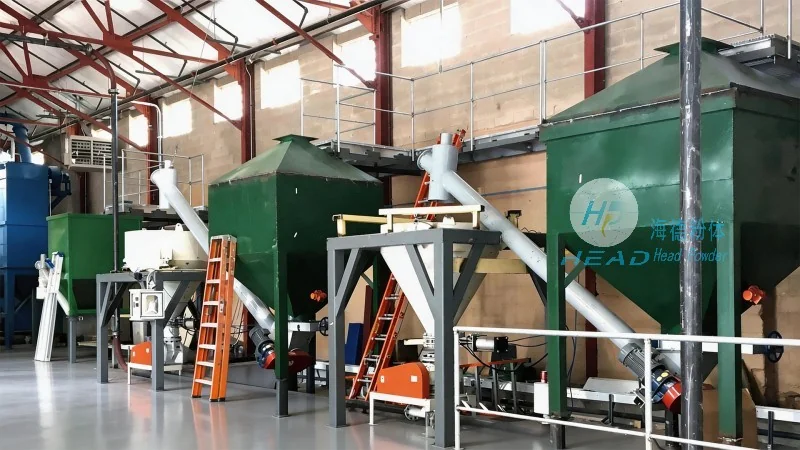
Shandong HeadPowder Engineering Co., Ltd., a leading provider of pneumatic conveying solutions, has successfully implemented numerous calcium carbonate limestone powder systems for clients in various industries. By leveraging their expertise in material handling and system design, they have developed customized solutions that meet specific operational requirements. For example, one project involved transporting calcium carbonate limestone powder over a distance of 500 meters from a storage silo to a processing plant. The system was designed as a dilute phase positive pressure system with stainless steel components to handle the abrasive nature of the material. The system has operated reliably for over two years, achieving consistent material throughput and low maintenance costs. This success demonstrates the importance of proper system design and equipment selection in ensuring the long-term performance of calcium carbonate limestone powder pneumatic conveying systems.




