Alumina powder pneumatic conveying systems are pivotal in industrial processes for the efficient and safe transport of fine powders. These systems are designed to handle materials like alumina, which are commonly used in various applications, including aluminum production, ceramics, and chemical manufacturing. Shandong HeadPowder Engineering Co., Ltd., a leading provider of such systems, specializes in delivering reliable and efficient solutions for material handling. Understanding the operation process and working principles of alumina powder pneumatic conveying systems is crucial for optimizing performance, ensuring reliability, and maintaining operational efficiency.
Core Components and Their Functions
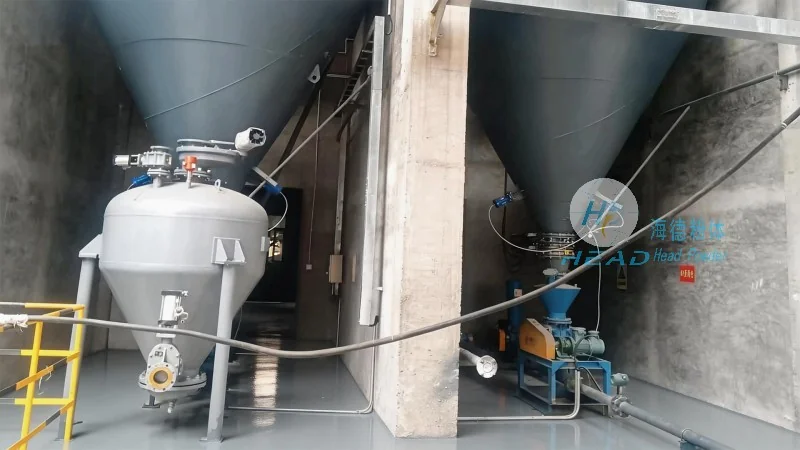
The alumina powder pneumatic conveying system comprises several essential components, each with a specific role in the overall operation. The primary components include the material hopper, air compressor or blower, conveying pipeline, and a control system. The hopper serves as the storage and feeding unit, holding the alumina powder and providing a controlled feed to the system. It is typically equipped with a feeder, such as a rotary valve or screw feeder, which regulates the material flow rate to prevent overloading or underfeeding. The air compressor or blower generates the necessary air pressure or vacuum to move the powder. In pressure systems, the compressor creates positive pressure that forces the powder into the pipeline, while in vacuum systems, a vacuum pump draws the powder into the air stream. The pipeline network, usually made of materials resistant to corrosion and abrasion (e.g., stainless steel or plastic), transports the powder-air mixture from the source to the destination. The control system monitors and adjusts key parameters, including air pressure, flow rate, and material feed rate, to maintain stable operation and prevent system inefficiencies.
Working Principle: Pressure vs. Vacuum Systems
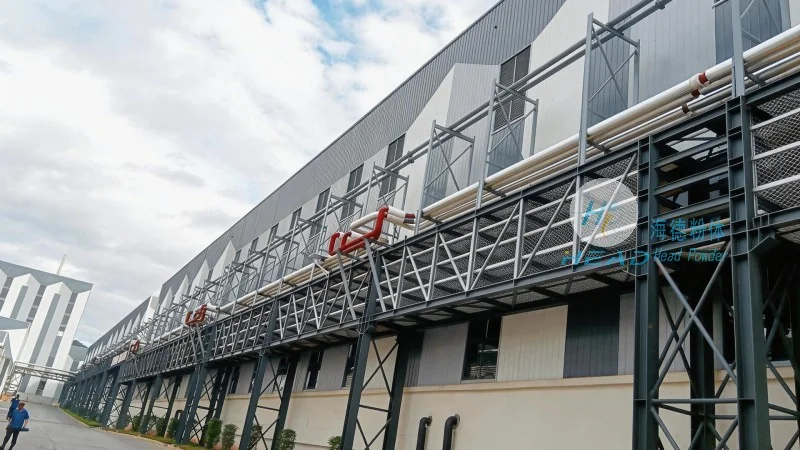
The working principle of an alumina powder pneumatic conveying system is based on the suspension of powder particles in an air stream. There are two main types of systems: pressure and vacuum. In a pressure system, the air compressor produces positive pressure that forces the powder into the pipeline. The powder is suspended by the air velocity, and the pressure differential ensures continuous movement. This method is suitable for short to medium distances and when the source and destination are at different elevations. In a vacuum system, a vacuum pump creates a negative pressure that draws the powder from the source into the pipeline. The air flow maintains the suspension of the powder particles, preventing clogging or settling. Vacuum systems are often used for long-distance transport or when the material needs to be moved from a higher to a lower elevation. Both systems rely on the principle of particle suspension, where the air velocity is sufficient to keep the powder particles in the air stream, ensuring smooth and uninterrupted transport.
Step-by-Step Operation Process
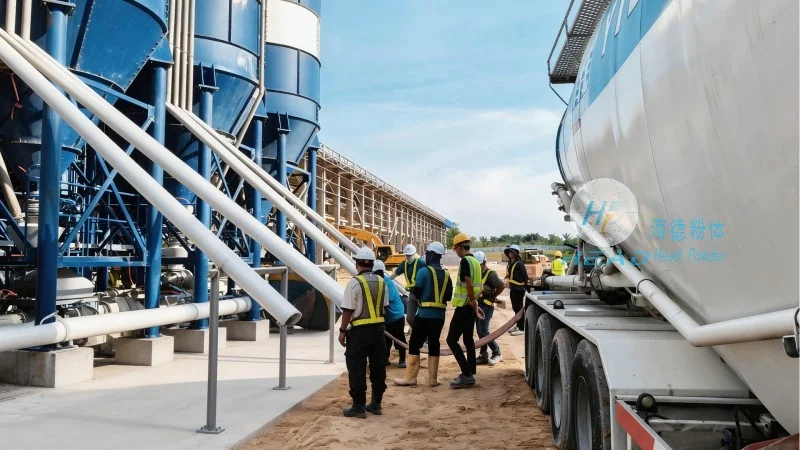
The operation of an alumina powder pneumatic conveying system follows a systematic sequence of steps to ensure efficient material handling. First, the alumina powder is loaded into the hopper from the storage silo or production line. The hopper is designed to maintain a consistent material level, and the feeder regulates the feed rate based on the system's requirements. Next, the air compressor or blower is activated, generating the required air pressure or vacuum. The air is introduced into the pipeline at the inlet or through an air injection point, depending on the system design. The powder is then drawn or pushed into the air stream, forming a powder-air mixture. The mixture travels through the pipeline network, which includes bends, elbows, and expansion joints. These components are engineered to minimize pressure loss and maintain the flow velocity, ensuring the powder remains suspended. At the receiving end, the system may include a separator or filter to separate the powder from the air. The air is either recirculated or vented, while the alumina powder is collected in the receiving hopper or storage tank. The control system continuously monitors parameters such as pressure, flow rate, and material level, and adjusts the feeder speed or air pressure as needed to maintain optimal operation. This feedback loop ensures that the system operates reliably, minimizing downtime and maximizing throughput. Regular maintenance, including cleaning the pipeline and checking the performance of the compressor and feeder, is essential to keep the system running efficiently.




