Shandong HeadPowder Engineering Co., Ltd., commonly known as HeadPowder, is a professional enterprise dedicated to the research, development, and application of pneumatic conveying systems. The company is headquartered in Shandong, China, and specializes in providing customized solutions for powder handling and material transport in various industrial sectors.
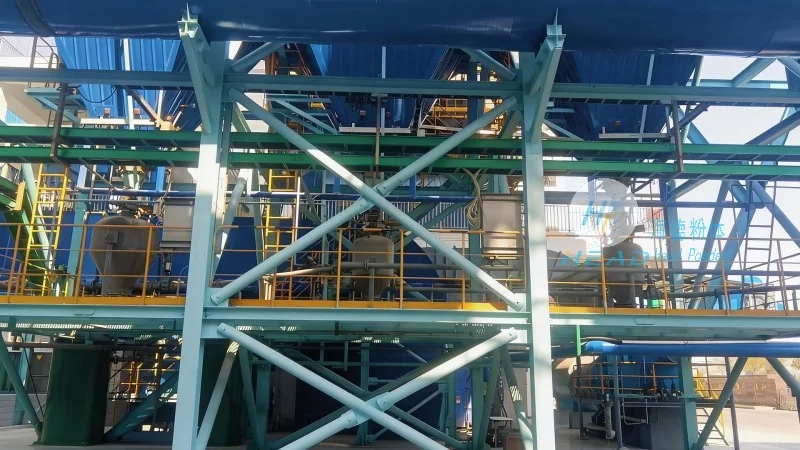
Operation Process of High-Calcium Powder Pneumatic Conveying
Pneumatic conveying, as a key technology for transporting high-calcium powders, involves the use of air as the conveying medium to move bulk materials through a pipeline system. The process typically begins with the preparation of the high-calcium powder, which is stored in a hopper or silo. From there, the powder is fed into the conveying line via a feeder, such as a rotary valve or a screw feeder, ensuring a consistent flow rate. The air, often supplied by a positive displacement blower or a centrifugal fan, is introduced into the pipeline, creating a flow that carries the powder particles. The mixture of powder and air travels through the pipeline, with the velocity of the air being sufficient to overcome the gravitational and frictional forces acting on the powder particles. Upon reaching the destination, the powder is separated from the air using a separator, such as a cyclone or a bag filter, and the air is then discharged or recirculated for energy efficiency. This process allows for the efficient and safe transport of high-calcium powders over long distances, minimizing material loss and contamination.
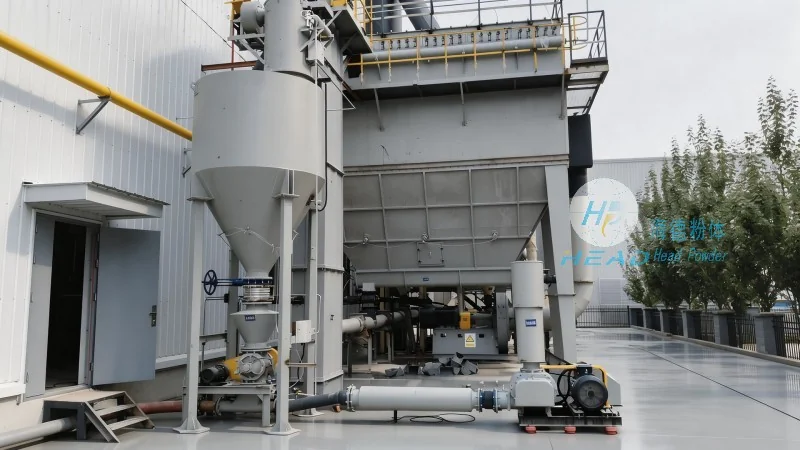
Working Principle of High-Calcium Powder Pneumatic Conveying
The working principle of high-calcium powder pneumatic conveying is based on the interaction between the powder particles and the air flow within the conveying system. The core components of the system include the material feed system, the air supply system, the conveying pipeline, and the separation equipment. The material feed system ensures that the high-calcium powder is introduced into the system at a controlled rate, preventing blockages and maintaining a stable flow. The air supply system generates the necessary pressure and flow rate to move the powder particles through the pipeline. The conveying pipeline, typically made of stainless steel or other corrosion-resistant materials, is designed to withstand the pressure and temperature conditions of the powder and air mixture. The separation equipment, such as a cyclone separator, uses centrifugal force to separate the powder from the air, collecting the powder in a hopper for further processing. The air, now free of powder, is either discharged to the atmosphere or recirculated back to the air supply system, reducing energy consumption and environmental impact. The entire system operates on the principle of fluidization, where the air flow creates a suspension of the powder particles, allowing them to be transported as a fluid-like medium. This principle enables the efficient and reliable transport of high-calcium powders, which are often sensitive to moisture and contamination, by maintaining a dry and controlled environment throughout the conveying process.
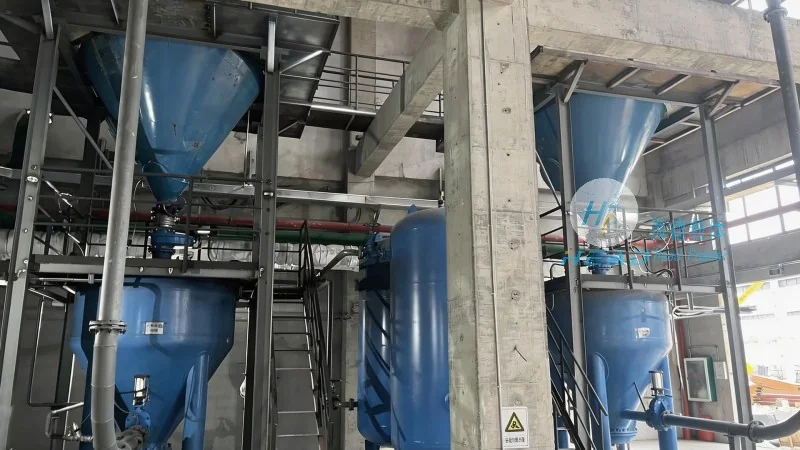
Key Steps in the Conveying Process
The operation process of high-calcium powder pneumatic conveying involves several critical steps that ensure efficient and reliable material transport. First, the high-calcium powder is stored in bulk storage silos or hoppers, which are designed to maintain the powder's quality and prevent caking or agglomeration. These storage vessels are equipped with airtight covers and level indicators to monitor the powder inventory and ensure safe operation. Next, the powder is fed from the storage vessel into the conveying system using a feeder, such as a rotary valve or a vibratory feeder. The feeder controls the flow rate of the powder, ensuring a consistent and controlled feed into the pipeline. In some cases, a conditioning system, such as a pre-drying or pre-mixing unit, may be used to improve the powder's flowability and reduce the risk of blockages. The air supply system, which includes a blower or fan, generates the necessary pressure and flow rate to move the powder particles through the pipeline. The air is introduced into the pipeline at the feed point, creating a high-velocity flow that suspends the powder particles. The velocity of the air must be sufficient to overcome the gravitational force acting on the powder particles, ensuring that they remain in suspension and are transported efficiently. The conveying pipeline, typically a closed system made of stainless steel or other corrosion-resistant materials, is designed with appropriate bends and elbows to minimize pressure losses and ensure smooth flow. The length and diameter of the pipeline are optimized based on the material's properties and the required transport distance. At the destination, the powder-air mixture is directed into a separator, such as a cyclone or a bag filter. The separator uses centrifugal force to separate the powder from the air, collecting the powder in a collection hopper. The air, now free of powder, is either discharged to the atmosphere or recirculated back to the blower for energy efficiency. The separated powder is then transferred to the next processing stage, such as a mixer or a storage silo.
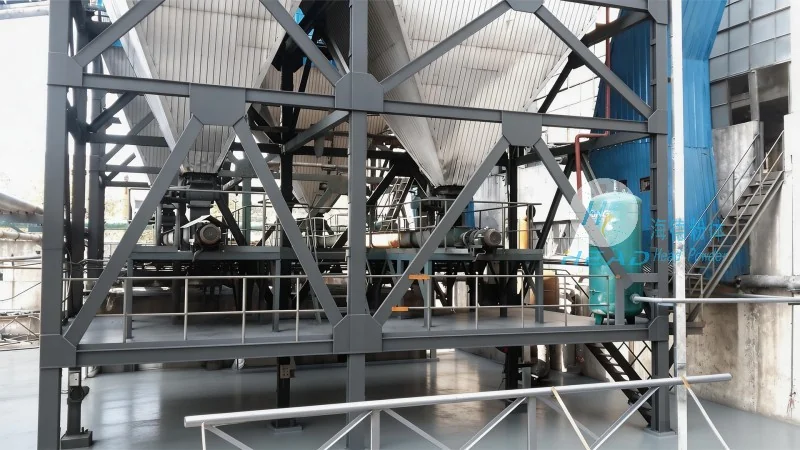
Optimization of Conveying Parameters
Optimizing the conveying parameters is crucial for the efficient operation of high-calcium powder pneumatic conveying systems. Key parameters include air velocity, powder feed rate, pipeline diameter, and material properties. The air velocity must be carefully controlled to ensure that the powder particles remain in suspension without causing excessive wear on the pipeline or equipment. A higher air velocity may be required for larger or denser particles, while smaller particles may require lower velocities to prevent over-conveying and energy waste. The powder feed rate is adjusted to maintain a stable flow and prevent blockages, which can occur if the feed rate is too high or the air velocity is too low. The pipeline diameter is selected based on the required flow rate and the material's properties, ensuring that the air velocity remains within the optimal range for conveying. Additionally, the material's density and particle size distribution influence the conveying efficiency, as these factors affect the pressure drop and flow characteristics within the pipeline. By optimizing these parameters, the system can achieve maximum efficiency, minimize energy consumption, and ensure the consistent quality of the transported high-calcium powder.




