Shandong HeadPowder Engineering Co., Ltd., based in Shandong, China, specializes in providing advanced pneumatic conveying solutions tailored for calcium carbonate materials. This article explores the fundamental principles of pneumatic conveying and highlights key application scenarios where such systems excel in industrial settings.
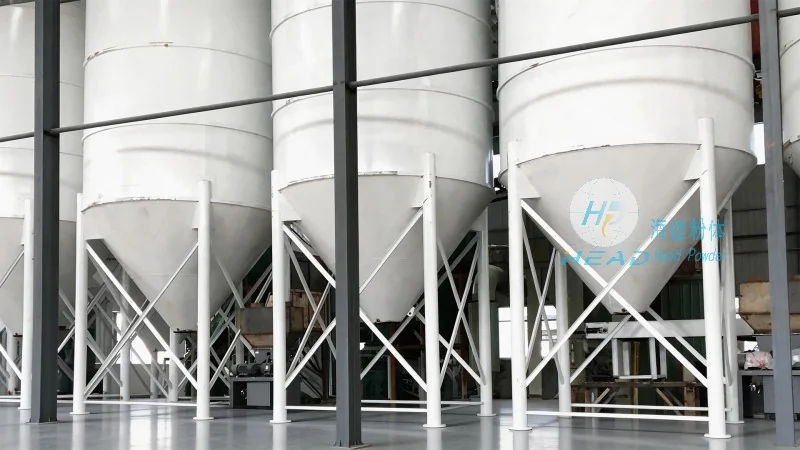
Principles of Pneumatic Conveying for Calcium Carbonate
Pneumatic conveying is a method that uses air or gas to transport solid particles, such as calcium carbonate, through a pipeline. The process relies on the creation of a pressure differential or vacuum to move the material. For calcium carbonate, which is commonly used in industries like coatings, plastics, and paper, the design of the conveying system must consider factors like particle size, density, and moisture content. The two primary types of pneumatic conveying are positive pressure and negative pressure systems. Positive pressure systems use a blower to generate pressure and push the material through the pipeline, while negative pressure systems use a vacuum to pull the material. Each type has distinct advantages and is selected based on the specific requirements of the application.
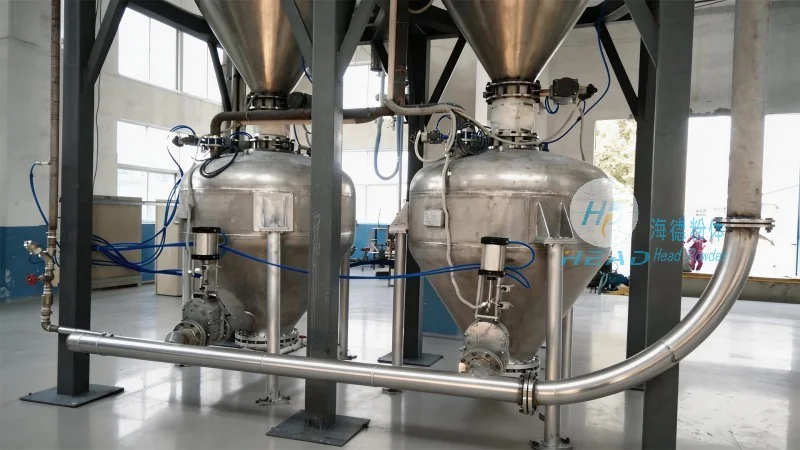
Key Characteristics of Pneumatic Conveying Systems for Calcium Carbonate
One of the most significant advantages of pneumatic conveying for calcium carbonate is its ability to maintain product purity and integrity. Unlike mechanical conveying methods, which may cause abrasion or contamination, pneumatic systems operate in a closed environment, minimizing exposure to external factors. This is particularly important for high-purity calcium carbonate used in pharmaceutical or food applications. Additionally, pneumatic conveying offers flexibility in terms of distance and layout, allowing for long-distance and complex routing without the need for multiple transfer points. The system's efficiency is also enhanced by the ability to handle varying flow rates and material loads, ensuring consistent performance even under fluctuating production conditions.
Application Scenarios and Operational Benefits
In industrial production, pneumatic conveying systems for calcium carbonate are widely used across various sectors. For example, in the manufacturing of paints and coatings, the system efficiently transports fine calcium carbonate powders to mixing and blending units, ensuring uniform dispersion and consistent product quality. In the plastics industry, the conveying system delivers calcium carbonate filler to extrusion lines, improving material handling efficiency and reducing downtime. The closed-loop design of the system also contributes to better safety and environmental control, as it prevents dust emissions and minimizes the risk of material spillage. Furthermore, the modular nature of the system allows for easy integration with existing production lines, making it a cost-effective solution for upgrading or expanding material handling capabilities.
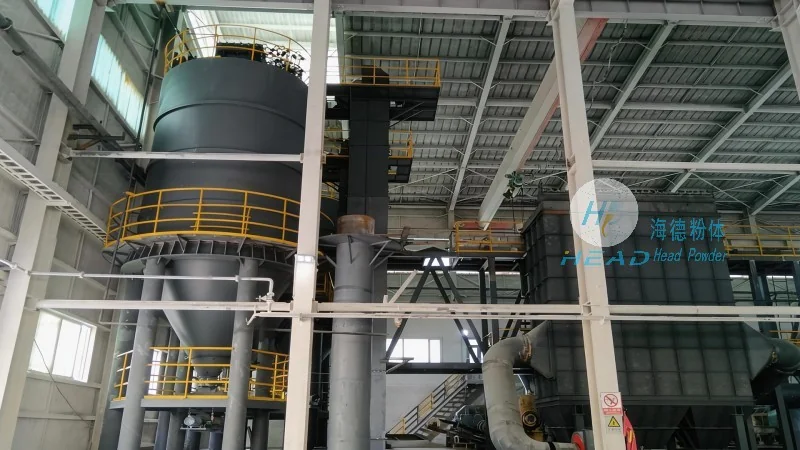
System Design and Maintenance Considerations
The successful implementation of a pneumatic conveying system for calcium carbonate requires careful consideration of several design factors. The selection of the appropriate air velocity is critical to prevent particle deposition and ensure smooth flow. For calcium carbonate particles, which can vary in size from fine powders to coarse granules, the system must be optimized to handle the specific particle characteristics. Additionally, the choice of pipeline material and diameter affects the system's performance and longevity. Regular maintenance is essential to maintain the system's efficiency, including cleaning of filters, checking for air leaks, and inspecting the blower or vacuum pump. Shandong HeadPowder Engineering Co., Ltd. provides comprehensive support for system installation, commissioning, and ongoing maintenance, ensuring that clients can maximize the operational benefits of their pneumatic conveying solutions.




