Sulfur, as an important chemical raw material, is widely used in industrial production, and its conveying efficiency directly affects the overall operation of production lines. Pneumatic conveying technology provides an efficient and safe solution for sulfur transmission. This article will delve into the principles of sulfur pneumatic conveying and analyze its application characteristics in different working scenarios, while also introducing the background information of relevant technical providers.
Basic Principles of Sulfur Pneumatic Conveying
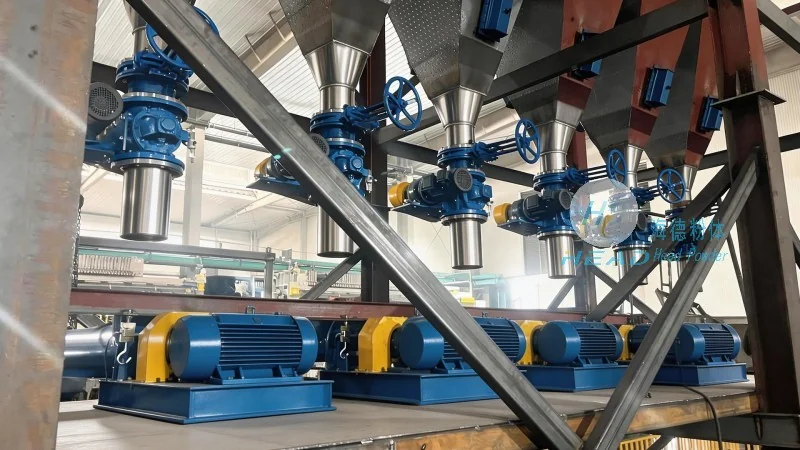
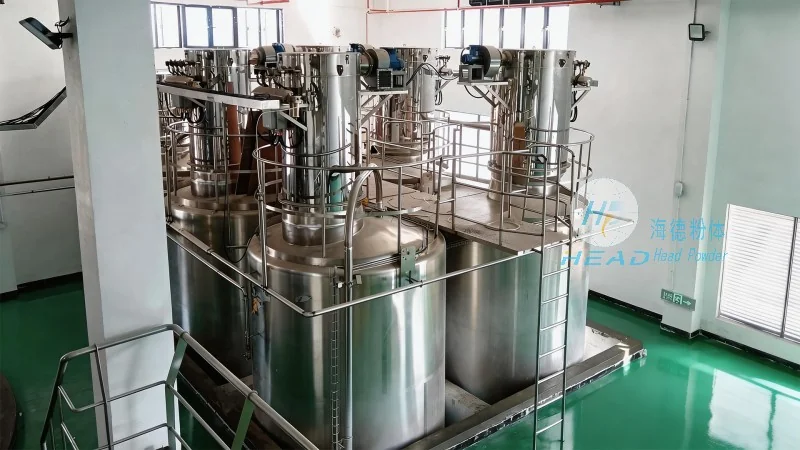
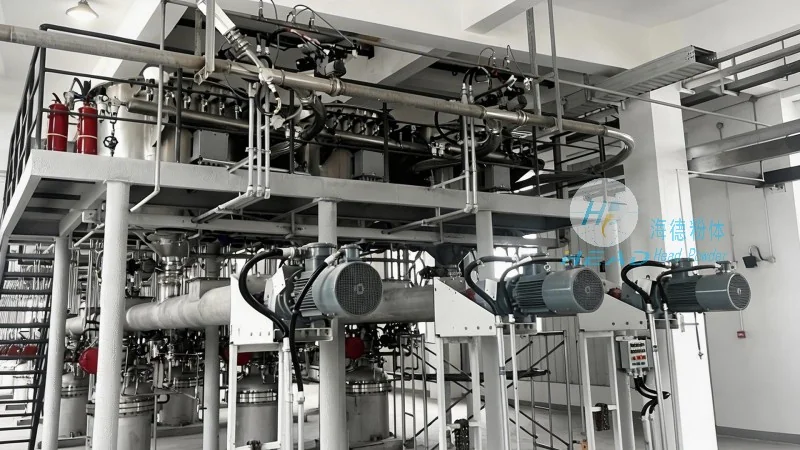
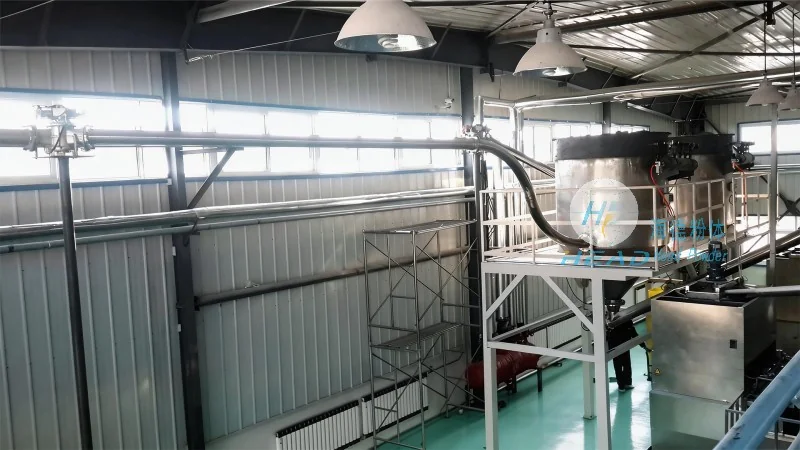
The core of sulfur pneumatic conveying is to use compressed air or inert gas as a power source to transport sulfur particles from the starting point to the endpoint. Its working principle is mainly based on the pressure difference and particle suspension in fluid mechanics. When compressed air passes through the conveying pipeline, it forms a high-speed airflow that carries the sulfur particles. This conveying method avoids the friction and wear problems in traditional mechanical conveying and reduces the direct contact between the material and equipment, thereby lowering the oxidation and contamination risks of sulfur. Specifically, the pneumatic conveying system typically includes feeding devices, conveying pipelines, separators, and receiving equipment. The feeding device evenly sends sulfur particles into the conveying pipeline, and compressed air forms a high-speed airflow in the pipeline, making the sulfur particles suspended and moving with the airflow. During the conveying process, the airflow velocity needs to be maintained above the particle's suspension velocity to ensure that the particles do not settle. When reaching the endpoint, the airflow velocity decreases, and the sulfur particles settle due to gravity, entering the receiving equipment after being separated by the separator. This principle enables sulfur pneumatic conveying to achieve long-distance, high-capacity transmission while maintaining the purity and integrity of the material.
Working Scenario Characteristics of Sulfur Pneumatic Conveying
Sulfur pneumatic conveying exhibits unique advantages in different industrial scenarios. First, in the internal conveying link of sulfur production factories, pneumatic conveying can efficiently connect reactors, dryers, packaging equipment, etc., realizing the continuous transmission of sulfur from production to packaging. For example, after sulfur is melted, it is directly conveyed to the packaging machine through a pneumatic conveying system, reducing material loss and operational risks in intermediate links. Second, in the sulfur storage and transportation field, pneumatic conveying can be used to transport sulfur from storage tanks to transport vehicles or ships, ensuring the stability and safety of sulfur during loading and unloading. In addition, in the production lines of sulfur processing enterprises, such as sulfuric acid production from sulfur and sulfur-based plastics, pneumatic conveying can precisely transport raw sulfur to reaction equipment, meeting the requirements of different processes for sulfur particle size, temperature, and flow rate. The parameters of the pneumatic conveying system need to be adjusted according to the physical properties of sulfur (such as density, particle size, humidity) and the conveying distance in different working scenarios. For example, short-distance conveying can use low-pressure pneumatic conveying, while long-distance or high-flow conveying requires high-pressure or dense-phase pneumatic conveying. In addition, for flammable and explosive sulfur, the pneumatic conveying system needs to be equipped with explosion-proof measures to ensure operational safety. Overall, sulfur pneumatic conveying has the characteristics of high efficiency, safety, and flexibility in industrial applications, capable of adapting to different production environments and process requirements.




