

Preventing Pipeline Blockages in Air-Pneumatic Conveying Systems for Anhydrous Sodium Sulfate: Key D
For industries dealing with the transportation of anhydrous sodium sulfate, the efficiency and reliability of air-pneumatic conveying systems are paramount. A common challenge in such operations is the risk of pipeline blockages, which can lead to costly downtime and operational disruptions. Understanding and implementing the right design parameters are crucial to mitigate these risks and ensure smooth material flow. This article explores effective strategies to prevent blockages and highlights the critical design elements that contribute to the successful operation of air-pneumatic conveying systems in the context of anhydrous sodium sulfate transport.
Understanding the Challenges of Anhydrous Sodium Sulfate Conveyance
Anhydrous sodium sulfate, also known as sodium sulfate anhydrous (Na₂SO₄), is a white crystalline solid widely used in various industrial applications, including glass manufacturing, detergents, and chemical processing. Its physical properties, such as particle size distribution, bulk density, and flow characteristics, can significantly impact the performance of air-pneumatic conveying systems. Unlike some other bulk materials, anhydrous sodium sulfate can exhibit cohesive behavior under certain conditions, making it prone to bridging and arching in pipelines. These phenomena can lead to blockages if the conveying system is not properly designed or operated.
Key Design Parameters for Preventing Blockages
Several key design parameters must be considered when configuring an air-pneumatic conveying system for anhydrous sodium sulfate to minimize the risk of blockages. These parameters are tailored to the material's characteristics and the system's operational requirements.
1. Air-to-Solid Ratio (A/S Ratio)
The air-to-solid ratio is a critical factor that determines the velocity of the material in the pipeline. It is defined as the ratio of the volume of air to the volume of solid material being conveyed. For anhydrous sodium sulfate, an optimal A/S ratio is essential to maintain a consistent flow velocity and prevent the material from settling or forming deposits. A higher A/S ratio typically results in higher conveying velocities, which can help prevent blockages by ensuring the material remains in suspension. However, excessively high ratios can lead to increased energy consumption and potential wear on system components. The recommended A/S ratio for anhydrous sodium sulfate often falls within a range of 0.5 to 1.5, depending on the particle size and the system's design. Proper calculation of this ratio is crucial to achieve efficient and blockage-free operation.
2. Pipeline Diameter and Length
The diameter of the conveying pipeline and its length play a significant role in the risk of blockages. Smaller diameter pipes increase the risk of material accumulation and blockages, as the material has less space to flow and is more susceptible to bridging. Conversely, larger diameters can reduce the risk but may increase the system's cost and energy requirements. The optimal diameter is typically determined based on the material's particle size and the desired conveying velocity. For anhydrous sodium sulfate, a pipeline diameter of at least 100 mm is often recommended to ensure smooth flow and minimize blockage risks. Additionally, the length of the pipeline should be designed to avoid excessive pressure drops, which can lead to reduced conveying velocity and increased blockage potential. Proper pipe sizing and layout, including the inclusion of appropriate bends and elbows, are essential to maintain consistent flow and prevent material stagnation.
3. Conveying Velocity
The conveying velocity, which is influenced by the A/S ratio and pipeline diameter, is a key parameter in preventing blockages. The velocity must be sufficient to keep the material in suspension and prevent it from settling on the pipe walls. For anhydrous sodium sulfate, the recommended conveying velocity is typically between 15 to 25 meters per second. This velocity ensures that the material remains in a fluidized state, reducing the likelihood of bridging and arching. Monitoring and controlling the conveying velocity is essential, as fluctuations can lead to inconsistent flow and potential blockages. Modern air-pneumatic conveying systems often incorporate velocity sensors and control mechanisms to maintain optimal velocity levels.
4. Material Characteristics and Conditioning
The physical properties of anhydrous sodium sulfate, such as its particle size, moisture content, and flowability, directly impact the system's performance. Materials with larger particle sizes or higher moisture content may require adjustments to the A/S ratio and conveying velocity to prevent blockages. Conditioning the material, such as by adding a small amount of anti-caking agent or by pre-drying, can improve its flow characteristics and reduce the risk of bridging. Additionally, ensuring that the material is free from contaminants, such as dust or foreign particles, can prevent blockages caused by material buildup or clogging of system components.
5. System Sizing and Layout
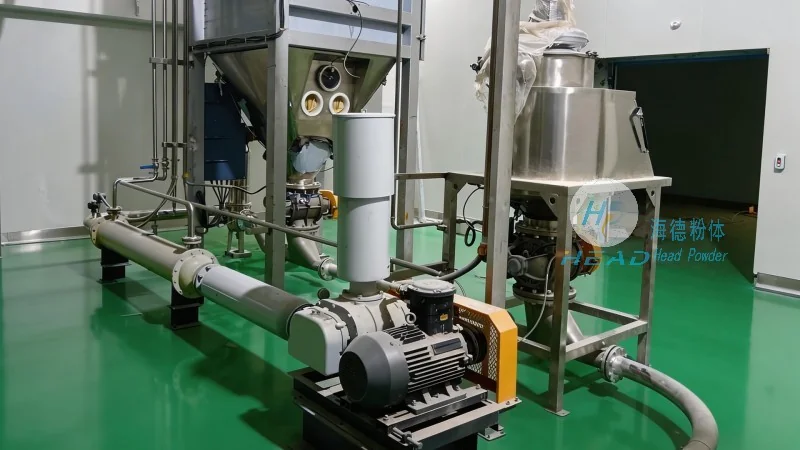
The overall system design, including the number of conveying lines, the placement of feeders, and the location of collection hoppers, must be carefully planned to minimize the risk of blockages. A well-designed layout ensures that the material flows smoothly from the source to the destination without any bottlenecks or areas of stagnation. The inclusion of appropriate expansion joints, valves, and control devices allows for adjustments to the system's operation and helps prevent blockages caused by pressure fluctuations or material buildup. Proper maintenance of the system, including regular cleaning and inspection of pipelines and components, is also essential to prevent long-term blockages.
6. Control and Monitoring Systems
Implementing advanced control and monitoring systems can significantly enhance the performance of air-pneumatic conveying systems for anhydrous sodium sulfate. These systems typically include sensors for pressure, temperature, and flow rate, as well as control algorithms that adjust the A/S ratio and conveying velocity based on real-time conditions. Real-time monitoring allows operators to detect potential blockages early and take corrective action before they escalate into major issues. Additionally, data logging and analysis features provide insights into system performance and help identify areas for improvement. The use of automated control systems reduces the risk of human error and ensures consistent operation, contributing to the prevention of blockages.
Conclusion
Preventing pipeline blockages in air-pneumatic conveying systems for anhydrous sodium sulfate requires a comprehensive approach that considers multiple design parameters and operational factors. By optimizing the air-to-solid ratio, selecting appropriate pipeline dimensions, maintaining adequate conveying velocity, conditioning the material, and implementing effective control systems, industries can significantly reduce the risk of blockages and ensure reliable material transport. The expertise of companies like Shandong HeadPowder Engineering Co., Ltd. (headpowder) is invaluable in designing and implementing such systems, leveraging years of experience and specialized knowledge to address the unique challenges of anhydrous sodium sulfate conveyance. With the right design and operational strategies, air-pneumatic conveying systems can provide efficient and reliable transport of anhydrous sodium sulfate, minimizing downtime and maximizing productivity.