Calcium carbide slag powder pneumatic conveying systems are advanced industrial solutions designed to efficiently transport calcium carbide slag powder, a byproduct commonly generated in the production of calcium carbide. This technology is crucial for industries seeking to manage and utilize this material effectively, ensuring safe and reliable material handling processes. The system's design and operation are tailored to meet the specific demands of calcium carbide slag powder, which is characterized by its fine particle size and potential for dust generation during handling.
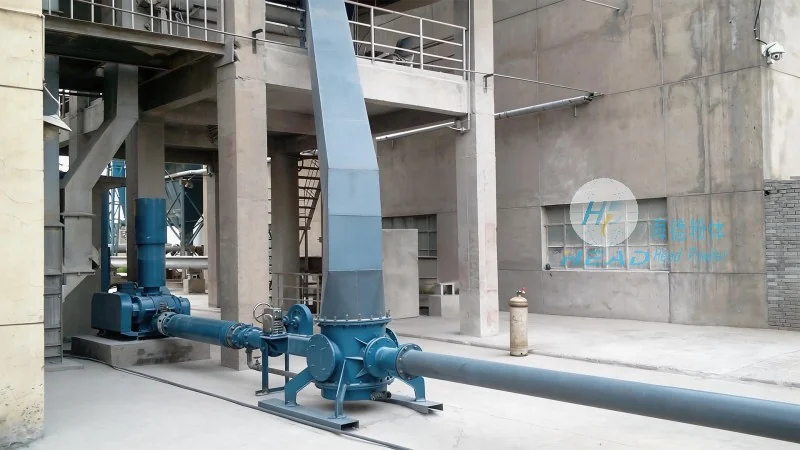
Company Profile: Shandong HeadPowder Engineering Co., Ltd.
HeadPowder, the manufacturer of this advanced pneumatic conveying system, is a leading engineering company based in Shandong, China. With a strong focus on innovation and quality, HeadPowder specializes in providing customized material handling solutions for various industrial applications. The company's expertise in pneumatic conveying technology, combined with its commitment to customer satisfaction, has established it as a trusted partner in the industry. HeadPowder's systems are engineered to deliver high performance, reliability, and durability, ensuring optimal operation in demanding industrial environments.
System Overview and Key Components
The calcium carbide slag powder pneumatic conveying system typically consists of several key components that work in tandem to achieve efficient material transport. These components include a material hopper for storing the calcium carbide slag powder, a rotary airlock valve to control the flow of material into the conveying line, a positive displacement blower or air compressor to generate the necessary air pressure, and a pipeline network that transports the powder from the source to the destination. Additionally, the system may incorporate dust collection equipment and a receiver or silo at the end of the conveying line to store the delivered material.
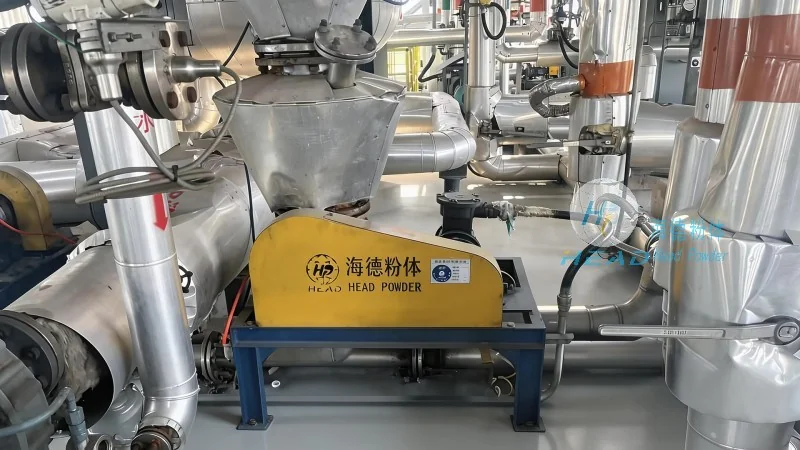
Operation Process of the Pneumatic Conveying System
The operation of the calcium carbide slag powder pneumatic conveying system follows a systematic process that ensures smooth and continuous material transport. The process begins with the loading of calcium carbide slag powder into the material hopper. As the material is fed into the system, a rotary airlock valve regulates the flow, preventing backflow and maintaining consistent material delivery. Simultaneously, the positive displacement blower generates high-pressure air, which is introduced into the pipeline. The air, carrying the powder particles, moves through the pipeline at a controlled velocity, ensuring that the powder is suspended and transported efficiently. The conveying line may include bends, elbows, and other fittings, which are designed to minimize pressure loss and maintain the flow of material. At the receiving end, the air and powder mixture is separated, with the powder collected in the receiver and the air directed to a dust collection system for filtration and disposal.
Working Principle of the Pneumatic Conveying System
The working principle of the calcium carbide slag powder pneumatic conveying system is based on the fundamental concept of pneumatic transport, where material is conveyed using a carrier gas, typically air. The system operates under positive pressure, meaning that the air pressure in the pipeline is higher than the ambient pressure. This pressure differential creates a flow of air through the pipeline, which entrains the powder particles and transports them to the destination. The key to efficient operation lies in maintaining the correct air-to-material ratio, which ensures that the powder is fully suspended and does not settle or clog the pipeline. The rotary airlock valve plays a critical role in controlling the material flow rate, while the blower or compressor provides the necessary air pressure to overcome the resistance in the pipeline and maintain the conveying velocity. The system's design also incorporates features to minimize dust generation and ensure environmental compliance, such as efficient dust collection and filtration systems.
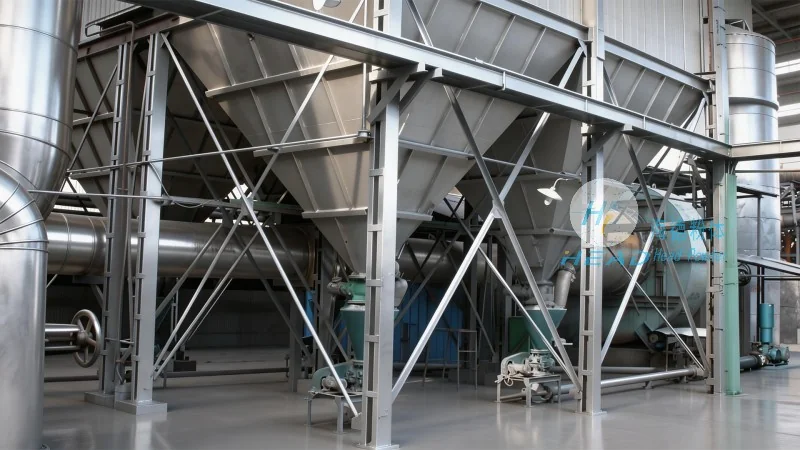
Advantages and Applications of the System
The calcium carbide slag powder pneumatic conveying system offers several advantages over traditional material handling methods, making it an ideal solution for industries dealing with calcium carbide slag powder. Some of the key advantages include high efficiency in material transport, reduced labor costs due to automated operation, improved safety by minimizing manual handling of powders, and lower maintenance requirements compared to mechanical conveyors. The system is particularly suitable for applications where the material needs to be transported over long distances or through complex layouts, such as in industrial plants, power stations, and chemical processing facilities. Additionally, the system's ability to handle fine powders without clogging or degradation makes it suitable for a wide range of industrial applications, including cement production, fertilizer manufacturing, and waste management.
Maintenance and Operational Considerations
To ensure the long-term performance and reliability of the calcium carbide slag powder pneumatic conveying system, regular maintenance and proper operational considerations are essential. The system components, such as the rotary airlock valve, blower, and pipeline, require periodic inspection and maintenance to prevent wear and tear, which can affect system performance. The dust collection system should be regularly cleaned and maintained to ensure efficient filtration and prevent dust accumulation. Additionally, the system should be operated within the recommended air-to-material ratio and pressure range to avoid excessive wear on components and ensure optimal conveying efficiency. Proper training of operators on the system's operation and maintenance procedures is also crucial to maximize the system's lifespan and performance. By adhering to these maintenance and operational guidelines, users can ensure that the system operates at peak efficiency, minimizing downtime and maximizing productivity.




