For industrial applications involving the handling of ceramic powders, efficient and reliable material transport is crucial. The ceramic powder pneumatic conveying system, provided by Shandong HeadPowder Engineering Co., Ltd. (headpowder), offers a sophisticated solution to meet these demands. This equipment is designed to handle the unique challenges associated with ceramic powders, ensuring minimal degradation, consistent flow, and high system efficiency.
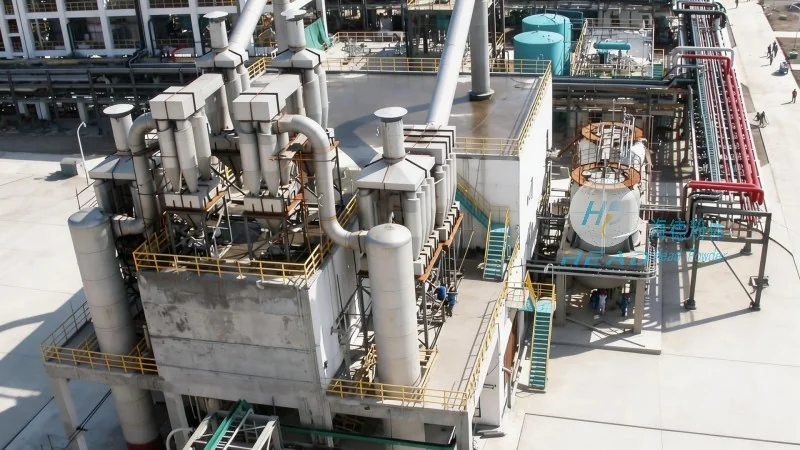
Ceramic Powder Pneumatic Conveying System Overview
The ceramic powder pneumatic conveying system is a closed-loop system that utilizes air or other gases to transport dry, free-flowing materials like ceramic powders from one location to another. Unlike traditional mechanical conveying methods, this system eliminates the need for moving parts in the material path, reducing maintenance requirements and enhancing safety. The system typically consists of a hopper for material storage, a feeder to control the flow rate, a conveying line (often equipped with pressure vessels or ducts), and a receiver for the discharged material. The entire process is driven by a blower or compressor that generates the necessary air pressure to move the powder through the system.
Key Components and Their Functions
Each component of the ceramic powder pneumatic conveying system plays a critical role in ensuring optimal performance. The hopper serves as the primary storage vessel, holding the ceramic powder and providing a consistent feed to the feeder. The feeder, often a rotary valve or a mass flow controller, regulates the amount of powder released into the conveying line, preventing overloading and maintaining stable flow rates. The conveying line, made from materials resistant to abrasion and corrosion (such as stainless steel or special polymers), transports the powder under pressure. The blower or compressor generates the airflow, creating the pressure differential required to move the powder. Finally, the receiver collects the material at the destination, completing the transport cycle.
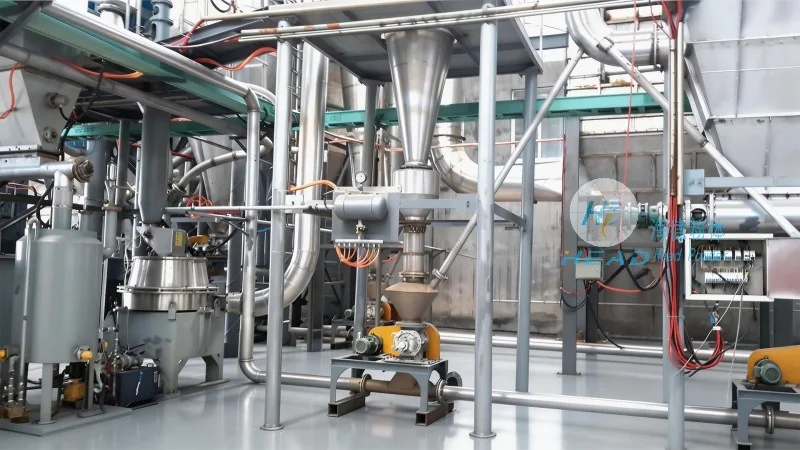
Operation Process of the Ceramic Powder Pneumatic Conveying System
The operation of the ceramic powder pneumatic conveying system follows a systematic sequence to ensure efficient material transport. Initially, the ceramic powder is loaded into the hopper. The feeder then controls the discharge rate, allowing a controlled amount of powder to enter the conveying line. Simultaneously, the blower or compressor starts, generating the necessary airflow. As the powder is introduced into the line, it is entrained by the air stream and carried through the conveying ducts. The pressure in the system is maintained at a level sufficient to overcome friction losses and elevation changes. Upon reaching the receiver, the air and powder mixture is separated, typically through a cyclone or filter, and the powder is collected in the receiver. The air is then discharged back into the system or vented to the atmosphere, completing the cycle. This process can be automated, with sensors and control systems monitoring pressure, flow rate, and material levels to adjust the operation in real-time.
Working Principle of the Pneumatic Conveying System
The working principle of the ceramic powder pneumatic conveying system is based on the principle of fluidization and drag flow. In the conveying line, the air velocity is maintained above the minimum fluidization velocity of the ceramic powder, which causes the powder particles to become suspended in the air stream. This suspension allows the powder to be transported as a fluid, similar to conveying a liquid. The pressure differential created by the blower or compressor drives the flow of the air-powder mixture through the system. The system can operate in either positive pressure or negative pressure modes. In positive pressure systems, the conveying line is pressurized above the ambient pressure, while negative pressure systems create a vacuum in the line, drawing the powder from the source. The choice of mode depends on the application requirements, such as the distance and elevation changes between the source and destination.
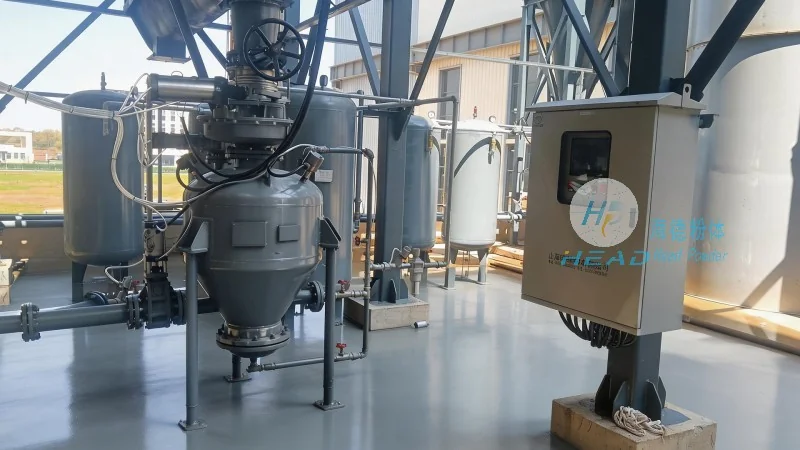
Advantages of Using Ceramic Powder Pneumatic Conveying Systems
Implementing a ceramic powder pneumatic conveying system offers several advantages over traditional conveying methods. First, it eliminates the need for mechanical components in the material path, reducing wear and tear and minimizing the risk of contamination. This is particularly important for ceramic powders, which are often sensitive to moisture or particle degradation. Second, the system provides a high degree of control over the flow rate and pressure, ensuring consistent material transport. Third, the closed-loop design prevents dust emissions, improving workplace safety and environmental compliance. Additionally, the system is compact and can be easily integrated into existing industrial setups, making it a versatile solution for various applications.
Applications and Industries
The ceramic powder pneumatic conveying system is widely used in industries that handle ceramic powders, including ceramics manufacturing, pharmaceuticals, food processing, and chemical processing. In ceramics manufacturing, the system is used to transport raw materials like clay, feldspar, and silica to the production lines. In pharmaceuticals, it ensures the safe and hygienic transport of active ingredients and excipients. The system's ability to handle fine powders without degradation makes it suitable for applications where material quality is critical. Overall, the ceramic powder pneumatic conveying system is a reliable and efficient solution for material transport in industries requiring precise and controlled handling of ceramic powders.




