

What is Micropowder Material Pneumatic Conveying Equipment? And What Are Its Design Principles?
For industrial operations that handle fine powders, especially micropowders, efficient and reliable material handling is crucial. This article introduces the micropowder material pneumatic conveying equipment and explores its design principles, focusing on the technology developed by Shandong HeadPowder Engineering Co., Ltd., a leading company in this field based in China.
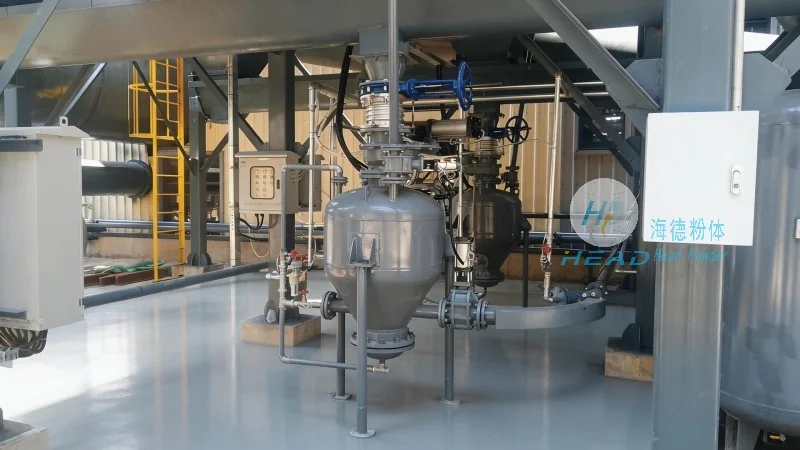
About Shandong HeadPowder Engineering Co., Ltd.
Shandong HeadPowder Engineering Co., Ltd. is a professional manufacturer and supplier specializing in pneumatic conveying systems for various powder materials. The company is headquartered in Shandong, China, and has built a strong reputation for delivering high-quality, customized solutions tailored to the unique needs of different industries. With years of experience and a team of skilled engineers, HeadPowder provides comprehensive services from design and manufacturing to installation and maintenance of pneumatic conveying equipment.
Introduction to Micropowder Material Pneumatic Conveying Equipment
Micropowder material pneumatic conveying equipment is a system designed to transport fine powders, such as micropowders, through a pipeline using air or other gases as the conveying medium. This technology offers several advantages over traditional mechanical conveying methods, including reduced contamination, lower maintenance requirements, and the ability to handle materials that are difficult to transport by other means. The equipment is widely used in industries like pharmaceuticals, food processing, chemicals, and ceramics, where the purity and integrity of the powder are critical.
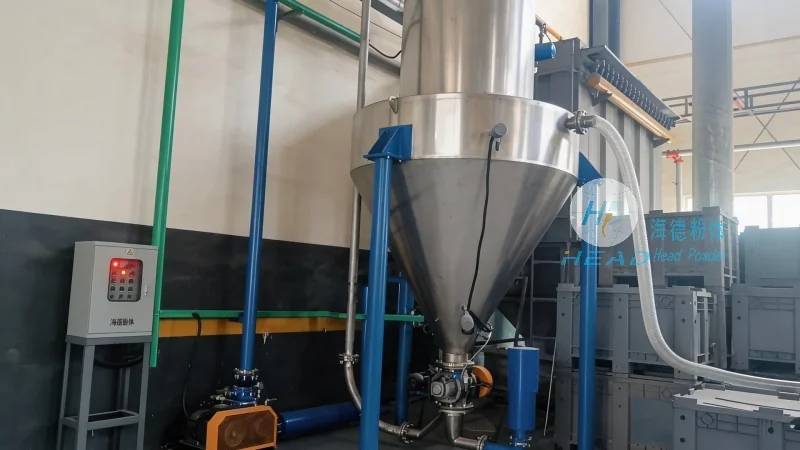
Design Principles of Pneumatic Conveying Systems
The design of micropowder material pneumatic conveying equipment is based on several key principles to ensure efficient and reliable operation. The primary principle is the use of differential pressure to move the powder through the pipeline. The system typically consists of a blower or compressor that generates the necessary air pressure, a hopper or feeder to introduce the powder into the system, and a pipeline network that transports the material to the destination. The design must consider factors such as the particle size, density, and flow characteristics of the micropowder, as well as the required conveying distance and throughput.
Key Components and Their Functions
The pneumatic conveying system for micropowders includes several essential components, each playing a critical role in the overall operation. The blower or compressor is responsible for generating the air flow and pressure needed to move the powder. The hopper or feeder ensures a consistent and controlled feed of the micropowder into the system, preventing blockages and maintaining a steady flow. The pipeline network, often made of stainless steel or other corrosion-resistant materials, transports the powder from the source to the destination. The system may also include components like cyclones, filters, and dust collectors to separate the powder from the air and ensure environmental compliance.
Advantages of Micropowder Pneumatic Conveying
Compared to traditional mechanical conveying methods, micropowder pneumatic conveying offers several advantages. First, it minimizes product contamination by eliminating direct contact with metal or other materials. Second, it reduces the risk of product degradation due to less exposure to air and moisture. Third, the system is more flexible and can be easily adjusted to handle different powder types and conveying requirements. Additionally, pneumatic conveying systems are generally more compact and require less floor space compared to other methods, making them suitable for installations with limited space.
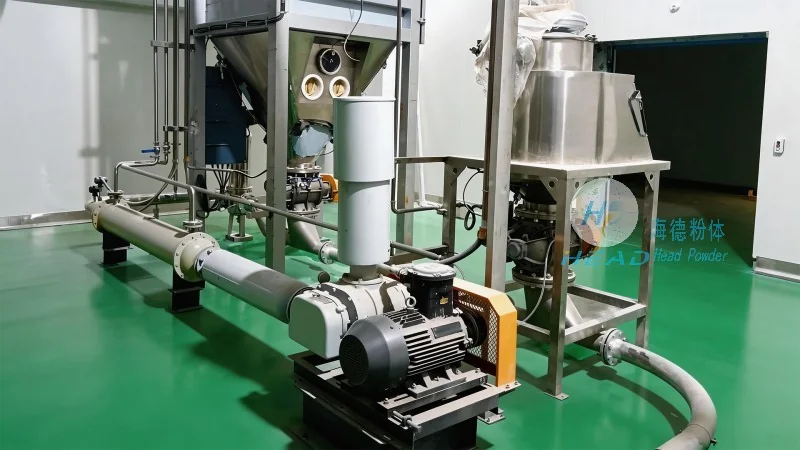
Application Examples
The micropowder material pneumatic conveying equipment from Shandong HeadPowder Engineering Co., Ltd. has been successfully applied in various industries. For example, in the pharmaceutical industry, the system is used to transport active pharmaceutical ingredients (APIs) and excipients with high purity requirements. In the food processing industry, it handles fine powders like sugar, flour, and spices, ensuring that the products remain fresh and uncontaminated. In the chemical industry, the equipment is used to convey powders such as pigments, catalysts, and reagents, which are often sensitive to moisture and temperature. In the ceramics industry, it transports raw materials like clay and feldspar, which are essential for manufacturing ceramic products.
Conclusion
Micropowder material pneumatic conveying equipment is a sophisticated and efficient solution for handling fine powders in industrial applications. The design principles, which focus on differential pressure and controlled air flow, ensure reliable and clean transportation of micropowders. Shandong HeadPowder Engineering Co., Ltd. has demonstrated expertise in developing and manufacturing these systems, providing customized solutions that meet the specific needs of different industries. By leveraging pneumatic conveying technology, industries can improve their operational efficiency, maintain product quality, and reduce costs associated with material handling.