For industrial applications involving the handling of PVC resin powders, the design of an efficient and reliable pneumatic conveying system is crucial. This document outlines key considerations and best practices for developing such systems, ensuring optimal performance, safety, and cost-effectiveness. The information provided is tailored to assist engineers and decision-makers in selecting and implementing suitable solutions for their specific operational needs.
Understanding the Core Components of a Pneumatic Conveying System
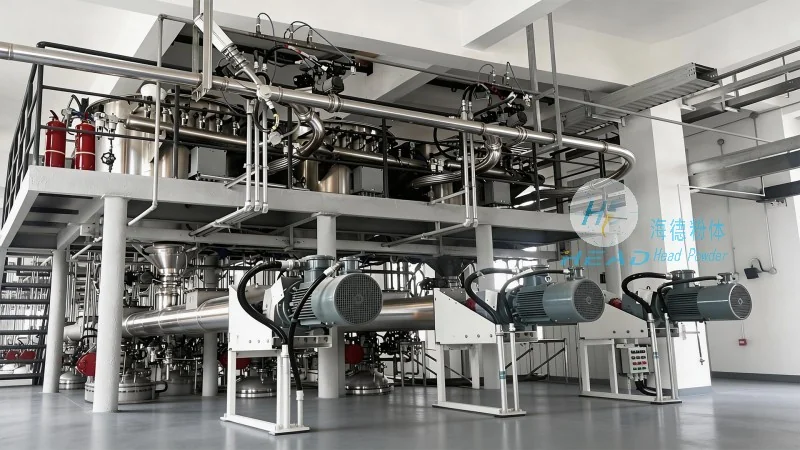
A pneumatic conveying system for PVC resin powders typically consists of several critical components. These include the material feed hopper, which stores and regulates the flow of resin powder; the conveyor line, which may be of the dilute-phase or dense-phase type depending on the application; the air compressor or blower, which provides the necessary pressure and airflow; and the receiver or discharge hopper, where the material is collected. Each component must be carefully selected and sized to ensure the system operates within its design parameters, minimizing energy consumption and maximizing material throughput.
Material Properties and Their Impact on System Design
PVC resin powders exhibit specific physical and chemical properties that influence the design of the pneumatic conveying system. Factors such as particle size distribution, bulk density, moisture content, and abrasiveness are critical. Larger or more abrasive particles may require higher air velocities or specialized equipment like rotary valves or screw feeders to prevent blockages and ensure smooth material flow. Additionally, moisture content can affect the material's flowability and the risk of caking, necessitating drying or moisture control measures within the system.
System Sizing and Airflow Considerations
Accurate system sizing is essential for the efficient operation of a PVC resin powder pneumatic conveying system. The airflow rate must be sufficient to maintain the material in suspension and overcome friction losses within the system. Calculations often involve determining the required air velocity based on the material's particle size and density, as well as the system's length and number of bends. Overdesigning the system can lead to excessive energy consumption, while underdesigning may result in material deposition or blockages. Engineers typically use empirical formulas or software tools to model the system and optimize airflow parameters.
Material Feed and Discharge Mechanisms
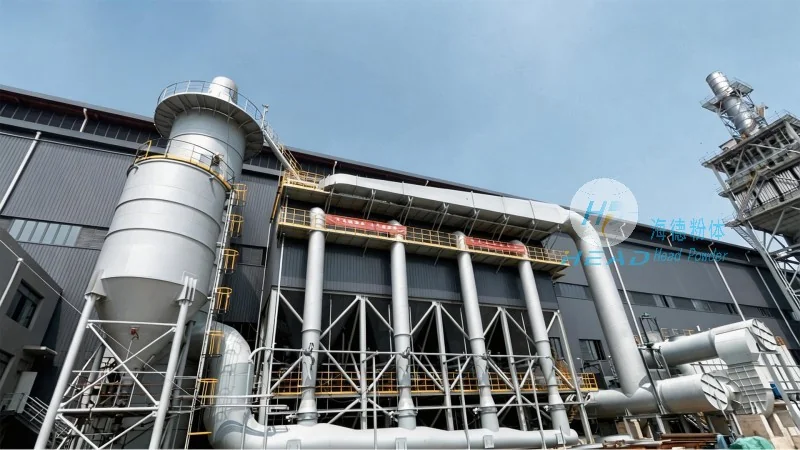
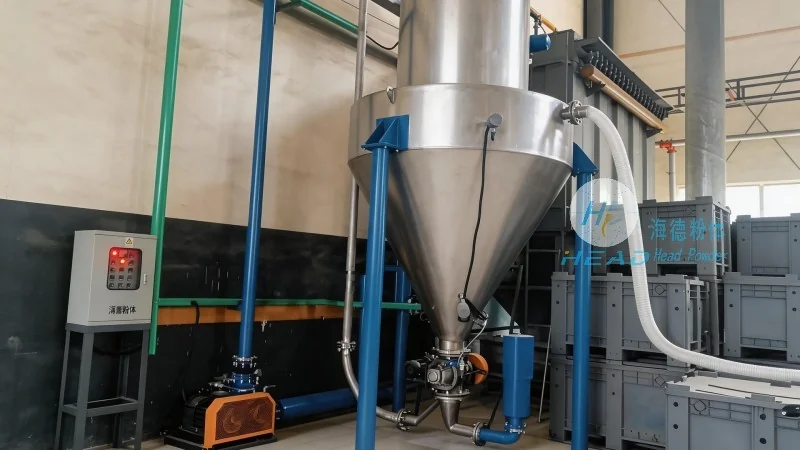
The feed and discharge mechanisms are critical for maintaining consistent material flow and preventing system downtime. Rotary valves are commonly used for feeding PVC resin powders due to their ability to control the flow rate and prevent backflow. These devices are designed to handle abrasive materials and can be adjusted to match the system's operating conditions. At the discharge end, the receiver or discharge hopper must be equipped with a suitable outlet, such as a rotary valve or a slide gate, to control the release of material. Proper sealing of these components is essential to prevent dust emissions and maintain system integrity.
Pressure and Vacuum Conveying Options
For PVC resin powder applications, both pressure and vacuum conveying systems are available, each with its own advantages and limitations. Pressure systems use compressed air to push the material through the line, typically operating at higher pressures and velocities. They are suitable for long-distance or high-capacity applications but may require more robust equipment and higher energy input. Vacuum systems, on the other hand, use suction to draw material into the line, often operating at lower pressures and velocities. These systems are ideal for short-distance or low-capacity applications and can be more cost-effective for certain scenarios. The choice between pressure and vacuum depends on factors such as the distance between the feed and discharge points, the material's properties, and the desired throughput.
System Integration and Control
Integrating the pneumatic conveying system with other process equipment is essential for seamless operation. This may involve connecting the system to a mixer, dryer, or storage silo. Proper control systems, including sensors for pressure, flow, and level, are necessary to monitor and regulate the system's performance. Automated controls can optimize the system's operation, reducing energy consumption and preventing overloading or underloading conditions. For example, a level sensor in the feed hopper can trigger the feed mechanism only when the material level is sufficient, ensuring consistent material flow and preventing system shutdowns due to empty hoppers.
Maintenance and Operational Considerations
Regular maintenance is crucial for the long-term reliability and efficiency of a PVC resin powder pneumatic conveying system. This includes inspecting and cleaning the conveyor line, replacing worn components like rotary valves or seals, and checking the air compressor or blower for optimal performance. Abrasive PVC resin powders can cause wear on system components, so scheduled maintenance intervals are recommended to extend the system's lifespan. Operational considerations also include monitoring for signs of system inefficiency, such as increased energy consumption or reduced throughput, and addressing them promptly to avoid costly downtime.
Case Study: Application in a PVC Manufacturing Plant
Shandong HeadPowder Engineering Co., Ltd., a leading provider of pneumatic conveying solutions, recently designed and implemented a PVC resin powder pneumatic conveying system for a major PVC manufacturing plant in China. The system was required to transport 10 tons of PVC resin powder per hour over a distance of 150 meters, with a vertical lift of 20 meters. The solution involved a pressure conveying system with a rotary airlock feeder and a receiver hopper equipped with a discharge valve. The system was designed to operate at a pressure of 0.7 MPa and an air velocity of 20 m/s, ensuring efficient material transport while minimizing energy consumption. The plant reported a 15% reduction in energy costs and a 20% increase in production efficiency after the system was installed. This case study highlights the importance of proper system design and integration in achieving operational excellence.




