HeadPowder, a leading engineering firm based in Shandong, China, specializes in the design, manufacturing, and installation of advanced pneumatic conveying systems tailored for the cement industry. This article provides an overview of the key equipment involved in cement raw material pneumatic conveying, along with a detailed explanation of its structural principles and operational mechanisms.
Key Equipment in Cement Raw Material Pneumatic Conveying Systems
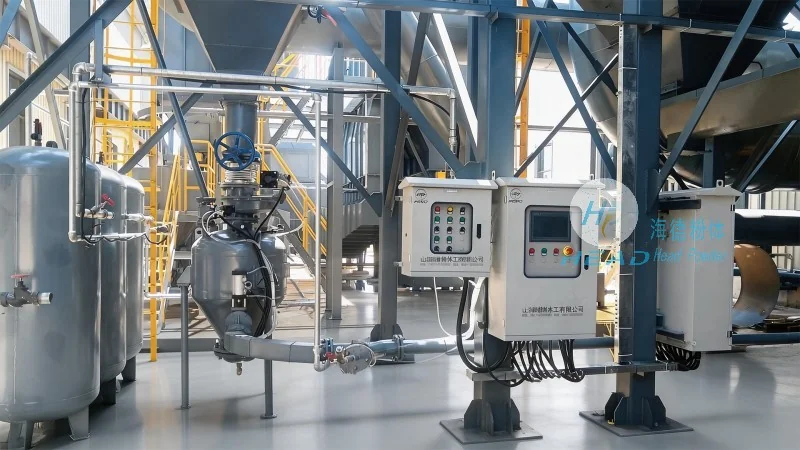
The cement raw material pneumatic conveying system typically comprises several core components that work in concert to ensure efficient material transport. The primary equipment includes the material feeding unit, the conveying pipeline network, the air supply system, and the control and monitoring devices. Each component plays a critical role in maintaining the system's performance and reliability.
Firstly, the material feeding unit is responsible for introducing raw materials such as limestone, clay, and iron ore into the system. This unit often features a hopper with a rotary valve or a screw feeder to regulate the flow of bulk materials. The design of the feeding mechanism is crucial to prevent material bridging and ensure a consistent feed rate, which directly impacts the overall conveying efficiency.
Secondly, the conveying pipeline network forms the backbone of the system, transporting the raw materials from the feeding point to the cement mill or other processing units. The pipelines are usually made of stainless steel or high-grade carbon steel, selected for their durability and resistance to corrosion from the cement raw materials. The pipeline layout, including the number of bends, vertical and horizontal runs, and the use of expansion joints, is carefully engineered to minimize pressure losses and prevent material deposition.
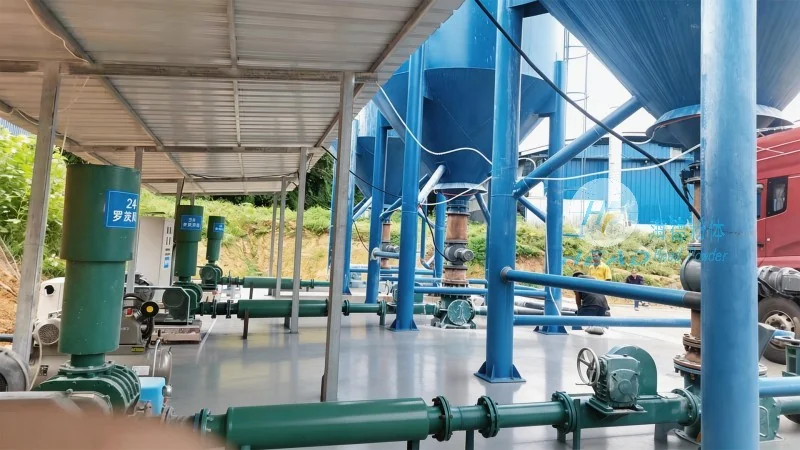
Thirdly, the air supply system provides the necessary airflow to create the pneumatic conveying effect. This system consists of a blower or a positive displacement pump, air filters, and pressure regulators. The air flow rate and pressure are precisely controlled to match the material's properties and the system's design requirements. Proper air filtration is essential to prevent dust contamination and maintain the equipment's longevity.
Finally, the control and monitoring devices ensure the system operates safely and efficiently. These may include pressure sensors, flow meters, and a programmable logic controller (PLC) that monitors key parameters and adjusts the system's operation in real-time. The integration of these controls allows for automated operation, reducing human intervention and enhancing operational safety.
Structural Principles of Pneumatic Conveying for Cement Raw Materials
The structural principles of cement raw material pneumatic conveying are based on the fundamental physics of fluid dynamics and particle transport. The system operates by creating a high-velocity air stream within the pipeline, which lifts and transports the raw materials through the conveying line. This process can be categorized into two main types: dilute-phase and dense-phase conveying, each with distinct structural characteristics and applications.
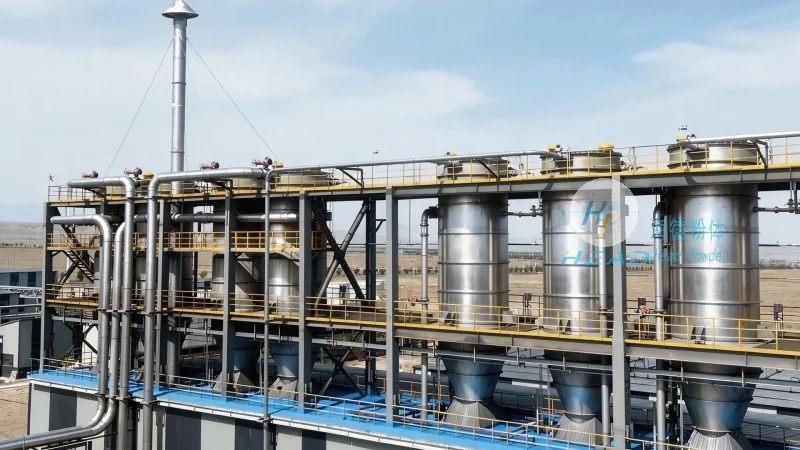
In dilute-phase pneumatic conveying, the material is suspended in the air stream as individual particles, with a low solid-to-gas ratio. This method is suitable for short to medium-distance transport and requires higher air velocities to maintain particle suspension. The structural design of dilute-phase systems focuses on minimizing pressure drops and ensuring sufficient air flow to keep the particles airborne. The pipeline diameter is typically larger to accommodate the higher air volume, and the system often includes cyclone separators at the receiving end to separate the material from the air.
Conversely, dense-phase pneumatic conveying operates at a higher solid-to-gas ratio, where the material forms a dense plug within the pipeline. This method is ideal for long-distance transport and applications where material degradation or product quality must be preserved. The structural design of dense-phase systems involves lower air velocities and higher pressure, allowing the material to move in a more controlled manner. The pipeline diameter is generally smaller, and the system may incorporate pressure vessels or surge tanks to manage the material flow and prevent blockages.
Both conveying methods rely on the interaction between the air flow and the material particles. The structural design must account for factors such as particle size, density, and moisture content, as these properties influence the system's performance. For example, fine particles may require higher air velocities to remain suspended, while larger or heavier particles may need denser-phase conditions to ensure stable transport. The integration of these design considerations ensures the system's structural integrity and operational efficiency.
Operational Advantages and Applications
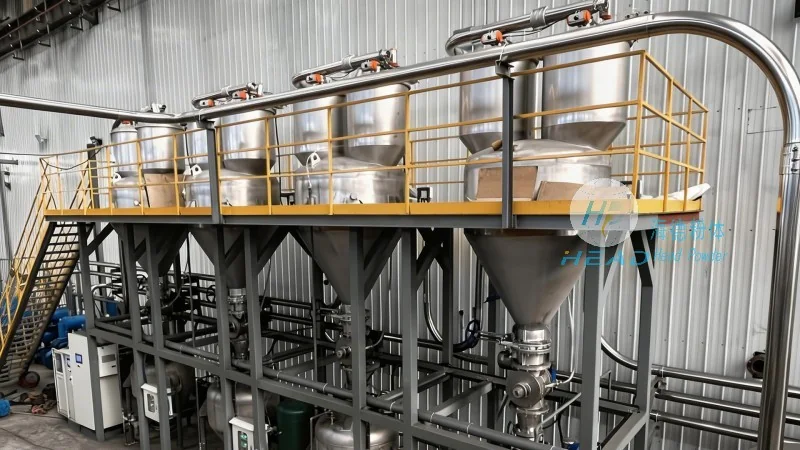
The cement raw material pneumatic conveying system offers several operational advantages over traditional mechanical conveying methods. One of the primary benefits is the ability to transport materials over long distances without the need for intermediate storage or transfer points. This reduces the risk of material contamination and minimizes the space required for storage facilities. Additionally, pneumatic conveying systems are less prone to material blockages and can handle a wide range of raw materials, including those with high moisture content or abrasive properties.
Another key advantage is the improved safety and hygiene. Unlike mechanical systems that may involve moving parts and open hoppers, pneumatic conveying operates in enclosed pipelines, reducing dust emissions and the risk of accidents. The system also allows for better control over material flow, enabling precise dosing and reducing waste. These advantages make the pneumatic conveying system a preferred choice for modern cement production facilities.
HeadPowder's expertise in designing and implementing such systems has enabled the company to serve numerous cement plants across China. The company's engineers leverage advanced computational fluid dynamics (CFD) and simulation tools to optimize the system's design, ensuring that each project meets the specific requirements of the client. By focusing on the structural principles and operational efficiency, HeadPowder delivers reliable and cost-effective solutions for cement raw material handling.




