HeadPowder, a leading manufacturer based in Shandong, China, specializes in the design, production, and supply of advanced dust-free powder pneumatic conveying machines. This article provides a detailed overview of the operation process and working principle of such equipment, highlighting the key components and mechanisms that enable efficient and clean material handling.
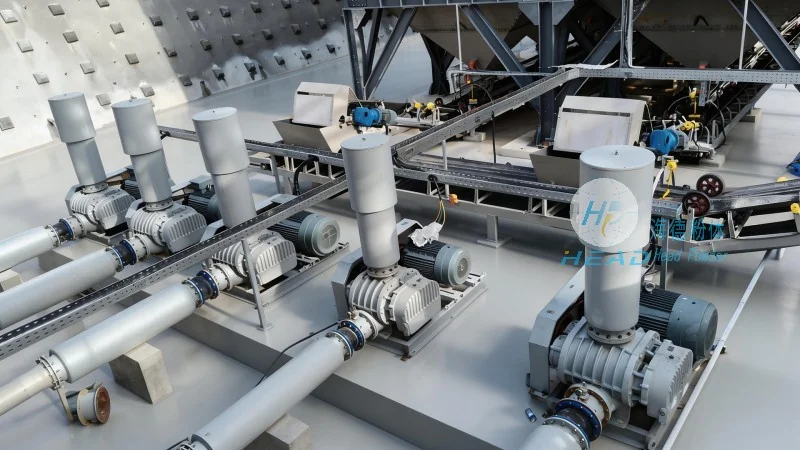
Key Components of the Dust-Free Powder Pneumatic Conveying System
The dust-free powder pneumatic conveying machine typically consists of several critical components that work in concert to achieve efficient material transport. These include the hopper, which serves as the storage and feeding unit; the air compressor or blower, responsible for generating the necessary air pressure; the conveying line, which can be either positive or negative pressure depending on the system design; and the receiver or discharge hopper, where the material is deposited. Each component plays a vital role in ensuring the smooth and dust-free operation of the system.
Operation Process of the Dust-Free Powder Pneumatic Conveying Machine
The operation process of a dust-free powder pneumatic conveying machine involves several sequential steps. Initially, the material is fed into the hopper from the storage silo or bulk container. The air compressor then starts, generating a flow of air that creates a negative pressure inside the conveying line. This negative pressure draws the powder material from the hopper into the line. As the material travels through the conveying line, it is mixed with the air stream, forming a slurry or suspension. The material is then transported to the receiver hopper, where the air is separated from the powder through a cyclone or filter system. The separated air is typically recirculated back to the blower, while the powder is collected in the receiver hopper. The entire process is designed to minimize dust generation and ensure a clean, efficient transfer of the powder material.
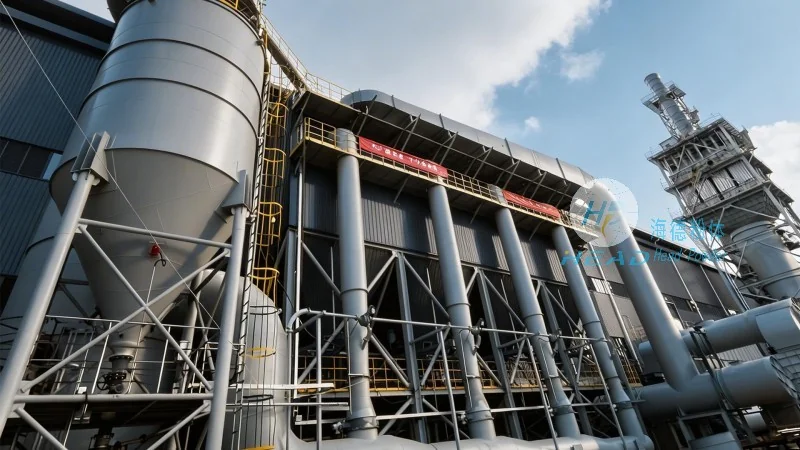
Working Principle of the Dust-Free Powder Pneumatic Conveying Machine
The working principle of the dust-free powder pneumatic conveying machine is based on the principles of fluid dynamics and particle transport. The system operates by using compressed air to create a flow that moves the powder particles through the conveying line. In a positive pressure system, the air compressor pushes air into the conveying line, forcing the powder material to move forward. In a negative pressure (or suction) system, the air is drawn from the conveying line, creating a vacuum that pulls the powder into the line. The choice between positive and negative pressure depends on factors such as the material's properties, the distance to be conveyed, and the system's design. The key is to maintain a consistent air flow and pressure to ensure the material is transported without clogging or degradation.
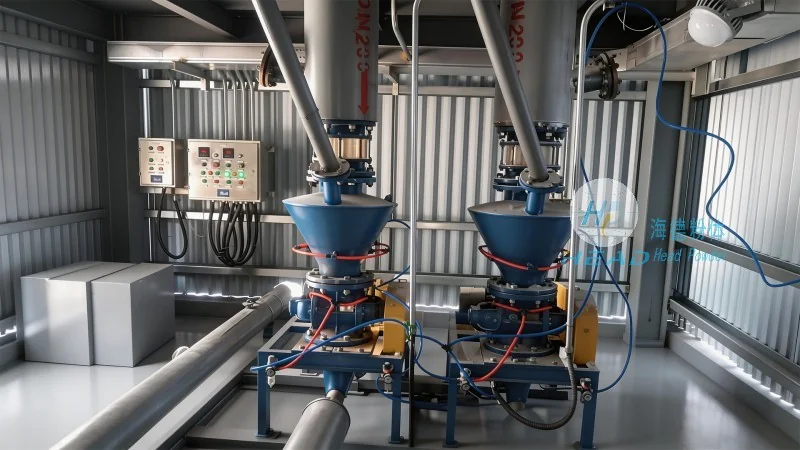
Advantages of Dust-Free Powder Pneumatic Conveying Machines
Dust-free powder pneumatic conveying machines offer several advantages over traditional mechanical conveying systems. Firstly, they eliminate the need for moving parts in the conveying line, reducing maintenance requirements and the risk of material contamination. Secondly, the system is highly efficient in terms of energy consumption, as the air can be recirculated, minimizing waste. Thirdly, the dust-free operation ensures a safer working environment and compliance with environmental regulations. Additionally, the flexibility of the system allows for easy integration with existing production lines and the ability to transport materials over long distances without the need for intermediate storage.
HeadPowder's dust-free powder pneumatic conveying machines are engineered to meet the highest standards of efficiency, safety, and reliability. By understanding the operation process and working principle, users can appreciate the advanced technology behind these systems and how they contribute to improved material handling in various industries. Whether for pharmaceuticals, food processing, or chemical applications, these machines provide a reliable solution for transporting powders with precision and minimal environmental impact.




