Desulfurization gypsum, a byproduct of flue gas desulfurization in power plants and industrial facilities, is often handled as a fine powder. The efficient transportation of this powder is crucial for downstream processing and storage. Pneumatic conveying, a method that uses air to transport solid particles, offers a reliable solution for handling desulfurization gypsum powder. This article explores the operation process and working principle of pneumatic conveying systems specifically designed for desulfurization gypsum powder, highlighting key components, operational steps, and the benefits of this technology.
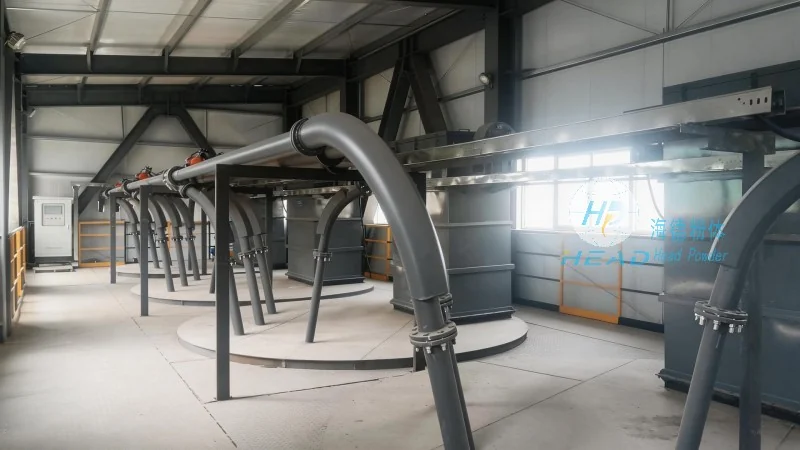
Company Overview: Shandong HeadPowder Engineering Co., Ltd.
Shandong HeadPowder Engineering Co., Ltd., commonly known as HeadPowder, is a leading provider of engineering solutions for powder handling and processing. With a focus on innovative technologies and customer-centric designs, HeadPowder specializes in developing pneumatic conveying systems tailored to the unique characteristics of industrial powders, including desulfurization gypsum. The company’s headquarters is located in Shandong, China, where it leverages local expertise and resources to deliver high-quality, reliable equipment and services.
Key Components of Pneumatic Conveying Systems for Desulfurization Gypsum
The pneumatic conveying system for desulfurization gypsum powder typically consists of several critical components that work in tandem to ensure efficient material transport. These components include the hopper or feeder, the conveying line (often with multiple sections), the air compressor or blower, and the dust collector or filter system. The hopper is designed to store and feed the gypsum powder into the system, ensuring a consistent flow rate. The conveying line, which may be of the dilute-phase or dense-phase type depending on the application, uses compressed air to move the powder through the pipeline. The air compressor provides the necessary pressure and volume of air to propel the particles. Finally, the dust collector ensures that any airborne particles are captured and returned to the system or disposed of safely, maintaining air quality and system efficiency.
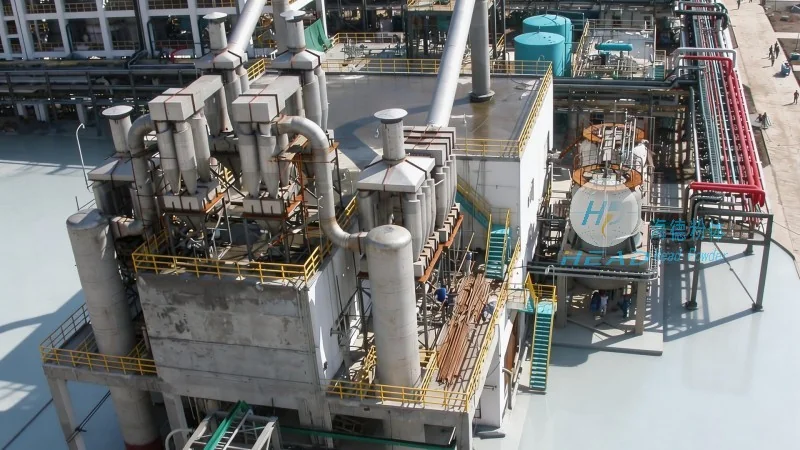
Operation Process of Desulfurization Gypsum Powder Pneumatic Conveying
The operation process of a pneumatic conveying system for desulfurization gypsum powder involves several sequential steps that ensure smooth and continuous material transport. First, the desulfurization gypsum powder is stored in the hopper. The feeder then regulates the flow of powder into the conveying line, controlling the rate at which material is introduced. Simultaneously, the air compressor generates compressed air, which is introduced into the conveying line at a specific pressure and flow rate. The compressed air creates a flow that carries the gypsum powder particles through the pipeline. As the powder travels, it may encounter sections of the line that adjust the air-to-particle ratio, such as expansion or contraction sections, to maintain optimal conveying conditions. The system may also include a receiver or storage tank at the end of the line, where the transported gypsum powder is collected for further processing or storage. Throughout the process, the dust collector continuously operates to capture any particles that escape from the system, preventing air pollution and ensuring compliance with environmental regulations.
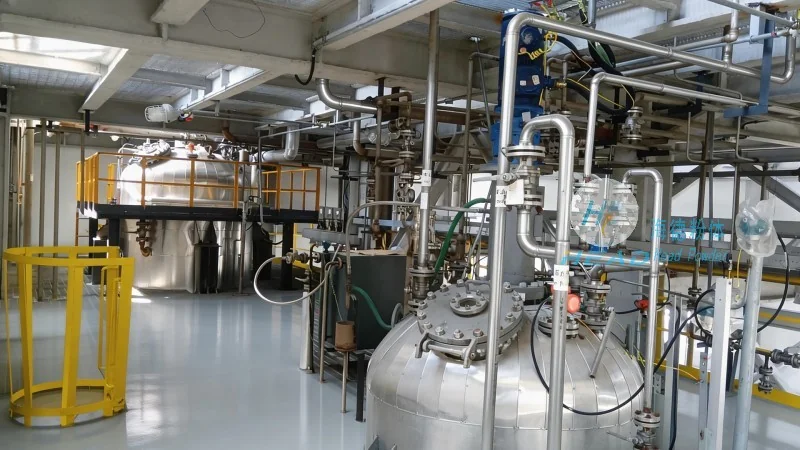
Working Principle of Pneumatic Conveying for Desulfurization Gypsum
The working principle of pneumatic conveying for desulfurization gypsum powder is based on the interaction between solid particles and a moving air stream. In a dilute-phase system, the powder is suspended in the air as it travels through the pipeline, with the air velocity exceeding the terminal velocity of the particles. This allows the particles to be carried efficiently over long distances with minimal pressure drop. In a dense-phase system, the air-to-particle ratio is lower, and the particles move in a more compact manner, often with the aid of pulse or rotary valves to control the flow. The key to effective conveying is maintaining the correct air velocity and pressure to ensure that the particles remain entrained in the air stream without settling or clogging the pipeline. The system’s design, including the size and configuration of the conveying line, the type of air compressor, and the hopper design, all contribute to achieving optimal conveying performance for desulfurization gypsum powder, which has specific properties such as particle size distribution, moisture content, and density.
Benefits and Applications of Pneumatic Conveying for Desulfurization Gypsum
Pneumatic conveying systems for desulfurization gypsum powder offer several advantages over traditional methods like belt conveyors or bucket elevators. These systems are highly flexible, allowing for the transport of powder over long distances or through complex layouts without the need for multiple transfer points. They also provide a dust-free environment, which is critical for maintaining air quality and worker safety in industrial settings. Additionally, pneumatic conveying can handle powders with varying properties, including those with high moisture content or abrasive characteristics, which may be challenging for other transport methods. The technology is widely used in the power generation industry for transporting desulfurization gypsum from the flue gas desulfurization (FGD) system to storage facilities or for use in cement production as a raw material. The efficiency and reliability of pneumatic conveying make it an essential component of modern industrial operations that handle large volumes of fine powders.




