When it comes to handling dry yeast in industrial settings, selecting the right conveying method is crucial for efficiency, cost-effectiveness, and product quality. The choice of conveying system can significantly impact production processes, especially in industries like brewing, baking, and food processing where dry yeast is a key ingredient. This article provides an in-depth comparison of common dry yeast conveying methods, examining their advantages and disadvantages to help businesses make informed decisions.
Introduction to Dry Yeast Conveying Methods
Dry yeast, often used in fermentation processes, requires careful handling to maintain its viability and quality. Conveying dry yeast involves transporting it from storage to processing equipment without compromising its performance. The primary methods used in industry include screw conveyors, pneumatic (air) conveying systems, and pump-based solutions. Each method has its own set of benefits and limitations, which are discussed below.
Screw Conveyors: A Traditional and Reliable Option
Screw conveyors, also known as auger conveyors, are among the most common and traditional methods for transporting dry yeast. These systems consist of a rotating screw (auger) inside a cylindrical tube, which moves the material forward through the tube. The screw conveyor is a closed system, which helps prevent contamination and dust dispersion. For dry yeast, screw conveyors are particularly effective because they can handle bulk materials without the need for additional air or power beyond the motor driving the screw.
The advantages of screw conveyors include their simplicity, low maintenance, and ability to operate in a vertical or horizontal configuration. They are ideal for short to medium distances and can handle a wide range of dry materials, including yeast, without causing degradation. Additionally, screw conveyors are relatively inexpensive to install and maintain, making them a cost-effective solution for many businesses.
However, screw conveyors have some drawbacks. They are not suitable for long-distance transport due to the friction and wear on the screw and tube. The system can also be prone to clogging if the yeast is not properly conditioned or if the material is too fine. Moreover, screw conveyors may not be the best choice for high-volume applications, as the speed and capacity are limited compared to other methods. Another consideration is that the system generates heat due to friction, which can affect the temperature-sensitive nature of dry yeast.
Pneumatic Conveying Systems: Efficient and Flexible
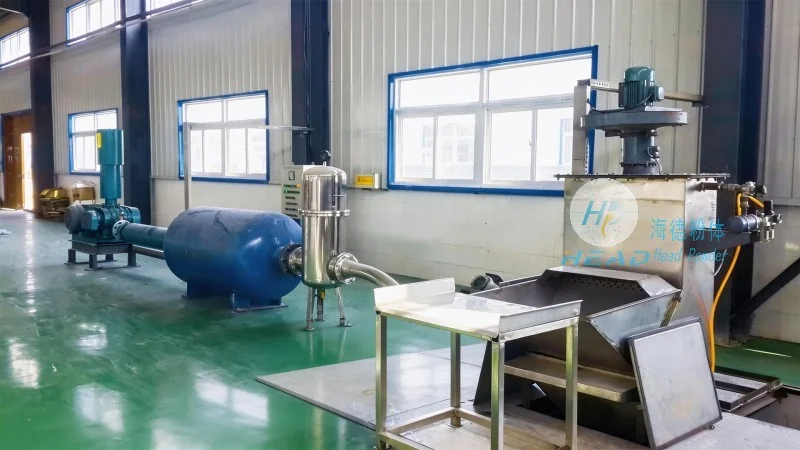
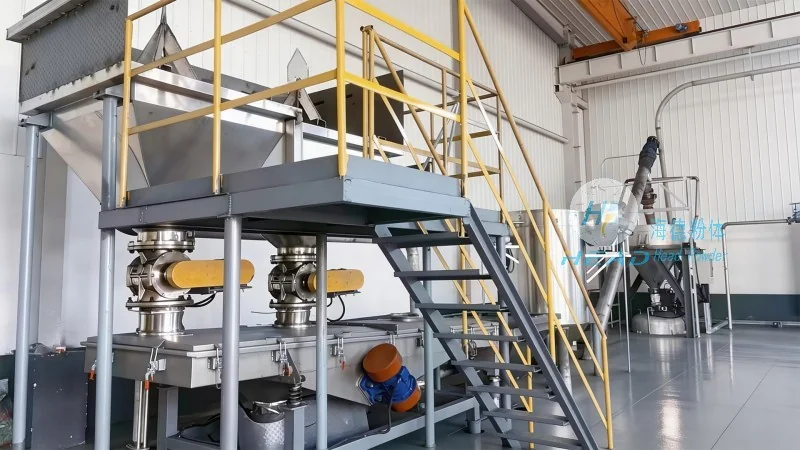
Pneumatic conveying, or air conveying, uses compressed air to transport dry yeast through a pipeline. This method is highly flexible and can be used for both short and long distances, making it suitable for various industrial applications. There are two main types of pneumatic conveying systems: dilute-phase and dense-phase. Dilute-phase systems use low air pressure and high air velocity to move the material, while dense-phase systems use higher pressure to create a more concentrated flow of material.
For dry yeast, dilute-phase pneumatic conveying is often preferred because it can handle fine powders without clogging the system. The system is also capable of transporting yeast over long distances, up to several hundred meters, with minimal loss of material. Another advantage is that the system can be integrated with other processing equipment, such as mixers or reactors, allowing for a seamless flow of materials.
However, pneumatic conveying has its own set of challenges. The system requires a significant amount of compressed air, which increases energy consumption and operating costs. The equipment is also more complex and expensive to install compared to screw conveyors. Additionally, the system can be susceptible to dust explosions if proper safety measures are not in place. Another drawback is that the high air velocity can cause wear on the pipeline and components, leading to increased maintenance costs over time.
Pump-Based Conveying: High-Volume and Uniform Flow
Pump-based conveying systems, such as positive displacement pumps or centrifugal pumps, are used for transporting dry yeast in slurry or suspension form. These systems are particularly effective for high-volume applications where a consistent flow rate is required. The pump can be used to move the yeast through pipelines or directly into processing equipment, ensuring a uniform and controlled delivery.
The main advantage of pump-based systems is their ability to handle high volumes of material with consistent flow rates. This makes them ideal for large-scale production lines where a steady supply of yeast is needed. Additionally, the system can be easily integrated with control systems to monitor and adjust the flow rate as needed. The pumps are also relatively compact and can be installed in tight spaces, making them suitable for facilities with limited floor space.
However, pump-based conveying has some limitations. The system requires a liquid carrier, such as water or a solution, to transport the yeast, which adds an extra step in the process and increases the risk of contamination. The pumps can also be prone to clogging if the yeast is not properly pre-treated or if the liquid carrier is not properly maintained. Another consideration is that the system may not be suitable for transporting dry yeast in its pure form, as the liquid carrier can affect the yeast's viability and quality. Furthermore, the pumps require regular maintenance to prevent wear and tear, which can increase operational costs.
Choosing the Right Conveying Method for Your Business
When selecting a dry yeast conveying method, businesses must consider several factors, including the distance of transport, the volume of material, the required flow rate, and the budget. Screw conveyors are a good choice for short distances and low to medium volumes, while pneumatic conveying is ideal for long distances and fine powders. Pump-based systems are best for high-volume applications where a consistent flow is needed.
It is also important to consider the specific characteristics of the dry yeast being used. For example, if the yeast is sensitive to temperature or moisture, a system that minimizes heat generation and exposure to air may be preferred. Additionally, the system should be designed to prevent contamination and dust dispersion, as these can affect the quality of the final product.
Shandong HeadPowder Engineering Co., Ltd., a leading manufacturer of dry yeast processing equipment, offers a range of conveying solutions tailored to meet the needs of different industries. With years of experience in the field, the company provides high-quality, reliable systems that are designed to enhance efficiency and product quality. Whether you need a screw conveyor, pneumatic system, or pump-based solution, HeadPowder Engineering can provide the right equipment to meet your business requirements.




