

Operation Process and Working Principle of Polycrystalline Silicon Powder Pneumatic Conveying
Polycrystalline silicon powder pneumatic conveying is a critical technology in the material handling and processing industry, particularly for handling fine powders like polycrystalline silicon. This method involves transporting solid particles through a pipeline using a gas stream, typically air or other suitable gases. The process is essential for efficient and safe material transport in various industrial applications, including the semiconductor and solar energy sectors where polycrystalline silicon is a key raw material.
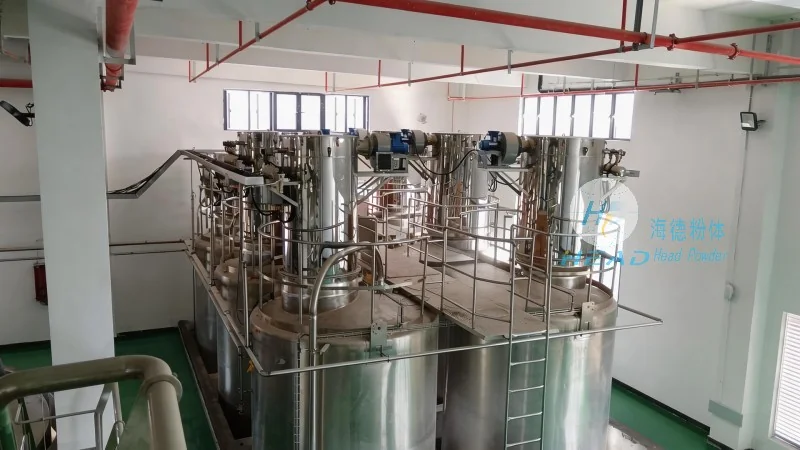
Company Profile and Expertise
HeadPowder, a leading provider in the field, specializes in engineering solutions for pneumatic conveying systems. As Shandong HeadPowder Engineering Co., Ltd., the company has established itself as a trusted partner for businesses requiring reliable and efficient material handling solutions. With a focus on innovation and precision, HeadPowder designs and implements systems tailored to the unique needs of each client, ensuring optimal performance and safety in polycrystalline silicon powder handling operations.
The Working Principle of Pneumatic Conveying
The core of polycrystalline silicon powder pneumatic conveying lies in the interaction between the solid particles and the gas stream. In a typical system, the powder is introduced into a conveying line, and a high-velocity gas (usually air) is supplied to create a flow that entrains the particles. The gas flow overcomes the gravitational and frictional forces acting on the powder, allowing it to be transported through the pipeline. This process can be categorized into different modes, such as dilute phase and dense phase conveying, each with its own advantages and applications depending on the material properties and system requirements.
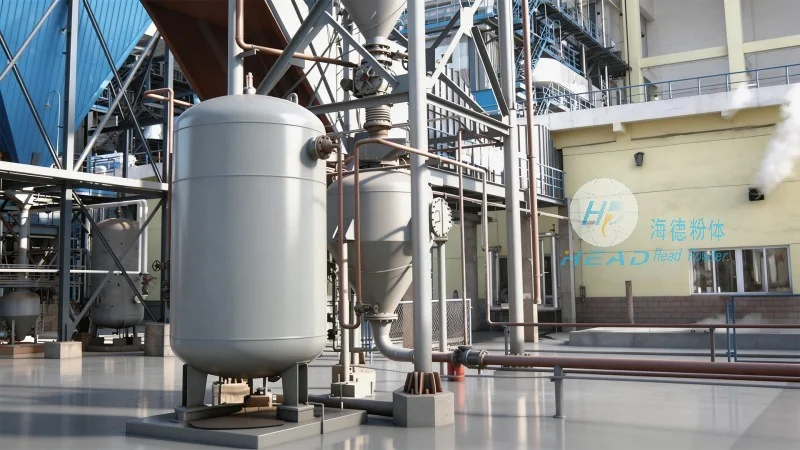
Operation Process of Polycrystalline Silicon Powder Pneumatic Conveying
The operation process of polycrystalline silicon powder pneumatic conveying involves several key steps. First, the polycrystalline silicon powder is fed into the conveying system, often using a hopper or feeder that ensures a consistent flow rate. The gas is then introduced into the system, typically at a pressure higher than atmospheric, to create the necessary flow velocity. As the powder is entrained by the gas, it travels through the pipeline to the destination point, such as a storage silo or processing unit. The system may include components like cyclones, filters, and pressure vessels to manage the powder and gas separation, ensuring that the material is delivered efficiently and without loss or contamination.
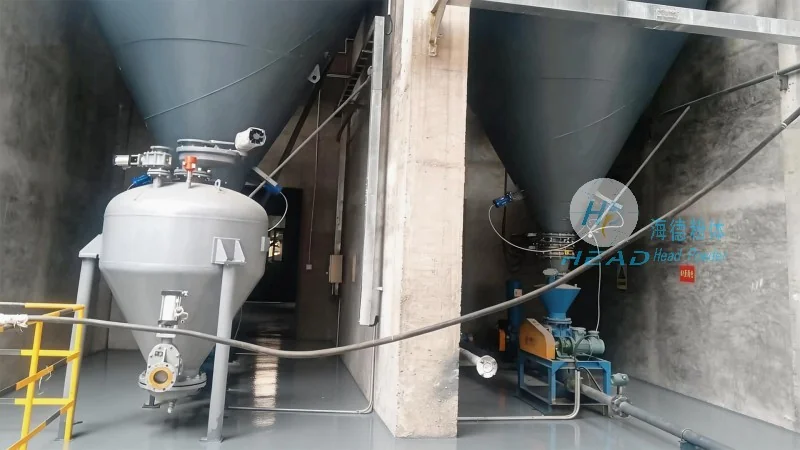
Key Components and System Design
Effective polycrystalline silicon powder pneumatic conveying systems rely on a combination of specialized components. These include feeders for consistent material input, gas compressors or blowers to generate the necessary air flow, pipelines with appropriate diameters and materials to withstand the pressure and particle abrasion, and separation devices like cyclones or bag filters to separate the powder from the gas. The design of the system must consider factors such as the particle size, density, and moisture content of the polycrystalline silicon, as well as the required conveying distance and flow rate. HeadPowder engineers carefully evaluate these parameters to design a system that maximizes efficiency, minimizes energy consumption, and ensures long-term reliability.
Advantages and Applications
Pneumatic conveying offers several advantages for polycrystalline silicon powder handling. Unlike mechanical conveying methods, it eliminates the need for moving parts in contact with the powder, reducing wear and maintenance costs. The system is also flexible, allowing for changes in flow rate and direction without significant modifications. Additionally, it provides better control over the material's environment, preventing contamination and dust emissions. These benefits make pneumatic conveying ideal for applications in the semiconductor industry, where high-purity polycrystalline silicon is required, as well as in solar panel manufacturing, where efficient material transport is crucial for production efficiency.