

Advantages and Disadvantages of Negative Pressure and Positive Pressure Pneumatic Conveying for Mang
When it comes to the pneumatic conveying of manganese sulfate, selecting the appropriate system is critical for optimizing efficiency, reducing operational costs, and ensuring safety. Two primary methods dominate the industry: negative pressure (suction) conveying and positive pressure (pressure) conveying. Each approach presents distinct advantages and drawbacks, which can significantly influence the overall performance of the material handling process. This article provides a comprehensive comparison of these two systems, focusing on their applications, benefits, and potential limitations in the context of manganese sulfate transportation.
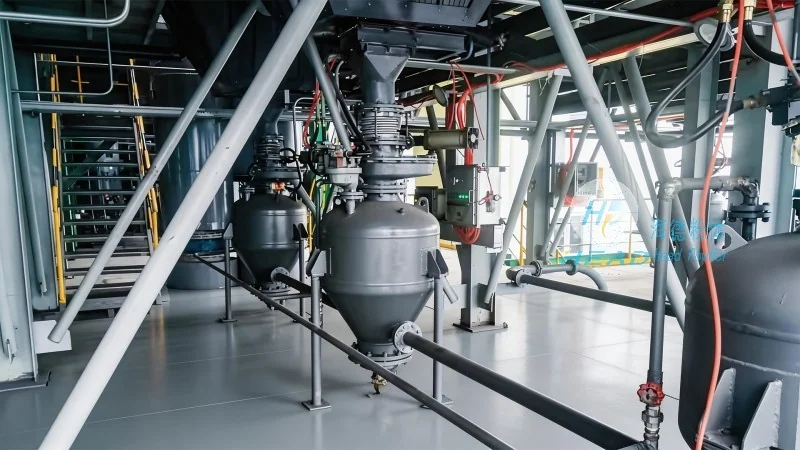
Introduction to Pneumatic Conveying Systems
Pneumatic conveying is a widely used technique for transporting bulk materials, such as powders and granules, through pipelines using air or gas as the conveying medium. It is employed across various industries, including chemical processing, food processing, and mining, due to its versatility and ability to handle diverse materials. The two main types of pneumatic conveying systems are negative pressure (suction) and positive pressure (pressure) systems. Understanding the differences between these systems is essential for choosing the most suitable option for a specific application.
Company Profile: Shandong HeadPowder Engineering Co., Ltd.
Shandong HeadPowder Engineering Co., Ltd., commonly known as HeadPowder, is a leading provider of advanced pneumatic conveying solutions. Headquartered in Shandong, China, the company specializes in designing, manufacturing, and installing customized conveying systems tailored to the unique needs of clients worldwide. HeadPowder's expertise lies in optimizing material handling processes, ensuring high efficiency, and minimizing long-term operational expenses for industrial applications.
Negative Pressure (Suction) Pneumatic Conveying
Negative pressure conveying, also referred to as suction conveying, operates by creating a vacuum within the conveying line to draw material from the source into the system. This method is particularly effective for applications where material needs to be transported from a higher elevation to a lower one or when multiple collection points need to be consolidated into a single destination. A key advantage of negative pressure systems is their low energy consumption compared to positive pressure counterparts. The system relies on a fan or blower to generate a vacuum, requiring less power to operate and resulting in lower operational costs.
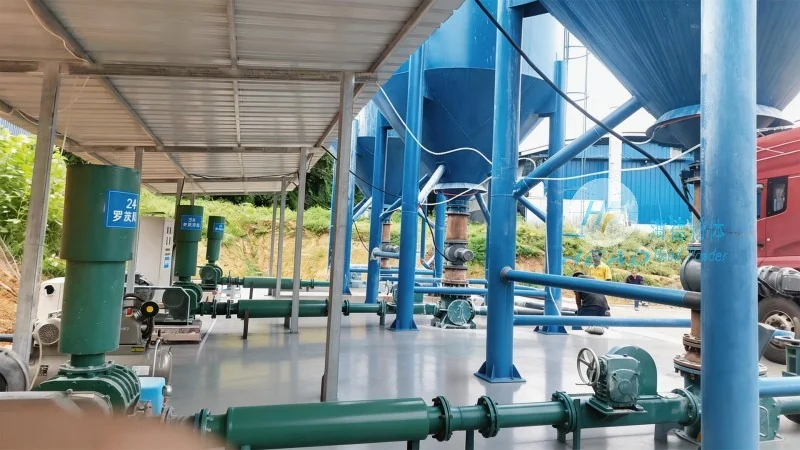
Another significant benefit is their suitability for handling materials sensitive to dust or requiring a clean environment. Since the system draws material into the pipeline rather than expelling it, it minimizes exposure to external contaminants and reduces the risk of material degradation. However, negative pressure conveying has notable limitations. The primary constraint is its limited conveying distance and capacity. The vacuum created by the system can only effectively transport material over short distances, typically up to a few hundred meters, making it unsuitable for long-distance transport. Additionally, the high-speed air flow can cause abrasion or attrition of material particles, potentially degrading the material's properties. Furthermore, negative pressure systems are more prone to clogging, especially when handling materials with high moisture content or fine particles, as the vacuum can cause material to stick to pipeline walls.
Positive Pressure (Pressure) Pneumatic Conveying
Positive pressure conveying, or pressure conveying, functions by forcing air or gas through the conveying line under pressure, pushing material from the source to the destination. This method is ideal for long-distance transport, high material volumes, or when material needs to be conveyed from a lower to a higher elevation. The primary advantage of positive pressure systems is their ability to handle extended distances and high capacities efficiently. The high pressure generated by the system allows for transportation over several kilometers, making it suitable for large-scale operations.
Another key benefit is its capability to handle a wide range of materials, including abrasive or corrosive substances. The high pressure ensures the material remains fully enclosed within the pipeline, preventing contact with the environment and reducing contamination risks. Positive pressure systems are also generally more reliable and less prone to clogging compared to negative pressure systems, as the high pressure helps maintain material movement and prevents sticking to pipeline walls.
Nevertheless, positive pressure conveying has its own drawbacks. The most significant limitation is higher energy consumption compared to negative pressure systems. The system requires a powerful blower or compressor to generate the necessary pressure, leading to increased operational costs. Another disadvantage is the potential for material degradation due to high pressure and temperature conditions, which can cause breakdown or loss of material properties. Additionally, positive pressure systems are more complex and require more maintenance, as high-pressure components are more susceptible to wear and tear.
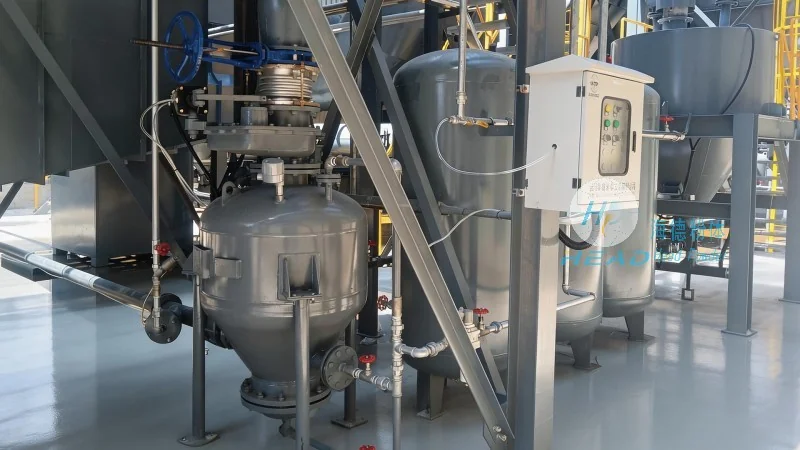
Comparison of Negative Pressure vs. Positive Pressure Conveying for Manganese Sulfate
When considering the pneumatic conveying of manganese sulfate, the choice between negative and positive pressure systems depends on factors such as distance, material characteristics, and operational requirements. Manganese sulfate is a fine powder with relatively high moisture content, making it sensitive to handling conditions. Negative pressure systems are generally more suitable for short-distance transport or when handling in a clean environment is required, as they minimize dust exposure and reduce material degradation risks. Conversely, for long-distance transport or high-capacity applications, positive pressure systems are more appropriate due to their higher capacity and reliability.
HeadPowder, with its extensive experience in pneumatic conveying systems, offers customized solutions tailored to manganese sulfate handling needs. The company's engineers assess operational requirements, material properties, and site conditions to recommend the most effective conveying system. Whether a negative or positive pressure system is selected, HeadPowder ensures the system meets high standards of efficiency, safety, and durability.
Conclusion
In summary, both negative pressure and positive pressure pneumatic conveying systems have distinct advantages and disadvantages for manganese sulfate handling. Negative pressure systems excel in short-distance transport and clean environments, while positive pressure systems are better suited for long-distance and high-capacity applications. The optimal choice depends on specific operational needs. By understanding system characteristics and consulting with experts like HeadPowder, industries can select the most effective and cost-efficient conveying solution for their manganese sulfate material handling requirements.