

How to Prevent Pipeline Blockages in Pneumatic Conveying Systems for Pharmaceutical Particle Transpo
In the pharmaceutical industry, pneumatic conveying systems are critical for efficiently and hygienically transporting drug particles. However, pipeline blockages are a common challenge that impacts operational efficiency. To ensure stable system performance and product quality, understanding and applying key design parameters is essential. This article explores how to effectively prevent blockages and analyzes core design factors influencing pneumatic conveying system performance.
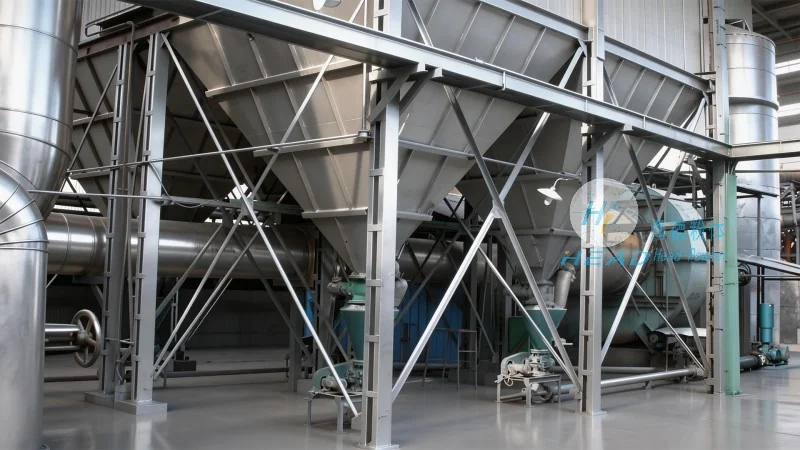
Understanding Pneumatic Conveying Systems in Pharmaceutical Applications
Pneumatic conveying systems are widely used in the pharmaceutical sector to move powders and granules with precision while minimizing contamination risks. These systems rely on air or other gases to transport materials through pipelines, offering advantages such as reduced cross-contamination, easy integration with existing production lines, and the ability to handle sensitive or hygienic materials. Nevertheless, the nature of pharmaceutical particles—often fine, cohesive, or abrasive—can lead to blockages if the system is not properly designed or operated.
Common Causes of Pipeline Blockages in Pharmaceutical Conveying
Pipeline blockages in pharmaceutical pneumatic conveying systems stem from several factors. A primary cause is the interaction between material properties (e.g., particle size, moisture content, and flowability) and system operating conditions. For instance, if air velocity is too low, particles may settle and accumulate, leading to clogs. Additionally, moisture presence can cause agglomeration, while high particle density or irregular shapes increase friction and resistance within the pipeline. Another critical factor is system pressure and flow rate; improper balancing can result in uneven material distribution and localized blockages.
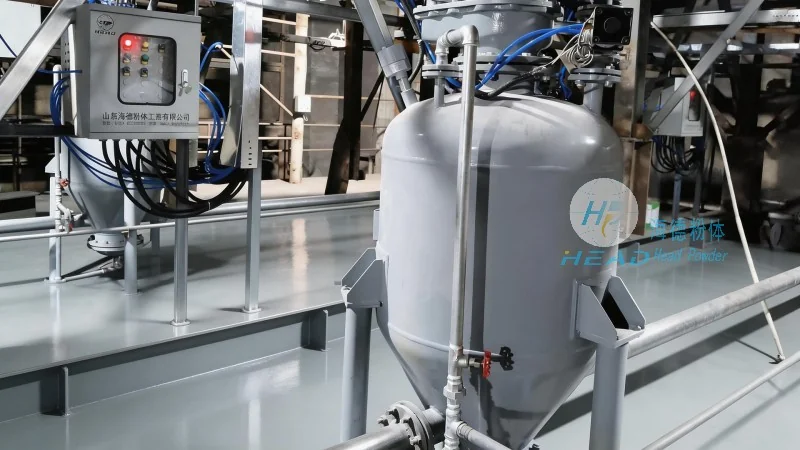
Key Design Parameters to Prevent Blockages
To mitigate blockage risks, several key design parameters must be carefully considered and optimized. The first is system pressure and air velocity. Maintaining an appropriate air velocity is crucial—it should be high enough to keep particles in suspension but low enough to avoid excessive equipment wear. For pharmaceutical powders, typical air velocities range from 20 to 30 m/s, depending on particle size and density. The second parameter is pipeline diameter and length. Larger diameters reduce friction and the likelihood of particle accumulation, while shorter pipelines minimize travel distance and settling risks. Additionally, using smooth, corrosion-resistant materials (such as stainless steel or PTFE-coated pipes) is essential to prevent material buildup and ensure easy cleaning.
Material Properties and Their Impact on Conveying
The physical and chemical properties of pharmaceutical particles significantly affect system performance. Particle size distribution, for example, influences how easily materials can be suspended in the air stream. Fine particles create more drag and are prone to agglomeration, while larger particles may require higher air velocities to remain in suspension. Moisture content is another critical factor; even small moisture levels can cause particles to stick together, leading to blockages. Thus, controlling moisture levels before conveying is essential. Furthermore, powder flowability—measured by parameters like angle of repose and compressibility—determines how easily it moves through the system. Poorly flowable materials may need pre-treatment (e.g., blending or conditioning) to improve conveying characteristics.
System Configuration and Design Strategies
The pneumatic conveying system's configuration is another critical design factor. The choice between positive pressure and negative pressure systems impacts blockage risk. Positive pressure systems (air blown into the pipeline) are generally more effective for handling cohesive or fine powders, as they maintain consistent flow and prevent material settling. Negative pressure systems may suit dust control applications but require careful air flow management to avoid suction-related issues. Additionally, appropriate fittings (bends, elbows, expansion joints) are essential. Sharp bends or narrow sections can cause particles to impact and accumulate, leading to blockages. Thus, selecting smooth, gradual bends and avoiding abrupt diameter changes is recommended.
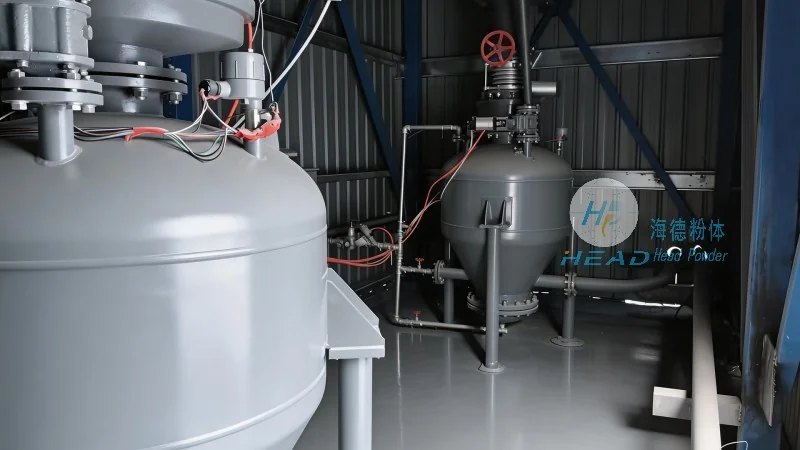
Role of HeadPowder Engineering in Addressing Blockage Issues
Shandong HeadPowder Engineering Co., Ltd., a leading provider of pneumatic conveying solutions, specializes in designing and manufacturing systems tailored to pharmaceutical challenges. With industry experience, the company understands blockage prevention importance and has developed innovative solutions. HeadPowder engineers collaborate with clients to analyze material properties and operational needs, then design customized systems optimizing air velocity, pressure, and pipeline dimensions. The company uses advanced simulation tools to model performance and predict blockage points, ensuring efficient and reliable designs. Furthermore, HeadPowder's commitment to high-quality materials and strict hygiene standards ensures systems effectively prevent blockages while meeting pharmaceutical regulatory requirements.
Conclusion: Optimizing Pneumatic Conveying for Pharmaceutical Success
Preventing pipeline blockages in pneumatic conveying systems for pharmaceutical particles is a multifaceted challenge requiring careful consideration of system design, material properties, and operational parameters. By focusing on key design parameters like air velocity, pipeline diameter, and material flowability, and leveraging companies like Shandong HeadPowder Engineering Co., Ltd., manufacturers can ensure smooth, efficient conveying operations. The result is enhanced productivity, reduced downtime, and improved product quality—critical for success in the competitive pharmaceutical industry.