Shandong HeadPowder Engineering Co., Ltd., commonly known as headpowder, is a professional engineering and equipment supplier specializing in the design, manufacturing, and installation of pneumatic conveying systems for various industrial applications. With a strong focus on caustic soda handling, the company leverages decades of experience to deliver customized solutions that meet the unique demands of clients across different industries. Headquartered in Shandong, China, headpowder combines advanced technology with rigorous engineering principles to ensure reliable and efficient material transport for caustic soda, a critical chemical widely used in chemical manufacturing, paper production, and water treatment sectors.
Importance of Pneumatic Conveying for Caustic Soda
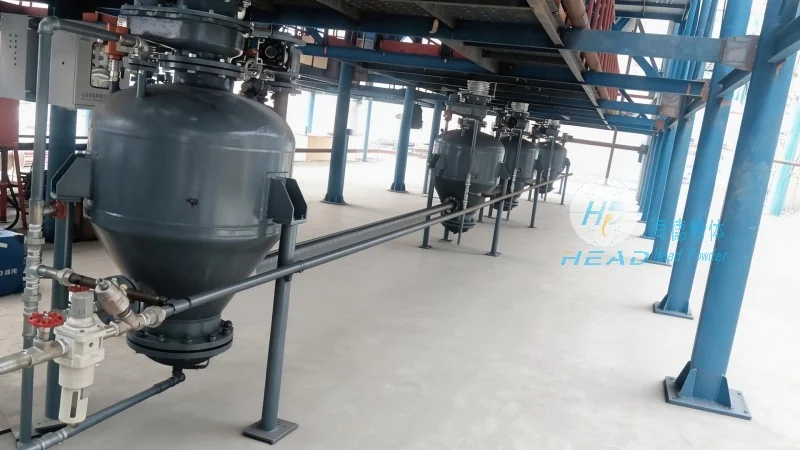
Caustic soda, or sodium hydroxide, is a highly caustic and reactive chemical that requires specialized handling to ensure safety and efficiency during transportation. Traditional methods such as belt conveyors or bucket elevators may pose challenges due to caustic soda's corrosive nature and the need for dust-free environments. Pneumatic conveying systems offer a superior alternative by utilizing air to transport caustic soda in a closed, controlled environment, minimizing exposure risks and optimizing material flow. This method is particularly advantageous for applications involving long-distance transport, multiple transfer points, or the need to maintain product purity and integrity.
Design Calculations for Caustic Soda Pneumatic Conveying Systems
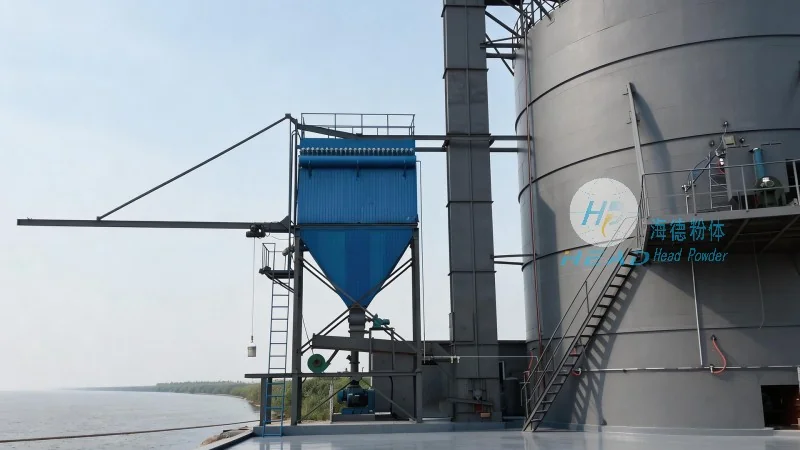
The successful implementation of a caustic soda pneumatic conveying system relies on precise design calculations that consider several critical parameters. First, the material's physical properties, including bulk density, particle size distribution, and flowability, are analyzed to determine the appropriate conveying velocity and air flow rate. Caustic soda, typically in solid form as flakes or pellets, has a bulk density ranging from 0.8 to 1.2 g/cm³, which influences the required air velocity to achieve stable transport. The design also accounts for the system's pressure drop, which is a key factor in determining energy consumption and system efficiency. Engineers at headpowder employ advanced computational fluid dynamics (CFD) and empirical formulas to calculate the optimal air velocity, ensuring that the material is conveyed without excessive pressure loss or particle degradation. Additionally, the system's capacity, which is defined by the required throughput in tons per hour, is calculated based on the client's production requirements, ensuring that the conveying system can meet current and future operational demands.
Equipment Selection and Key Components for Caustic Soda Pneumatic Conveying
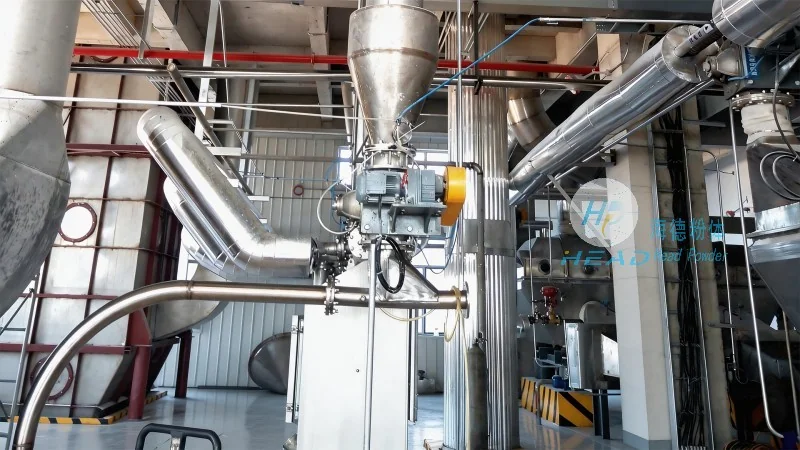
Choosing the right equipment for caustic soda pneumatic conveying is crucial to ensure long-term reliability and low maintenance costs. headpowder provides a comprehensive range of components tailored to the specific needs of caustic soda handling. The primary equipment includes the conveyor itself, which can be categorized into dilute-phase and dense-phase systems. Dilute-phase systems use low air-to-material ratios (typically 5-10:1) and are suitable for short to medium distances, while dense-phase systems employ higher air-to-material ratios (10-20:1) and are ideal for long-distance transport or when maintaining product quality is paramount. For caustic soda, dense-phase conveying is often preferred due to its ability to minimize particle breakage and maintain product integrity. Key components include the hopper and feeder, which are designed to handle the abrasive and corrosive nature of caustic soda. The hopper is typically made of stainless steel or other corrosion-resistant materials to prevent material degradation and ensure smooth flow. The feeder, such as a rotary valve or a screw feeder, regulates the material feed rate, ensuring consistent and controlled transport. The air compressor and blower are also critical components, as they provide the necessary pressure and airflow to move the caustic soda through the system. headpowder selects high-efficiency, low-noise compressors that are specifically designed for corrosive environments, ensuring reliable operation and minimal maintenance. Additionally, the system includes filters and cyclones to separate the caustic soda from the air, preventing contamination and ensuring compliance with environmental regulations. The choice of equipment is based on factors such as the system's capacity, distance, and the required level of product purity, with headpowder's engineers providing expert guidance to select the most suitable components for each application.




