

Operation Process and Working Principle of Molybdenum Oxide Pneumatic Conveying Line
Shandong HeadPowder Engineering Co., Ltd., commonly known as HeadPowder, is a leading enterprise specializing in the research, development, and manufacturing of powder engineering equipment. The company is headquartered in Shandong Province, China, dedicated to providing efficient and reliable pneumatic conveying solutions for industrial applications. This article will detail the operation process and working principle of the molybdenum oxide pneumatic conveying line, helping users fully understand the technical features and application value of the equipment.
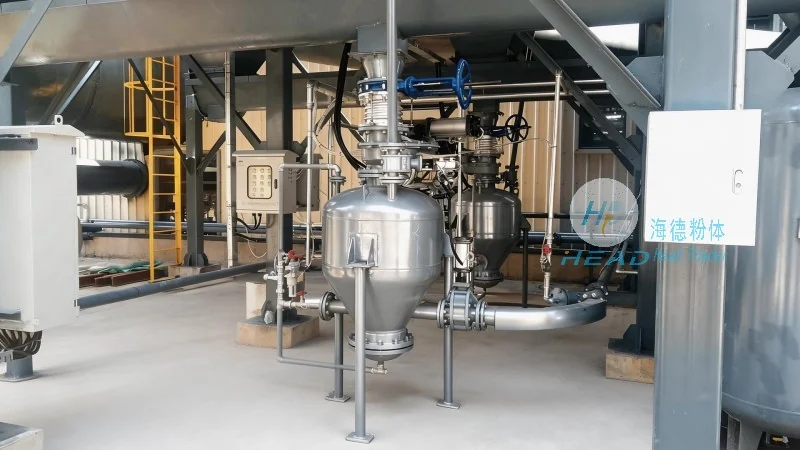
Overview of Molybdenum Oxide Pneumatic Conveying Line
Molybdenum oxide (Molybdenum Oxide, MoO₃) is an important industrial raw material widely used in the steel, chemical, and electronics industries. Traditionally, the conveying of molybdenum oxide has relied on manual or mechanical methods, which suffer from low efficiency, high labor intensity, and dust pollution issues. To address these problems, HeadPowder has developed the molybdenum oxide pneumatic conveying line, utilizing advanced pneumatic conveying technology to achieve efficient and safe material transport. The equipment employs an optimized system design based on the pneumatic conveying principle, ensuring stable transport of molybdenum oxide with minimal loss and pollution.
Operation Process of Molybdenum Oxide Pneumatic Conveying Line
The operation process of the molybdenum oxide pneumatic conveying line includes material preparation, transport, unloading, and system maintenance. Initially, the molybdenum oxide material is fed into the conveying system from a hopper or storage silo, mixed with compressed air (or inert gas) to form a gas-solid two-phase flow. Upon system start-up, a blower or roots blower provides the necessary power, propelling the material along the pipeline. During transport, the material remains in a suspended state due to the air flow velocity exceeding the particle settling velocity, preventing blockage or deposition. At the unloading point, the material is separated from the air through a unloading valve or cyclone separator for discharge. The entire operation process is highly automated, simple to operate, and capable of continuous and stable transport.
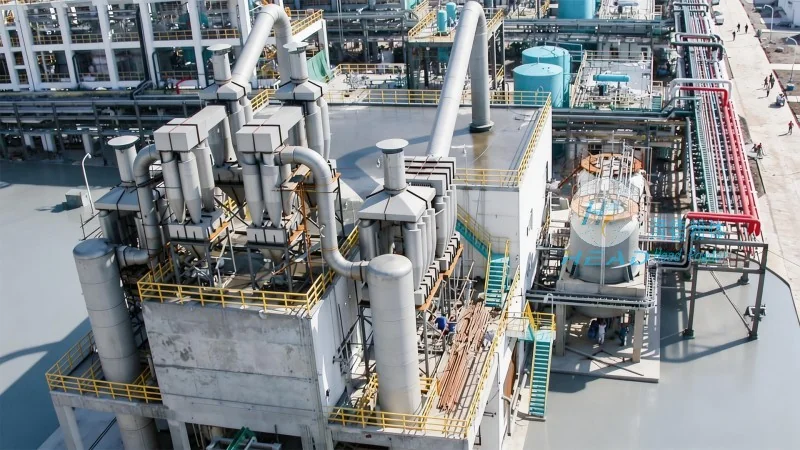
Working Principle of Molybdenum Oxide Pneumatic Conveying Line
The working principle of the molybdenum oxide pneumatic conveying line is based on the fundamental theory of pneumatic conveying, which utilizes the kinetic energy of air to suspend and transport powder materials. Specifically, the system generates high-pressure air through a fan or blower, mixing it with molybdenum oxide particles to form a gas-solid two-phase flow. Within the pipeline, the air velocity is higher than the particle settling velocity, keeping the material suspended and moving with the air flow. At the unloading point, the material settles due to gravity as the pipeline cross-section increases or air velocity decreases, separating from the air. Cyclone separators or bag filters further process the air, recovering fine particles to ensure compliance with emission standards. This principle is not only applicable to molybdenum oxide but can also be extended to other powder materials, offering broad application prospects.
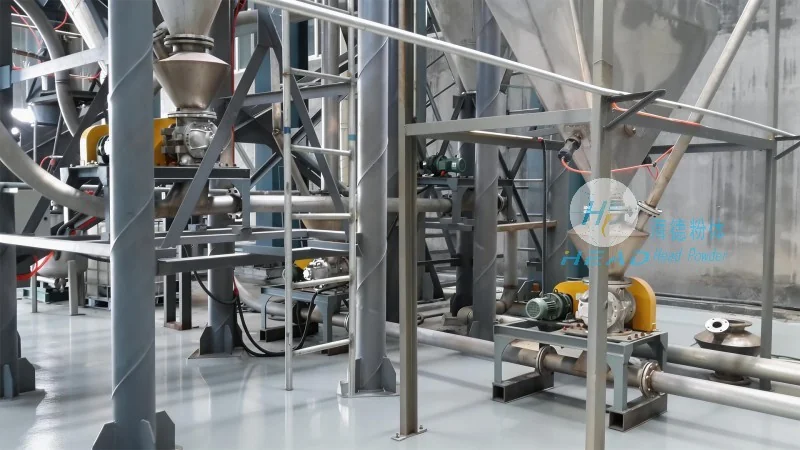
Key Components and Functions of the System
The core components of the molybdenum oxide pneumatic conveying line include a fan, hopper, conveying pipeline, unloading device, and control system. The fan provides the power required for transport, with its air volume and pressure adjusted according to material characteristics and transport distance. The hopper is used for material storage, often equipped with vibrators or screw conveyors to ensure continuous material feed into the conveying system. The conveying pipeline is made of corrosion-resistant materials such as stainless steel or plastic to accommodate the chemical properties of molybdenum oxide. The unloading device includes cyclone separators, bag filters, etc., for separating material from air and recovering fine powders. The control system monitors parameters like pressure and flow rate through sensors, enabling automatic adjustment and fault alarm to ensure stable operation.
Application Advantages and Practical Effects
Compared to traditional conveying methods, the molybdenum oxide pneumatic conveying line offers significant advantages. Firstly, it achieves dust-free transport, effectively reducing dust pollution and improving the working environment. Secondly, the system is highly automated, reducing labor costs and enhancing production efficiency. Additionally, pneumatic conveying allows precise control of material flow rate, avoiding overloading or blockage and ensuring the stability of the production process. In practical applications, the equipment has been successfully applied in the production and transport of molybdenum oxide, with positive user feedback regarding stable operation and low maintenance costs. HeadPowder, with its professional technical team and rich experience, provides customized pneumatic conveying solutions to meet the needs of different scenarios.