For industrial applications involving the handling of glass slag, efficient and reliable material transport is crucial. The glass slag pneumatic conveying line, a system designed to move glass slag particles through a pipeline using air pressure, offers a solution that minimizes contamination and ensures smooth operation. This article explores the operation process and working principle of such a system, highlighting its key components and the steps involved in its functioning. The system is typically manufactured by Shandong HeadPowder Engineering Co., Ltd., a leading provider of engineering solutions for material handling in industrial settings.
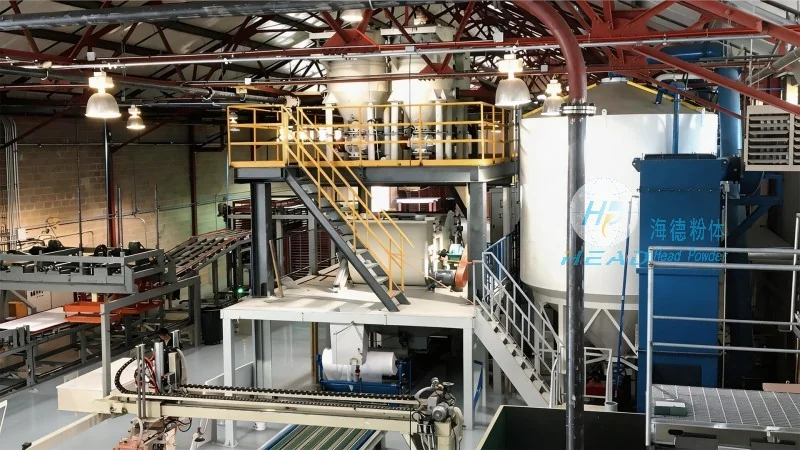
Key Components of the Glass Slag Pneumatic Conveying System
The glass slag pneumatic conveying line typically consists of several essential components that work in tandem to facilitate material transport. These include the hopper for material storage, the feeder to control the flow rate, the conveying pipeline where the material is propelled, the air compressor or blower that generates the air pressure, and the dust collector to manage airborne particles. Each component plays a vital role in ensuring the system operates efficiently and safely. The hopper is designed to hold the glass slag in a contained manner, preventing spillage and ensuring easy access for feeding. The feeder, often a rotary valve or screw feeder, regulates the flow of material into the conveying pipeline, maintaining a consistent rate to avoid overloading the system. The conveying pipeline, usually made of corrosion-resistant materials like stainless steel or plastic, is the main channel through which the glass slag and air travel. The air compressor or blower provides the necessary pressure to create the conveying airflow, with the pressure level adjusted based on the material characteristics and pipeline length. The dust collector, equipped with filters or cyclones, captures any airborne particles, preventing dust emissions and maintaining a clean environment.
Working Principle of the Glass Slag Pneumatic Conveying Line
The operation of the glass slag pneumatic conveying line is based on the principle of pneumatic transport, where air is used as the medium to move solid particles. The process begins with the glass slag being loaded into the hopper from the source, such as a glass manufacturing furnace or recycling facility. The feeder then starts to discharge the material at a controlled rate, ensuring a steady flow into the conveying pipeline. Simultaneously, the air compressor or blower creates a pressure differential within the pipeline, causing the air to flow through the system. As the air moves, it entrains the glass slag particles, lifting them from the hopper and transporting them along the pipeline to the discharge point. The pressure and flow rate are carefully controlled to maintain optimal transport conditions, preventing blockages and ensuring consistent material delivery. The air velocity is typically maintained above the minimum velocity required to prevent particle deposition, which is determined by factors such as particle size, density, and pipeline diameter.
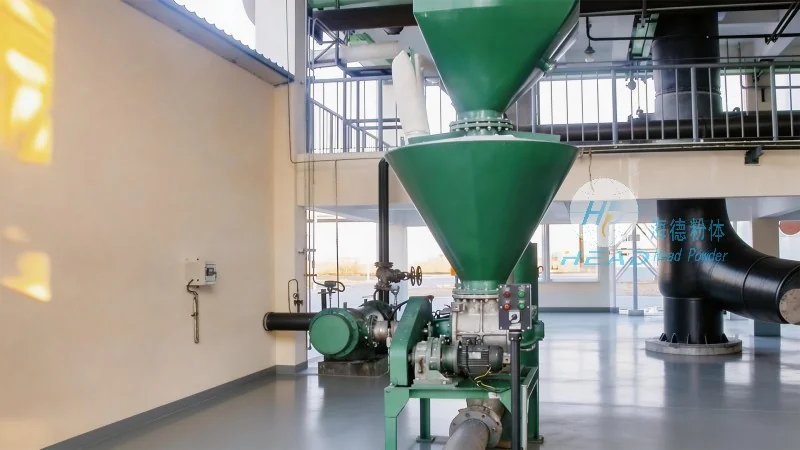
Operation Process Step-by-Step
The operation process of the glass slag pneumatic conveying line can be broken down into several key steps. First, the glass slag is loaded into the hopper from the production line or storage area. The feeder then starts to discharge the material at a controlled rate, ensuring a steady flow into the conveying pipeline. The air compressor or blower is activated, generating the necessary air pressure to create the conveying airflow. As the air flows through the pipeline, it picks up the glass slag particles, transporting them to the destination point, such as a storage silo or processing unit. The system continuously monitors the pressure and flow rates to maintain stable operation, with adjustments made as needed to accommodate variations in material load or pipeline conditions. The dust collector at the end of the system captures any airborne particles, ensuring that the environment remains clean and safe for operation. The discharge point is designed to allow the glass slag to be deposited without causing blockages or spillage, with the system often including a valve or gate to control the release of material.
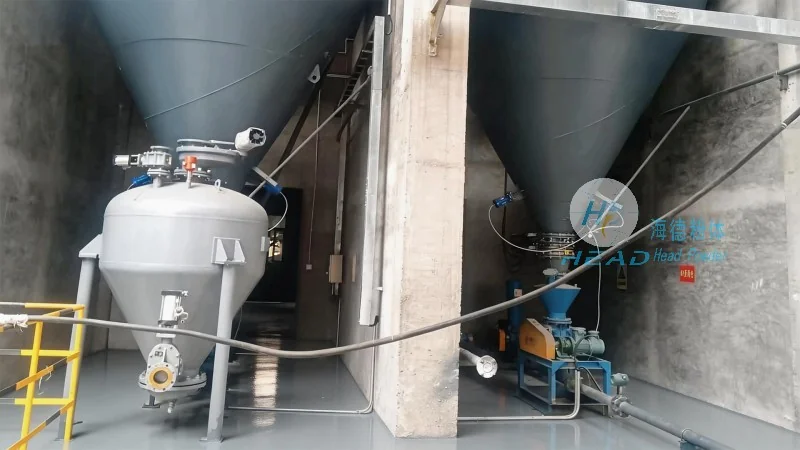
Advantages of Using a Glass Slag Pneumatic Conveying Line
Implementing a glass slag pneumatic conveying line offers several advantages over traditional material handling methods. These include reduced labor costs due to automated operation, minimized material contamination as the system is enclosed, and improved safety by eliminating manual handling of glass slag. The system, designed by Shandong HeadPowder Engineering Co., Ltd., also allows for flexible routing of the pipeline, enabling material to be transported to multiple destinations without the need for complex infrastructure changes. The enclosed design helps in controlling dust emissions, contributing to a cleaner working environment and compliance with environmental regulations. Additionally, the system can handle a wide range of glass slag particle sizes and densities, making it versatile for different industrial applications. The automated nature of the system reduces the need for manual intervention, leading to increased productivity and consistent material transport.
Applications and Industries
Glass slag pneumatic conveying lines are widely used in various industries that generate or process glass slag, including glass manufacturing, recycling facilities, and construction material production. In glass manufacturing, the system is used to transport glass slag from the furnace to storage or processing areas, ensuring efficient material reuse. The glass slag, a byproduct of the glass production process, can be recycled and used as an aggregate in construction materials, reducing the need for virgin raw materials. In recycling facilities, the line helps in moving glass waste to sorting and processing equipment, facilitating the recycling process and reducing waste sent to landfills. In construction material production, the system can be used to transport glass slag as an aggregate or filler material, contributing to sustainable building practices. The use of glass slag in construction materials can improve the durability and thermal properties of the final products, making it a valuable resource in the industry.




