

Principle and Working Scene Characteristics of Titanium Dioxide Powder Pneumatic Conveying System Eq
For industries dealing with titanium dioxide powder, efficient material handling is crucial to maintain production efficiency and product quality. The pneumatic conveying system has emerged as a key solution, offering a reliable method to transport fine powders like titanium dioxide. This article explores the underlying principles of such systems and highlights the specific characteristics of their operational scenarios, with insights from Shandong HeadPowder Engineering Co., Ltd., a leading provider in the field.
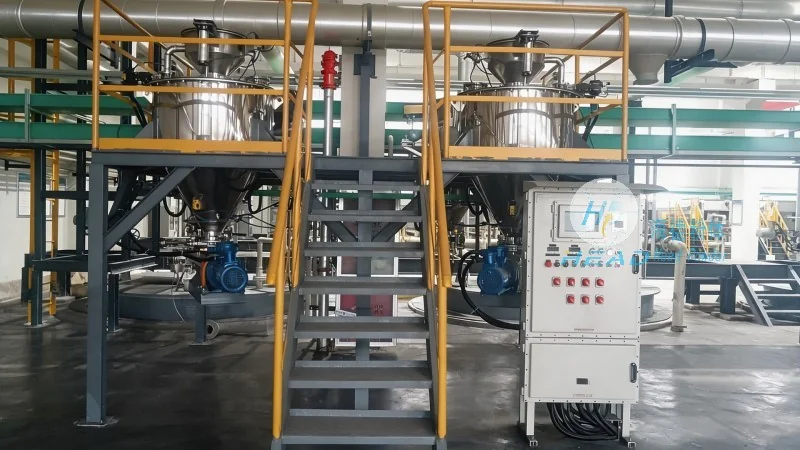
Introduction to Pneumatic Conveying Systems for Titanium Dioxide Powder
Titanium dioxide (TiO₂) is widely used in various industries, including pigments, coatings, and plastics, due to its high refractive index and excellent UV resistance. Handling this fine powder requires specialized equipment to prevent clogging, dust dispersion, and loss of product quality. Pneumatic conveying systems address these challenges by using air or gas to transport the powder through a pipeline network. The technology is particularly effective for materials with low bulk density and high dustiness, making it ideal for titanium dioxide applications.
Company Overview: Shandong HeadPowder Engineering Co., Ltd.
HeadPowder, the brand under Shandong HeadPowder Engineering Co., Ltd., specializes in engineering solutions for powder handling and material transport. With operations based in Shandong, China, the company has built a reputation for delivering high-performance pneumatic conveying systems tailored to the needs of diverse industrial sectors. Their expertise lies in designing systems that ensure safe, efficient, and cost-effective powder transport, aligning with the stringent requirements of modern manufacturing processes.
The Core Principle of Pneumatic Conveying Systems
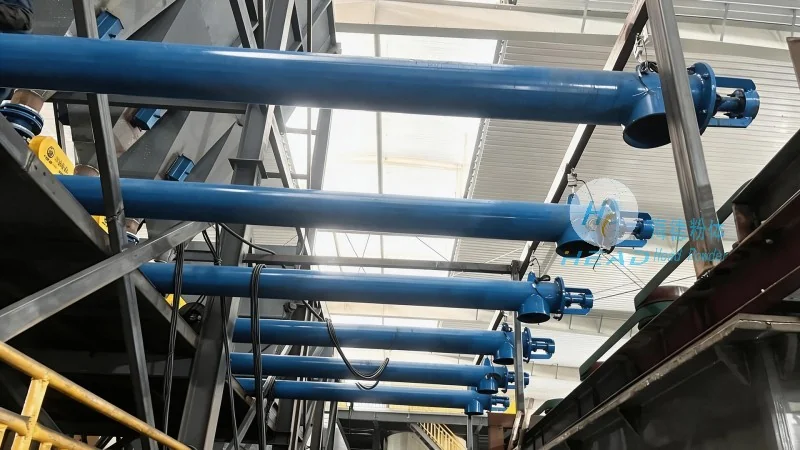
The fundamental principle of pneumatic conveying involves creating a pressure differential to move the powder particles through a pipeline. There are two main types of systems: pressure and vacuum. In pressure systems, a positive pressure is applied at the inlet, pushing the powder through the line. Vacuum systems, on the other hand, use a negative pressure at the outlet to draw the powder from the source. For titanium dioxide powder, which is often sensitive to moisture and agglomeration, the choice of system type and design parameters is critical to maintain particle integrity and prevent degradation.
Key Components and Their Functions
A typical pneumatic conveying system for titanium dioxide powder consists of several essential components. These include the material feed hopper, which stores and feeds the powder; the air compressor or vacuum pump, which generates the necessary pressure or vacuum; the conveying line, which transports the powder; and the discharge unit, which delivers the material to the destination. Each component plays a vital role in ensuring smooth operation and optimal performance. For instance, the feed hopper may be equipped with a rotary valve to control the flow rate and prevent blockages, while the conveying line is often made of materials resistant to corrosion and abrasion, such as stainless steel or special plastics, to withstand the abrasive nature of titanium dioxide particles.
Working Scene Characteristics: Application in Industrial Settings
The operational characteristics of pneumatic conveying systems for titanium dioxide powder vary depending on the specific industrial application. In pigment manufacturing, for example, the system may be used to transport the powder from storage silos to mixing and grinding units, where precise control over the flow rate is essential to maintain consistent product quality. In the coatings industry, the system can be integrated into a production line to deliver titanium dioxide to spray booths or mixing tanks, ensuring uniform dispersion of the pigment. The versatility of these systems allows them to adapt to different production scales, from small-scale batch operations to large-scale continuous production lines.
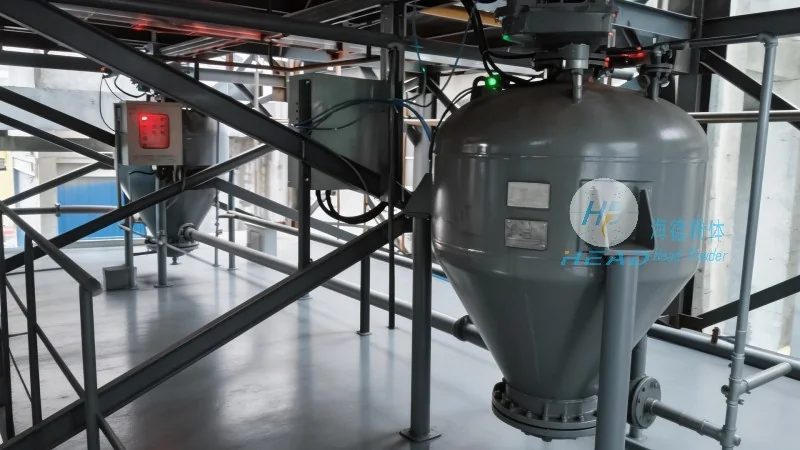
Advantages and Challenges in Operational Scenarios
One of the primary advantages of pneumatic conveying systems is their ability to handle fine powders without the need for mechanical components that could cause clogging or particle damage. This results in higher efficiency and lower maintenance costs compared to traditional methods like belt conveyors or bucket elevators. However, operational challenges exist, particularly with titanium dioxide powder, which can be prone to static electricity and agglomeration. Effective measures, such as incorporating anti-static devices and using appropriate air velocities, are necessary to mitigate these issues and ensure reliable performance. Additionally, the design of the system must consider factors like particle size distribution, moisture content, and bulk density to optimize conveying efficiency and prevent system downtime.
Conclusion: The Role of Pneumatic Conveying in Titanium Dioxide Processing
In conclusion, pneumatic conveying systems represent a sophisticated and efficient solution for handling titanium dioxide powder in various industrial applications. The principles underlying these systems, combined with the expertise of companies like Shandong HeadPowder Engineering Co., Ltd., enable manufacturers to achieve reliable, cost-effective material transport while maintaining product quality. As industries continue to demand higher standards in production efficiency and environmental compliance, the importance of well-designed pneumatic conveying systems will only grow, making them an indispensable part of modern titanium dioxide processing operations.