

Operation Process and Working Principle of Stone Powder Pneumatic Conveying
HeadPowder, a leading provider in the field of material handling solutions, specializes in the design, manufacturing, and installation of pneumatic conveying systems for various bulk materials. Among these, the pneumatic conveying of stone powder stands out as a critical application due to its efficiency and versatility in industrial settings. This article delves into the operation process and working principle of stone powder pneumatic conveying, highlighting the key components, operational steps, and the underlying physics that enable this technology to function effectively.
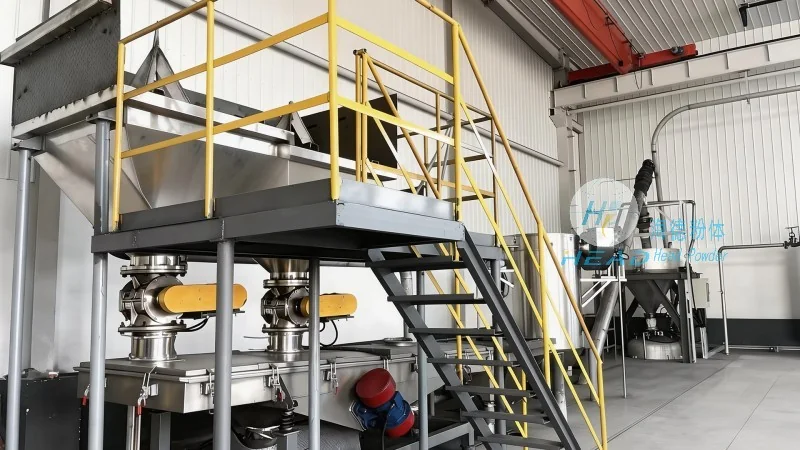
Overview of Pneumatic Conveying Systems
Pneumatic conveying systems utilize air or gas as the medium to transport bulk materials from one location to another. These systems are widely adopted in industries such as mining, construction, food processing, and chemical manufacturing due to their ability to handle a wide range of materials, including powders, granules, and even small particles. The core advantage of pneumatic conveying lies in its ability to transport materials without the need for mechanical components like belts or screws, reducing wear and maintenance costs while ensuring a clean and dust-free operation.
Key Components of a Stone Powder Pneumatic Conveying System
A typical stone powder pneumatic conveying system consists of several essential components that work in tandem to achieve efficient material transport. These components include the material feed hopper, the air compressor or blower, the conveying line (often made of metal or plastic pipes), the control valves, and the discharge outlet. Each component plays a crucial role in the overall operation of the system:
1. **Material Feed Hopper**: This is the container where the stone powder is stored before being fed into the conveying system. The hopper is designed to maintain a consistent material level and can be equipped with a rotary valve or a star feeder to control the flow rate of the material. Proper design of the hopper ensures that the material is fed smoothly without causing blockages or uneven flow.
2. **Air Compressor or Blower**: The air compressor or blower is the heart of the pneumatic conveying system, responsible for generating the necessary air pressure or airflow to move the stone powder through the conveying line. The choice of compressor depends on the material characteristics, conveying distance, and required flow rate. High-pressure systems are used for longer distances or more abrasive materials, while low-pressure systems are suitable for shorter distances and less demanding applications.
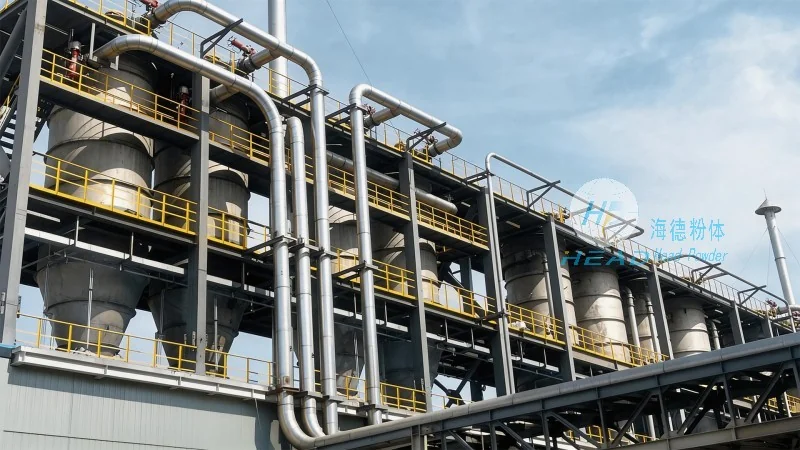
3. **Conveying Line**: The conveying line is the pipe through which the stone powder and air mixture travels. It is typically made of stainless steel or plastic, depending on the material's corrosiveness and the operating conditions. The diameter and length of the line are critical factors that affect the system's performance. Properly sized lines ensure minimal pressure drop and efficient material transport.
4. **Control Valves**: Control valves are used to regulate the flow of air and material within the system. They allow operators to adjust the pressure, flow rate, and direction of the conveying process. Common types of control valves include check valves, flow control valves, and pressure relief valves, which help maintain system stability and prevent damage from overpressure.
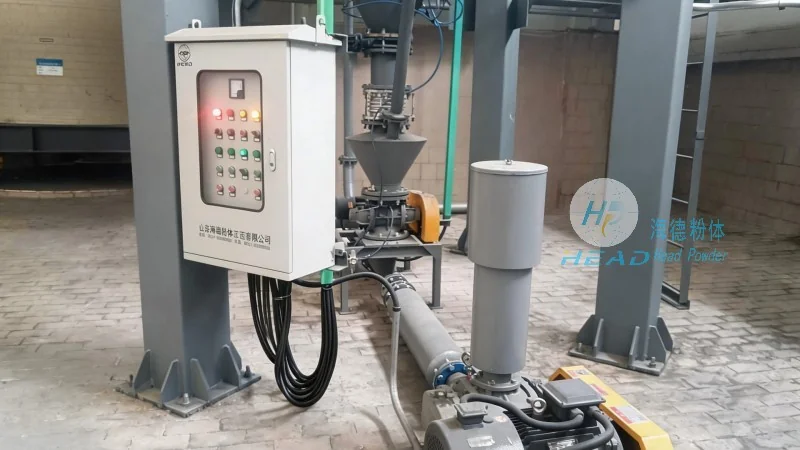
5. **Discharge Outlet**: The discharge outlet is where the stone powder is released from the conveying line. It can be a simple opening or a more complex device, such as a rotary valve or a cyclone separator, depending on the downstream process requirements. The design of the discharge outlet ensures that the material is discharged smoothly and without causing dust or blockages.
Operation Process of Stone Powder Pneumatic Conveying
The operation process of a stone powder pneumatic conveying system involves several sequential steps that ensure the efficient and safe transport of the material. The following is a detailed breakdown of the typical operation process:
1. **Material Loading**: The stone powder is loaded into the material feed hopper. The hopper is filled to a level that allows the rotary valve or star feeder to control the flow rate. The material is then released into the conveying line as needed.
2. **Air Compression and Injection**: The air compressor or blower generates the required air pressure or airflow. The compressed air is then injected into the conveying line at the inlet of the hopper or the material feed point. The air velocity is typically high enough to entrain the stone powder particles and carry them along the line.
3. **Material Entrainment and Transport**: As the air flows through the conveying line, it entrains the stone powder particles, forming a mixture of air and material. The mixture travels through the line under the pressure or airflow generated by the compressor. The velocity of the air is maintained above the minimum velocity required to keep the particles suspended, preventing them from settling or clogging the line.
4. **Control and Regulation**: During the transport process, control valves are used to adjust the air pressure and flow rate as needed. This ensures that the system operates within its design parameters and prevents overpressure or underflow conditions. The control system may also include sensors to monitor the pressure, flow rate, and material level, providing real-time feedback to the operator.
5. **Discharge and Separation**: At the discharge outlet, the air and stone powder mixture is separated. The air is typically vented to the atmosphere or recirculated, while the stone powder is collected in the downstream process equipment. The design of the discharge outlet and the separation system ensures that the material is discharged cleanly and without dust emissions.
Working Principle of Stone Powder Pneumatic Conveying
The working principle of stone powder pneumatic conveying is based on the physics of fluid dynamics and particle motion. The key principles involved include the entrainment of particles by air, the suspension of particles in the air stream, and the transport of the mixture through the conveying line. The following explains the underlying physics in detail:
1. **Entrainment and Suspension**: The primary principle is the entrainment of the stone powder particles by the air stream. When the air velocity is high enough, it creates a shear force on the particle surface, lifting the particles off the hopper surface and into the air stream. The particles are then suspended in the air as they travel through the line. The minimum velocity required to suspend a particle is known as the "minimum conveying velocity" or "critical velocity," which depends on the particle size, density, and shape.
2. **Pressure Drop and Flow Rate**: The pressure drop along the conveying line is a critical factor in the system's performance. It is caused by the friction between the air and the pipe walls, as well as the friction between the particles and the pipe walls. The pressure drop increases with the length of the line, the diameter of the pipe, and the flow rate of the material. Proper design of the system ensures that the pressure drop is within acceptable limits, allowing the compressor to maintain the required pressure.
3. **Air-Particle Interaction**: The interaction between the air and the stone powder particles is complex and involves several forces, including drag, lift, and gravity. The drag force is the primary force that moves the particles along the line, while the lift force helps to keep the particles suspended. The balance between these forces determines the efficiency of the conveying process. For example, if the air velocity is too low, the particles will settle and cause blockages, while if it is too high, the system may experience excessive pressure drop and energy consumption.