

Working Principle and Features of White Clay Material Handling
White clay material handling is a critical process in various industrial applications, particularly in the chemical and pharmaceutical sectors where white clay is used as a filtration agent or adsorbent. Understanding the working principle and features of the equipment used for transporting white clay is essential for optimizing production efficiency and ensuring product quality. This article provides an in-depth overview of the mechanisms involved and the key characteristics of white clay material handling systems, presented by Shandong HeadPowder Engineering Co., Ltd., a leading provider in the field.
Working Principle of White Clay Material Handling Systems
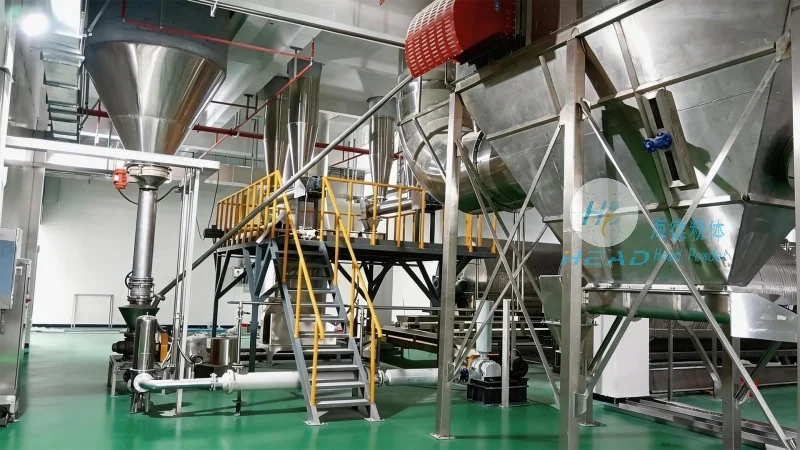
The working principle of white clay material handling systems typically involves several key components and processes designed to safely and efficiently transport white clay from storage to processing units. The primary mechanism relies on a combination of mechanical conveyors, such as belt conveyors, screw conveyors, or pneumatic conveying systems, which are tailored to handle the specific properties of white clay, including its fine particle size and potential moisture content. These systems are engineered to minimize dust generation and maintain product integrity throughout the transport process.
For example, belt conveyors are commonly used for horizontal or slight incline transport, where the white clay is loaded onto a moving belt and transported to the next stage of processing. The design of the belt conveyor, including the type of belt material and the speed of operation, is optimized to prevent material degradation or caking. In contrast, screw conveyors are suitable for vertical or inclined transport, utilizing a rotating screw to push the white clay along the conveyor. This method is particularly effective for handling bulk quantities of white clay while maintaining a consistent flow rate.
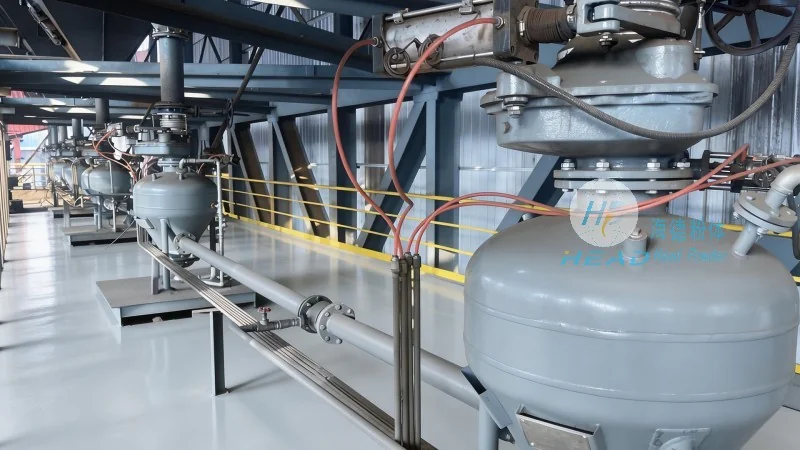
Pneumatic conveying systems, on the other hand, use air pressure to transport white clay in a closed pipeline. This method is ideal for applications requiring dust-free transport or when the white clay needs to be conveyed over longer distances. The system typically includes a hopper for material storage, a blower to generate air pressure, and a receiver to collect the material at the destination. The choice of conveying method depends on factors such as the quantity of white clay to be transported, the distance between the source and destination, and the need for dust control or product protection.
Key Features of White Clay Material Handling Systems
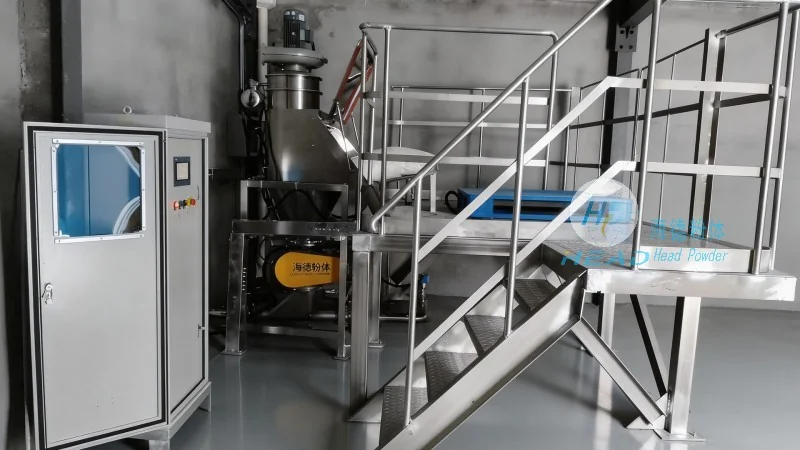
White clay material handling systems from Shandong HeadPowder Engineering Co., Ltd. are characterized by several key features that enhance their performance and reliability. One of the most notable features is the ability to handle fine, dry materials like white clay without causing excessive dust or product loss. This is achieved through advanced sealing and filtration systems that prevent material leakage and maintain a clean working environment.
Another important feature is the system's adaptability to different processing requirements. The equipment can be customized to accommodate varying particle sizes, moisture levels, and bulk densities of white clay, ensuring that the transport process is optimized for each specific application. This flexibility allows the systems to be integrated seamlessly into existing production lines without significant modifications.
Efficiency and energy conservation are also critical features of these systems. Modern white clay material handling equipment is designed with energy-efficient motors and optimized conveyor speeds to minimize power consumption while maintaining high throughput. Additionally, the use of durable materials and robust construction ensures long-term reliability and reduces maintenance costs over the system's lifespan.
Furthermore, safety features are integrated into the design to protect operators and maintain compliance with industrial safety standards. This includes emergency stop mechanisms, overload protection, and dust suppression systems that prevent the accumulation of hazardous dust in the workplace. The systems are also equipped with monitoring and control interfaces that allow for real-time tracking of material flow and system performance, enabling quick adjustments to maintain optimal operation.
Customization and Application in Industrial Settings
Shandong HeadPowder Engineering Co., Ltd. offers customized white clay material handling solutions tailored to the specific needs of industrial clients. The company's engineers work closely with clients to assess their production requirements, including the volume of white clay to be transported, the distance between processing stages, and any environmental or safety constraints. Based on this assessment, the company designs and manufactures systems that meet the exact specifications of the application.
These customized systems are widely used in industries such as pharmaceuticals, chemicals, and food processing, where white clay is used as a filtration aid or adsorbent. For example, in pharmaceutical manufacturing, white clay is often used to filter and purify liquids, and the material handling system must ensure that the white clay is transported without contamination or degradation. In the chemical industry, white clay is used as an adsorbent to remove impurities from process streams, and the system must maintain the purity of the material throughout the transport process.
The adaptability of the white clay material handling systems also makes them suitable for various operational scenarios, including batch processing and continuous production lines. The systems can be configured to handle both small and large quantities of white clay, making them versatile for different production scales. Additionally, the systems are designed to be easy to maintain and operate, with user-friendly controls and minimal downtime for maintenance.