Aluminum nitride (AlN) is a high-performance ceramic material widely used in electronics, optics, and advanced manufacturing due to its excellent thermal conductivity, electrical insulation properties, and chemical stability. The efficient and reliable transportation of AlN powder is crucial for industrial applications, and pneumatic conveying systems have emerged as a preferred method for handling such materials. This technical analysis, provided by Shandong HeadPowder Engineering Co., Ltd., focuses on the comparison between positive pressure and negative pressure conveying modes in AlN pneumatic conveying systems, highlighting the technical aspects, advantages, and considerations for each approach. The company, based in Shandong, China, specializes in engineering solutions for material handling systems, including advanced pneumatic conveying technologies tailored for high-value materials like AlN.
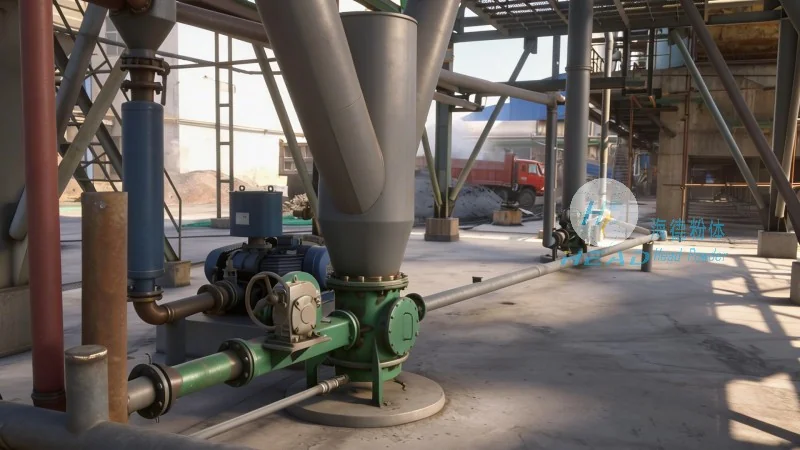
Understanding Pneumatic Conveying Fundamentals
Pneumatic conveying involves the transport of bulk materials through a pipeline using a gas stream, typically air or other gases. The two primary modes of pneumatic conveying are positive pressure and negative pressure systems. In positive pressure systems, the conveying air is pressurized and introduced at the material inlet, pushing the material through the pipeline. Conversely, negative pressure systems create a vacuum at the material outlet, drawing the material into the pipeline. Both modes have distinct characteristics that influence their suitability for AlN powder handling.
Positive Pressure Conveying Mode
Positive pressure conveying systems operate by supplying compressed air to the material feed point, ensuring the material is pushed through the pipeline. For AlN powder, this mode offers several advantages. The high pressure ensures consistent material flow, reducing the risk of blockages or uneven distribution. Additionally, positive pressure systems are generally more suitable for long-distance and high-capacity conveying, as they can maintain sufficient pressure to overcome pipeline resistance over extended distances. The system typically includes a blower or compressor at the inlet, a hopper for material storage, and a pipeline network. The material is introduced into the pipeline via a feeder, and the compressed air propels it to the destination. This mode is particularly effective for AlN powders that are prone to agglomeration or require gentle handling to prevent particle degradation. The positive pressure also helps maintain a consistent flow rate, which is critical for maintaining product quality in downstream processes.
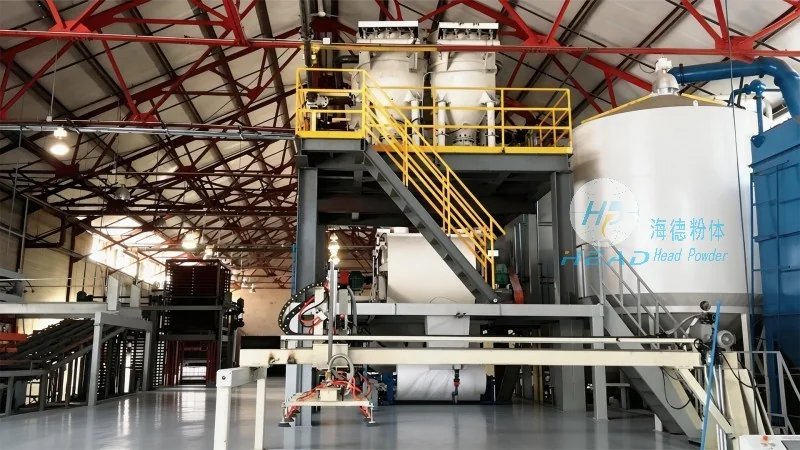
Negative Pressure Conveying Mode
Negative pressure conveying systems, also known as vacuum conveying, operate by creating a vacuum at the material outlet, drawing the material into the pipeline. This mode is often preferred for handling fine powders like AlN due to its ability to maintain low particle velocity and minimize material degradation. The system consists of a vacuum pump at the outlet, a hopper, and a pipeline. The material is fed into the pipeline through a feeder, and the vacuum pulls it towards the collection point. Negative pressure systems are generally more energy-efficient for short to medium distances, as they do not require high-pressure air. However, they may face challenges with long-distance conveying due to the limitations of maintaining sufficient vacuum over extended pipelines. The low velocity in negative pressure systems reduces the risk of particle attrition and agglomeration, making it suitable for sensitive AlN powders that require careful handling. The vacuum also helps in controlling dust emissions, as the material is drawn into the pipeline rather than being expelled into the environment.
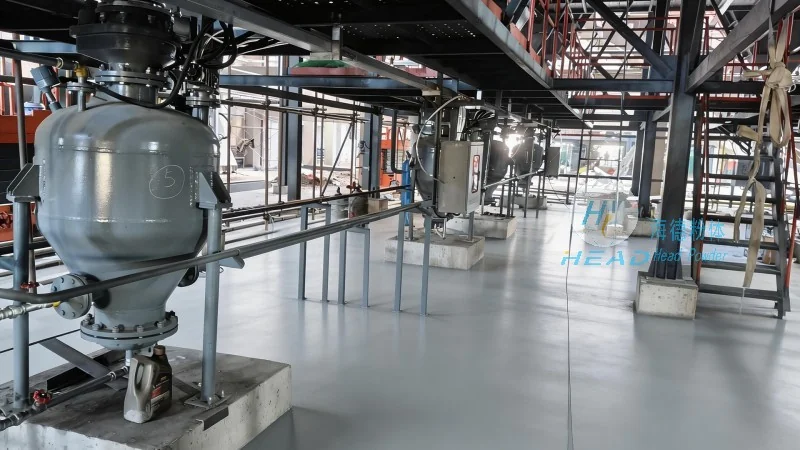
Technical Considerations and Performance Comparison
When comparing positive and negative pressure conveying modes for AlN pneumatic systems, several technical factors come into play. The choice between the two modes depends on factors such as conveying distance, material properties, system cost, and operational requirements. Positive pressure systems are generally more suitable for long-distance and high-capacity applications, offering higher flow rates and better control over material distribution. However, they require more energy due to the need for compressed air and may generate higher noise levels. Negative pressure systems, on the other hand, are more energy-efficient for shorter distances and are better suited for handling fine, sensitive powders. They produce less noise and have lower maintenance requirements due to the absence of high-pressure components. From a performance perspective, both modes can achieve reliable AlN powder transport, but the efficiency and suitability vary based on the specific application. For instance, in high-volume production lines where long-distance conveying is required, positive pressure systems may be more economical in the long run despite higher initial costs. Conversely, in research or laboratory settings where short-distance and gentle handling are prioritized, negative pressure systems may be preferred.
Application Scenarios and Practical Implications
The selection of positive or negative pressure conveying mode for AlN systems should align with the specific application requirements. For example, in the electronics industry, where AlN is used as a thermal interface material, the material must be handled with minimal degradation to maintain its thermal conductivity. Negative pressure systems are often preferred in such cases due to their gentle handling and low particle velocity. In contrast, in large-scale manufacturing of AlN components, where high throughput is essential, positive pressure systems may be more appropriate to meet production demands. The choice also impacts the overall system design, including pipeline diameter, material feeder type, and control systems. Positive pressure systems typically require larger pipelines to accommodate higher flow rates, while negative pressure systems may use smaller diameters due to lower material velocities. The control systems for each mode differ as well, with positive pressure systems often using pressure sensors and flow meters to monitor and adjust air pressure, and negative pressure systems relying on vacuum gauges and flow meters to regulate the vacuum level.




