For industries dealing with guar gum powder, efficient material handling is crucial. Pneumatic conveying systems offer a reliable solution to transport guar gum powder from storage to processing units, ensuring minimal product degradation and operational efficiency. This article explores the design calculations and equipment selection process for such systems, tailored to the specific needs of guar gum powder applications.

Key Design Considerations for Guar Gum Powder Pneumatic Conveying
When designing a pneumatic conveying system for guar gum powder, several factors must be considered to ensure optimal performance. The first step is to assess the material properties of guar gum powder, including its bulk density, flowability, and particle size distribution. These characteristics directly impact the system's capacity and the type of conveying method (e.g., dilute phase or dense phase). Additionally, the distance and elevation changes between the source and destination points are critical parameters that influence the required air volume and pressure. Proper calculation of these variables ensures that the system operates within safe and efficient limits, preventing issues like blockages or excessive energy consumption.
Equipment Selection for Guar Gum Powder Pneumatic Conveying
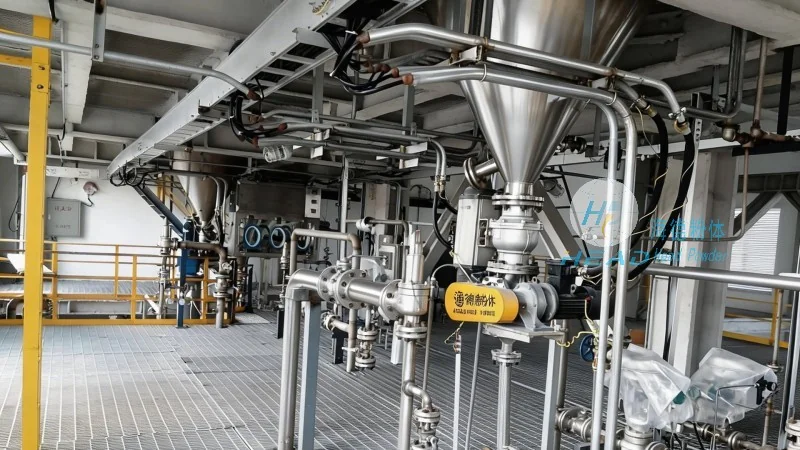
Choosing the right equipment is essential for a successful pneumatic conveying system. The primary components include the feed system, air supply unit, conveying line, and collection unit. For guar gum powder, which is typically fine and abrasive, high-quality materials like stainless steel or corrosion-resistant alloys are recommended for the conveying line to prevent wear and maintain product purity. The air supply unit, often a blower or compressor, must be capable of delivering the required air volume and pressure. The selection of the blower type (e.g., centrifugal or positive displacement) depends on the system's operating conditions and the material's characteristics. Additionally, the feed device, such as a rotary valve or star feeder, should be designed to handle the powder's flow properties without causing segregation or agglomeration. The collection unit, including filters and cyclones, is crucial for maintaining air quality and preventing product loss.
Design Calculations for Guar Gum Powder Pneumatic Conveying
Accurate design calculations are vital to ensure the pneumatic conveying system meets the operational requirements. The key calculations include determining the air velocity, conveying line diameter, and pressure drop. The air velocity must be high enough to prevent particle deposition but low enough to avoid excessive energy consumption. The conveying line diameter is calculated based on the material's bulk density and the required air velocity. The pressure drop across the system is a critical factor, as it affects the blower's power requirements. Engineers use empirical formulas and software tools to model the system and optimize these parameters. For guar gum powder, which has a relatively low bulk density compared to other powders, the calculations may require adjustments to account for the material's lightness and potential for air entrainment.
About Shandong HeadPowder Engineering Co., Ltd.
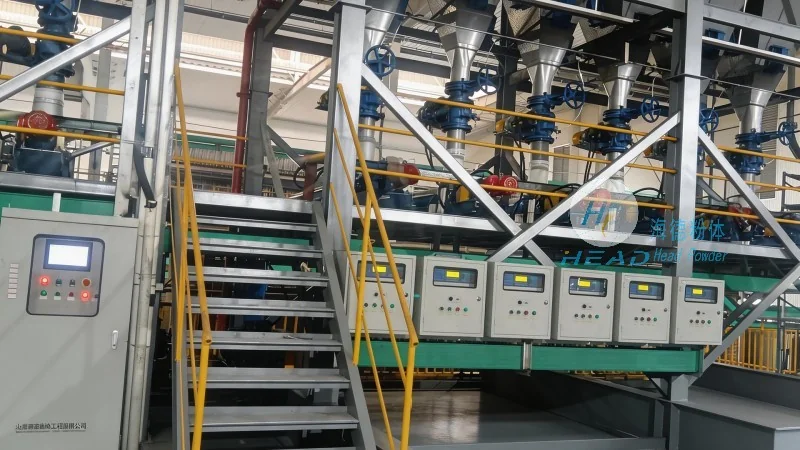
Shandong HeadPowder Engineering Co., Ltd., operating under the brand name headpowder, specializes in the design and manufacturing of pneumatic conveying systems for various industrial applications. With a focus on guar gum powder and other fine powders, the company provides customized solutions that meet the specific needs of clients. The company's team of experienced engineers uses advanced design tools and methodologies to ensure that each system is optimized for efficiency, reliability, and cost-effectiveness. HeadPowder's commitment to quality and customer satisfaction has made it a trusted partner in the industry, delivering systems that enhance operational performance and reduce downtime.




