HeadPowder, a leading manufacturer based in Shandong, China, specializes in the design, production, and supply of advanced carbon powder pneumatic conveying systems. These systems are engineered to efficiently transport carbon powders and related materials in various industrial applications. The company's commitment to quality and innovation ensures that its equipment meets the highest standards for performance, reliability, and safety.
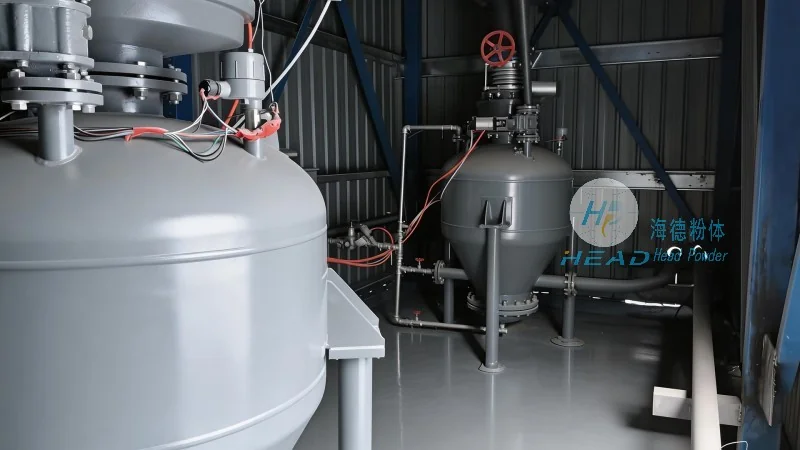
Understanding the Core Principle of Carbon Powder Pneumatic Conveying Systems
The fundamental principle behind carbon powder pneumatic conveying systems is the use of air or gas as the conveying medium to transport particulate materials. Unlike traditional mechanical conveying methods, which rely on belts, buckets, or screws, pneumatic systems utilize pressure differentials or vacuum to move materials through a pipeline. This method is particularly effective for handling fine powders like carbon, which are prone to caking, agglomeration, or dust generation when handled mechanically.
In a typical carbon powder pneumatic conveying system, the process begins with the material being fed into a hopper or feeder. The feeder then meters the powder into the conveying line, where it is mixed with the air stream. The air, often supplied by a blower or compressor, creates a flow that carries the powder particles through the pipeline. The system can operate under either positive pressure (pressure conveying) or negative pressure (vacuum conveying), depending on the specific requirements of the application. Positive pressure systems are commonly used for long-distance or high-volume transport, while vacuum systems are ideal for short-distance or material recovery applications.
Key Working Scene Characteristics of Carbon Powder Pneumatic Conveying Systems
The working scene characteristics of these systems are tailored to optimize performance in diverse industrial environments. One of the primary characteristics is the ability to handle fine and abrasive carbon powders without causing wear or damage to the system components. The design incorporates materials such as stainless steel, aluminum, or specialized coatings to resist corrosion and abrasion, ensuring long-term durability. Additionally, the systems are equipped with features like air filtration and dust collection to maintain air quality and comply with environmental regulations.
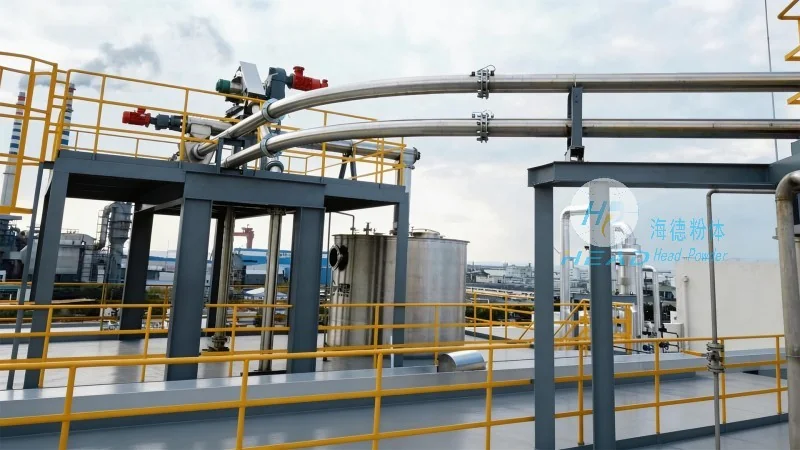
Another critical characteristic is the flexibility in system configuration. Carbon powder pneumatic conveying systems can be customized to accommodate different material properties, such as particle size, density, and moisture content. This adaptability allows the system to be integrated into existing production lines or new setups without significant modifications. The modular design also enables easy maintenance and component replacement, reducing downtime and operational costs.
Application Scenarios and Industry Integration
Carbon powder pneumatic conveying systems are widely used in various industries where carbon powders are a key component. In the battery manufacturing industry, these systems efficiently transport carbon black and other conductive powders to the production lines, ensuring consistent material quality and reducing contamination risks. The automotive industry also benefits from these systems, as they handle carbon powders used in brake pads and other components with precision and reliability. Furthermore, in the electronics and semiconductor sectors, the systems are employed to transport carbon-based materials for circuit board manufacturing and other high-tech applications.
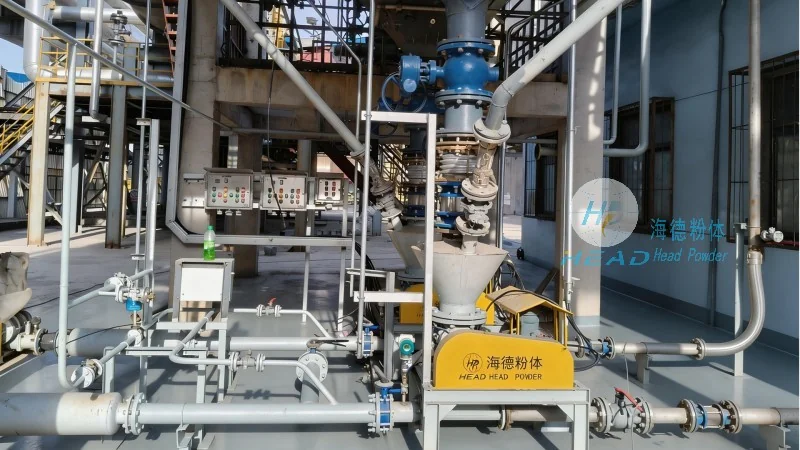
In the chemical and pharmaceutical industries, carbon powder pneumatic conveying systems are used to transport carbon-based additives and fillers, maintaining the purity and consistency of the final products. The systems' ability to handle hygroscopic or reactive powders under controlled conditions is particularly valuable in these sectors. Additionally, in the construction and materials processing industries, the systems assist in transporting carbon powders used in concrete additives, coatings, and other building materials, enhancing the efficiency of material handling processes.
Advantages and Performance Metrics in Real-World Applications
The advantages of carbon powder pneumatic conveying systems are evident in their performance metrics and operational benefits. Compared to mechanical conveying methods, pneumatic systems offer higher material throughput and lower energy consumption for certain applications. The systems also reduce the risk of material degradation due to less contact with equipment surfaces and minimal exposure to external contaminants. Furthermore, the enclosed pipeline design minimizes dust emissions, improving workplace safety and environmental compliance.
Operational efficiency is another key metric, with systems capable of maintaining consistent flow rates and material distribution. The use of advanced control systems allows for real-time monitoring and adjustment of conveying parameters, ensuring optimal performance under varying conditions. Maintenance costs are generally lower due to the reduced wear on components and the ability to perform routine checks without extensive system downtime. Overall, the carbon powder pneumatic conveying systems from HeadPowder provide a reliable and efficient solution for material handling in carbon powder applications.




