

Classification and Composition of Ceramic Powder Pneumatic Conveying Systems
For industrial applications involving the transport of ceramic powders, pneumatic conveying systems offer efficient and reliable solutions. These systems are designed to handle the unique properties of ceramic materials, such as their fine particle size, low bulk density, and potential for dust generation. Understanding the classification and composition of these systems is crucial for selecting the appropriate technology for specific operational requirements.
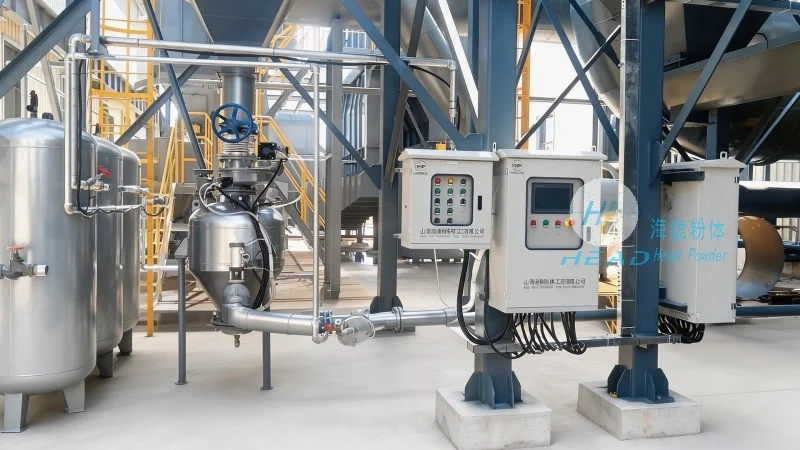
System Classification
Pneumatic conveying systems for ceramic powders are typically classified based on the gas velocity and the resulting flow regime. The primary categories include:
- Suspension Flow (or Dilute Phase): This is the most common type, where the powder is suspended in the air stream. It is suitable for long-distance transport and is often used when the material is non-abrasive and has a low dust content. The system operates at high velocities, typically above 20 m/s, ensuring that the particles remain airborne.
- Entrained Flow (or Dense Phase): In this mode, the powder is conveyed as a dense stream with a high solids concentration. It is ideal for handling abrasive or sticky powders and is often used for short to medium distances. The velocity is lower, usually between 5 to 15 m/s, and the system can handle larger particles.
- Mixed Flow: This is a hybrid approach that combines elements of both suspension and dense phase conveying. It offers flexibility in handling a wide range of particle sizes and flow rates, making it suitable for applications where varying conditions are encountered.
System Composition
Regardless of the classification, a typical ceramic powder pneumatic conveying system consists of several key components that work in tandem to ensure efficient material transport. The main components include:
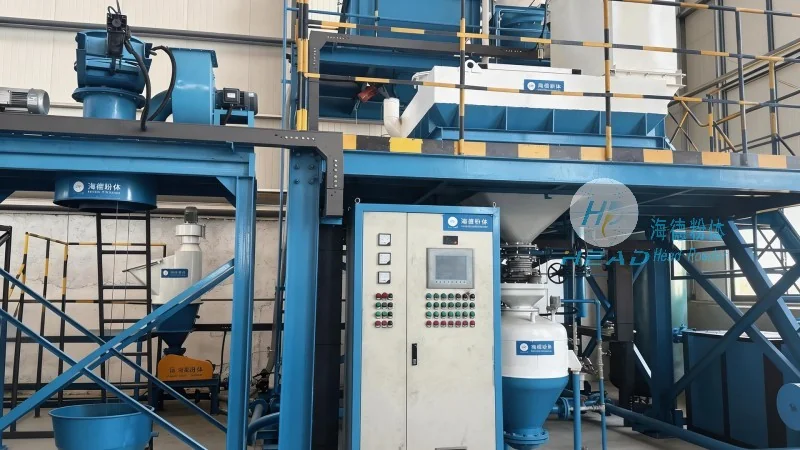
- Feed Hopper and Metering Device: The feed hopper is used to store the ceramic powder and maintain a consistent supply. The metering device, such as a rotary valve or a screw feeder, controls the flow rate of the material into the system, ensuring uniform feeding and preventing blockages.
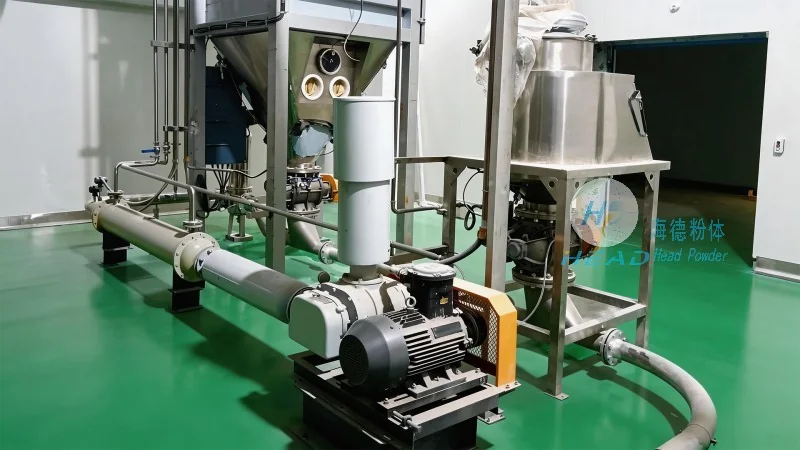
- Gas Source and Compressor: A compressor or blower provides the necessary air or gas pressure to generate the conveying velocity. The choice of compressor depends on the system classification and the required pressure. For suspension flow, higher pressure and velocity are needed, while dense phase systems may use lower pressure but higher volume flow rates.
- Conveying Pipeline: The pipeline is constructed from materials that are resistant to abrasion and corrosion, such as stainless steel or special alloys, to withstand the abrasive nature of ceramic powders. The pipeline design includes bends, expansions, and contractions to maintain the flow regime and prevent particle deposition.
- Separation and Collection Equipment: At the receiving end, a separator (such as a cyclone or a bag filter) is used to separate the powder from the air stream. The separated powder is collected in a receiving hopper, while the clean air is discharged to the atmosphere or recirculated. This component is critical for maintaining material purity and environmental compliance.
- Control and Monitoring Systems: Modern systems incorporate control panels and sensors to monitor pressure, flow rate, and temperature. These systems allow for real-time adjustments and ensure the safe and efficient operation of the conveying process. Automation features can also be integrated to optimize energy consumption and reduce downtime.
Application Considerations
The selection of a pneumatic conveying system for ceramic powders depends on several factors, including the particle size distribution, bulk density, moisture content, and the distance and elevation changes required for transport. For example, fine powders with high moisture content may require additional drying or conditioning steps before being conveyed. Similarly, abrasive powders may necessitate the use of more robust pipeline materials and components to extend the system's lifespan.
Company Overview
Shandong HeadPowder Engineering Co., Ltd., commonly known as HeadPowder, is a leading manufacturer and supplier of pneumatic conveying systems tailored for ceramic powder applications. With a focus on innovation and quality, the company provides customized solutions that meet the specific needs of its clients. HeadPowder's systems are designed to handle a wide range of ceramic materials, from fine alumina powders to coarse silica powders, ensuring reliable and efficient transport in various industrial settings.
Location and Contact
HeadPowder is headquartered in Shandong, China, with a dedicated team of engineers and technicians committed to delivering high-performance pneumatic conveying solutions. The company's facilities are equipped with advanced manufacturing and testing capabilities, enabling the production of systems that meet international standards and client specifications.