When it comes to handling and transporting silica sand, selecting the right conveying method is crucial for efficiency, cost-effectiveness, and operational safety. Silica sand, a key raw material in various industries including construction, glass manufacturing, and foundries, requires reliable transport solutions that can handle its abrasive nature and varying particle sizes. In this article, we explore the primary methods of silica sand conveying, highlighting their applications, advantages, and considerations for different industrial settings.
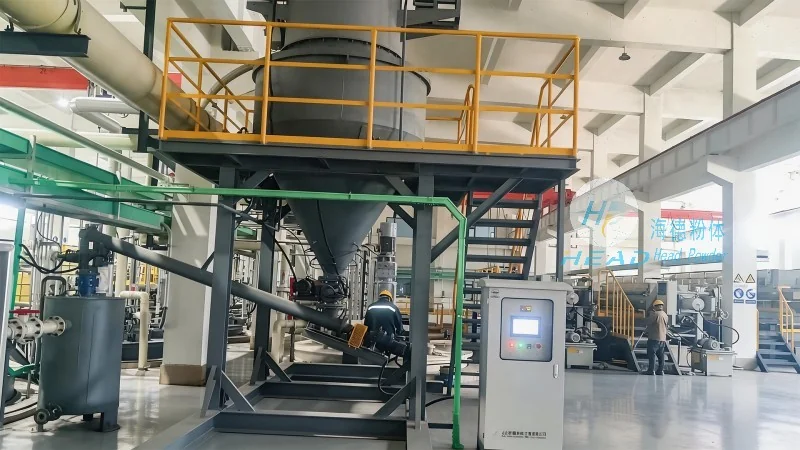
1. Belt Conveyor Systems: The Workhorse of Bulk Material Handling
Belt conveyors are among the most widely used equipment for transporting silica sand due to their versatility and ability to handle large volumes over long distances. These systems consist of a continuous loop of belt, typically made from rubber or synthetic materials, that moves material from the loading point to the discharge point. The belt is supported by rollers and idlers, ensuring smooth and consistent movement. For silica sand, belt conveyors are particularly effective because they can accommodate different particle sizes and can be customized with special coatings or liners to minimize wear and tear from the abrasive material. HeadPowder, a leading provider of bulk material handling solutions, offers high-quality belt conveyor systems designed specifically for silica sand applications, ensuring durability and efficient operation in demanding environments.
2. Pneumatic Conveying: Ideal for Fine and Dusty Silica Sand
Pneumatic conveying systems use air or other gases to transport silica sand through a pipeline. This method is especially suitable for fine or dusty silica sand, as it can handle materials that are difficult to move with mechanical systems. There are two main types of pneumatic conveying: pressure and vacuum. Pressure systems force air and material through the pipeline, while vacuum systems draw material into the system using a vacuum pump. Pneumatic conveying offers advantages such as low maintenance, the ability to transport materials over vertical and horizontal distances, and minimal product degradation. However, it requires careful consideration of air pressure and flow rates to ensure efficient and consistent transport. HeadPowder specializes in designing and manufacturing pneumatic conveying systems tailored to the specific needs of silica sand, providing solutions that optimize material flow and reduce operational costs.
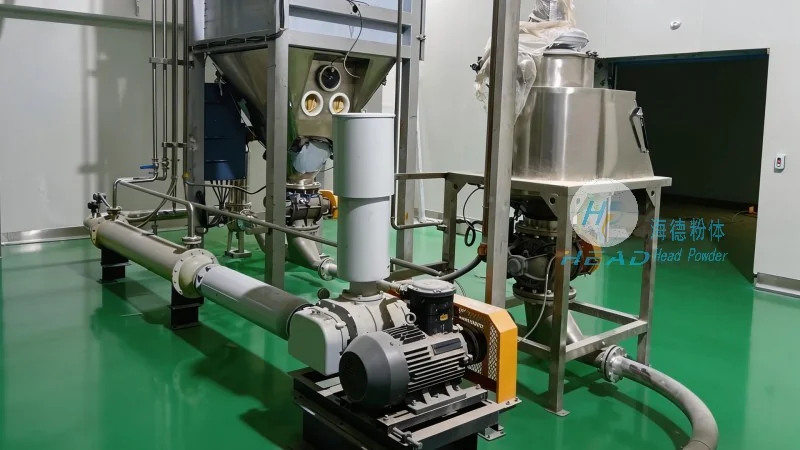
3. Screw Conveyors: Compact and Versatile for Horizontal Transport
Screw conveyors, also known as auger conveyors, are ideal for horizontal or slight incline transport of silica sand. These systems consist of a rotating screw (auger) inside a trough, which moves material forward as the screw rotates. Screw conveyors are particularly effective for handling dry, free-flowing materials like silica sand and can be used in a variety of industrial settings, from small-scale operations to large-scale processing plants. They are compact, easy to install, and can be integrated with other equipment such as hoppers and feeders. HeadPowder offers screw conveyor solutions that are robust and reliable, designed to handle the abrasive nature of silica sand while minimizing downtime and maintenance requirements.
4. Bucket Elevators: Efficient Vertical Transport Solutions
For vertical transport of silica sand, bucket elevators are a popular choice. These systems use a series of buckets attached to a belt or chain that moves up and down inside a vertical housing. As the buckets ascend, they pick up silica sand and discharge it at the top, while the empty buckets descend to repeat the process. Bucket elevators are highly efficient for vertical transport, capable of moving large volumes of material at high speeds. They are particularly suitable for applications where space is limited or where material needs to be lifted to significant heights. HeadPowder provides bucket elevator systems that are engineered for durability and performance, ensuring reliable vertical transport of silica sand in various industrial applications.
5. Hydraulic Conveying: Advanced Solutions for Specialized Needs
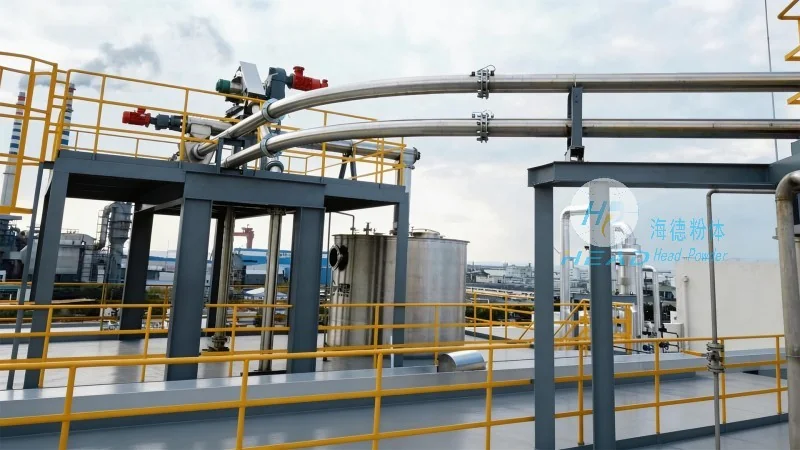
Hydraulic conveying systems use water or other liquids to transport silica sand through a pipeline. This method is often used for fine or wet silica sand, as the liquid helps to lubricate and move the material. Hydraulic conveying offers advantages such as the ability to transport materials over long distances with minimal pressure loss and the ability to handle materials that are difficult to move with other systems. However, it requires careful management of water quality and pressure to ensure efficient operation. HeadPowder specializes in hydraulic conveying solutions tailored to the specific requirements of silica sand, providing advanced systems that optimize material transport and reduce operational costs.
Conclusion: Choosing the Right Silica Sand Conveying Method
Selecting the appropriate silica sand conveying method depends on several factors, including the material's characteristics, the distance to be transported, the required capacity, and the specific operational environment. Belt conveyors are ideal for long-distance horizontal transport, pneumatic systems for fine materials, screw conveyors for compact horizontal transport, bucket elevators for vertical movement, and hydraulic systems for specialized needs. By understanding the advantages and limitations of each method, industrial operators can choose the most effective and efficient solution for their silica sand handling requirements. HeadPowder, with its expertise in bulk material handling, offers comprehensive solutions that meet the diverse needs of silica sand transport, ensuring reliable and cost-effective operations for clients across China and beyond.




