

Design and Calculation of Straw Ash Pneumatic Conveying System and Equipment Selection
Shandong HeadPowder Engineering Co., Ltd., commonly known as HeadPowder, is a professional engineering company based in Shandong, China. With years of experience in the field of material handling and conveying systems, HeadPowder specializes in providing comprehensive solutions for the design, calculation, and selection of pneumatic conveying systems, particularly for straw ash applications. This article outlines the key aspects of designing and selecting the appropriate equipment for straw ash pneumatic conveying, ensuring efficient and reliable material transport.
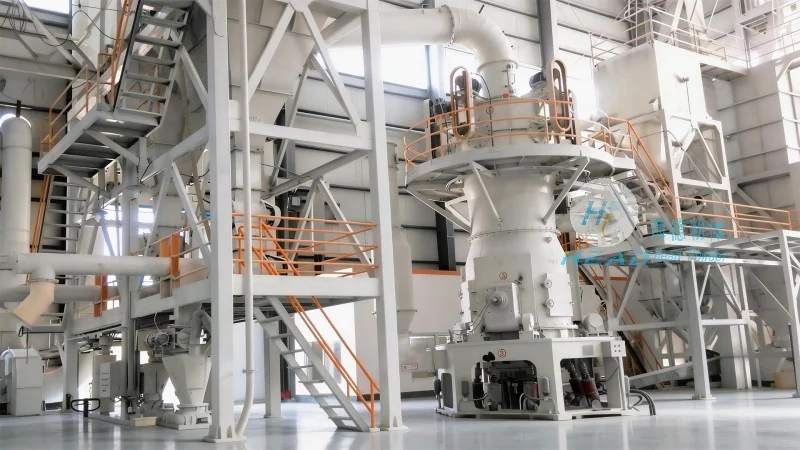
Understanding Straw Ash and Its Conveying Challenges
Straw ash, a byproduct of biomass combustion processes, presents unique challenges in material handling due to its fine particle size, low bulk density, and tendency to agglomerate. Traditional conveying methods such as belt conveyors or screw conveyors may not be suitable for straw ash due to the risk of blockages, dust generation, and material degradation. Pneumatic conveying, utilizing air as the conveying medium, offers a more effective solution by transporting the material in a fluidized state, minimizing friction and preventing particle degradation.
Key Design Considerations for Straw Ash Pneumatic Conveying
The successful design of a straw ash pneumatic conveying system involves several critical factors. First, the material's physical properties, including particle size distribution, moisture content, and bulk density, must be accurately characterized. These properties directly influence the selection of the conveying velocity, pipeline diameter, and pressure requirements. For straw ash, which typically consists of fine particles (often below 100 microns), higher conveying velocities and appropriate pipeline diameters are essential to prevent deposition and ensure smooth flow.
Second, the system's layout and configuration play a crucial role. The design must consider the source and destination points, the vertical and horizontal distances to be covered, and any obstacles or changes in elevation. HeadPowder engineers use advanced computational fluid dynamics (CFD) and empirical formulas to model the flow behavior and optimize the system layout. This ensures that the conveying system operates at the most efficient and cost-effective parameters.
Equipment Selection for Straw Ash Pneumatic Conveying
HeadPowder provides a range of equipment for straw ash pneumatic conveying, tailored to meet specific application requirements. The primary components include the material feed system, air supply unit, conveying pipeline, and material discharge equipment. The material feed system, such as a rotary valve or a star feeder, ensures a consistent and controlled flow of straw ash into the conveying line, preventing surges and maintaining system stability.
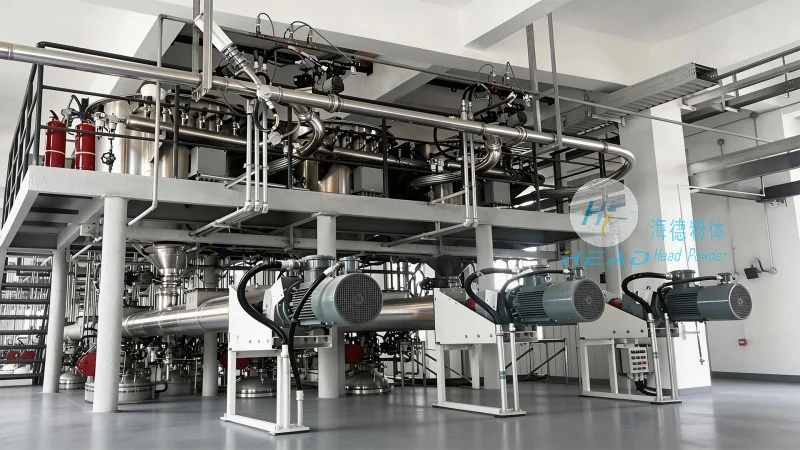
The air supply unit, typically a positive displacement blower or a centrifugal fan, generates the necessary pressure and airflow to move the material. The selection of the air supply equipment depends on the system's required pressure and flow rate, which are determined during the design phase. For straw ash applications, higher pressure blowers are often preferred to overcome the resistance caused by fine particles and potential blockages.
The conveying pipeline, made of materials such as stainless steel or plastic, must be designed to withstand the abrasive nature of straw ash particles. The pipeline diameter is selected based on the conveying velocity and material flow rate, ensuring that the system operates within the optimal velocity range (typically 20-30 m/s for fine particles) to prevent particle deposition and maintain system efficiency.
The material discharge equipment, such as a cyclone separator or a rotary valve, separates the conveyed material from the air stream and directs it to the destination. The discharge system must be designed to handle the fine particles without causing re-entrainment or dust emissions. HeadPowder's equipment selection process ensures that all components are compatible and optimized for the specific straw ash characteristics, ensuring long-term performance and minimal maintenance.
Design Calculation Process for Straw Ash Pneumatic Conveying
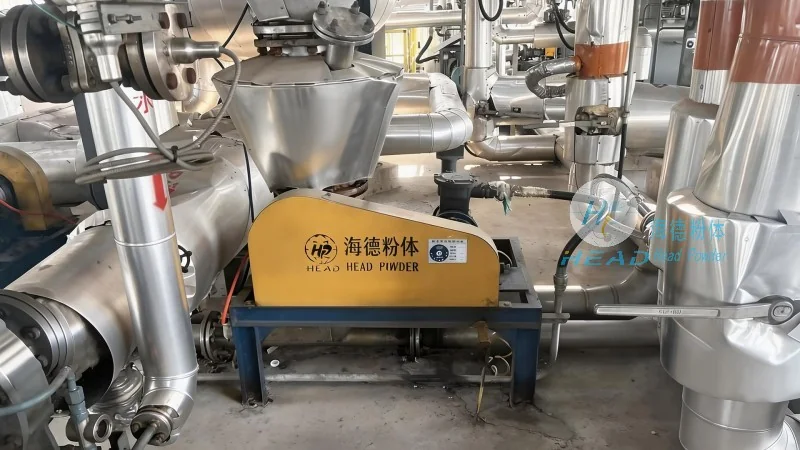
The design calculation process for straw ash pneumatic conveying involves several steps to ensure the system meets operational requirements. First, the material's physical properties are measured and characterized. This includes determining the particle size distribution, bulk density, and moisture content. These data are used to calculate the material's flow rate and the required conveying velocity.
Next, the system's layout is defined, including the pipeline length, elevation changes, and number of bends. The total pressure drop along the pipeline is calculated by considering the friction losses in straight sections, losses at bends and fittings, and additional losses due to the material's characteristics. The pressure drop calculation helps determine the required air supply pressure and the power consumption of the blower.
The conveying velocity is calculated based on the material's particle size and the pipeline diameter. For straw ash, a higher conveying velocity is recommended to prevent particle deposition and ensure smooth flow. The velocity is typically determined using empirical formulas or CFD simulations, which take into account the material's properties and the system's configuration.
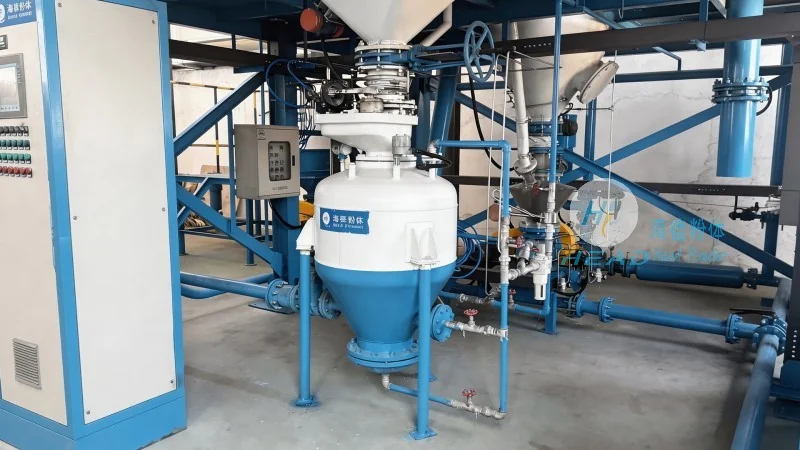
Finally, the equipment selection is finalized based on the calculated parameters. The air supply unit is selected to provide the required pressure and flow rate, and the pipeline diameter is determined to accommodate the material flow at the optimal velocity. HeadPowder's engineers use advanced software and tools to perform these calculations, ensuring accuracy and efficiency in the design process.
Benefits of Using HeadPowder's Straw Ash Pneumatic Conveying Solutions
Implementing a well-designed straw ash pneumatic conveying system offers several benefits for industrial applications. First, it improves operational efficiency by reducing material handling time and labor costs. The automated system minimizes the risk of human error and ensures consistent material flow, leading to higher production throughput.
Second, the system enhances safety by eliminating the need for manual handling of fine particles, which can cause respiratory issues and other health hazards. The enclosed conveying system also reduces dust emissions, improving workplace air quality and compliance with environmental regulations.
Third, the system provides cost savings by reducing material loss and minimizing maintenance requirements. The efficient design of the conveying system ensures that the material is transported with minimal degradation, preserving its quality for downstream processes. Additionally, the use of appropriate equipment and materials reduces the risk of pipeline blockages and corrosion, extending the system's lifespan.