Calcined gypsum, also known as plaster of Paris, is a widely used material in construction, industrial applications, and various manufacturing processes. Its effective and efficient transportation is crucial for maintaining production efficiency and product quality. The choice of conveying method significantly impacts operational costs, material integrity, and overall system reliability. This article explores common calcined gypsum conveying methods and highlights the advantages of HeadPowder's pneumatic conveying system.
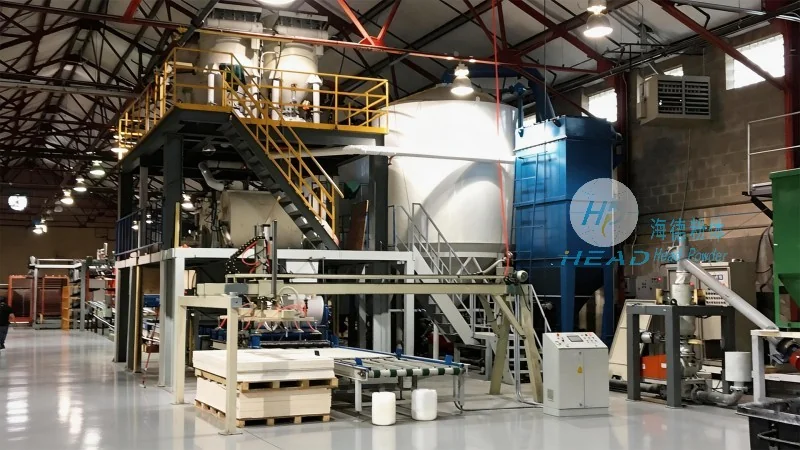
Common Calcined Gypsum Conveying Methods
Several conventional methods are employed for transporting calcined gypsum, each with distinct characteristics and applications. The most prevalent among them are mechanical conveyors, such as screw conveyors and belt conveyors, and pneumatic conveying systems. Understanding the strengths and limitations of each method is essential for selecting the most suitable solution for specific operational requirements.
1. Screw Conveyors
Screw conveyors, also called auger conveyors, are widely used for calcined gypsum transportation due to their simplicity and adaptability. These systems consist of a rotating helical screw inside a U-shaped or tubular housing. The screw pushes the material forward as it rotates, enabling horizontal, vertical, or inclined transport. Screw conveyors are particularly effective for handling bulk materials in a continuous flow. However, they have limitations when dealing with fine powders like calcined gypsum, as they can cause significant material degradation, increased dust generation, and higher maintenance costs due to wear and tear from the rotating screw and housing.
2. Belt Conveyors
Belt conveyors are another common mechanical solution for calcined gypsum transport. These systems use a continuous belt that moves over rollers or pulleys to transport materials horizontally or at a slight incline. Belt conveyors are suitable for handling larger, bulkier materials and can accommodate higher throughput compared to screw conveyors. Nevertheless, they face challenges with fine powders, as the material can easily fall through the belt or cause excessive dust. Additionally, belt conveyors require regular maintenance to prevent belt slippage, wear, and material buildup, which can lead to operational inefficiencies and increased downtime.
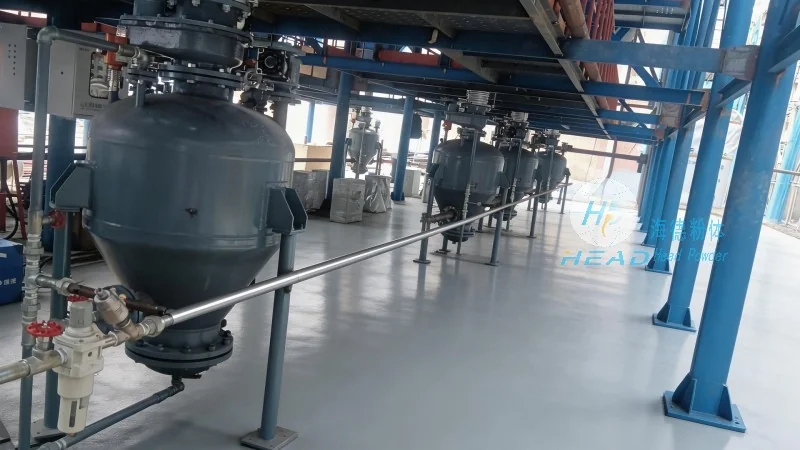
3. Pneumatic Conveying Systems
Pneumatic conveying, or air-based transport, offers a more advanced solution for calcined gypsum handling. This method uses compressed air to transport the material through a pipeline system. Pneumatic systems can be categorized into two main types: dilute-phase and dense-phase. Dilute-phase systems use low air-to-material ratios, suitable for long-distance and high-velocity transport, while dense-phase systems employ higher air-to-material ratios, ideal for precise, low-velocity transport with minimal material degradation. Pneumatic conveying is known for its ability to handle fine powders, reduce dust emissions, and maintain material integrity during transport.
HeadPowder's Pneumatic Conveying System: Advantages and Features
Shandong HeadPowder Engineering Co., Ltd., a leading provider of material handling solutions, specializes in developing advanced pneumatic conveying systems tailored for calcined gypsum applications. The company's expertise in engineering and material science has led to the development of a highly efficient and reliable system that addresses the limitations of traditional mechanical conveyors. The HeadPowder pneumatic conveying system is designed to optimize calcined gypsum transport by combining high performance with low operational costs.
1. High Efficiency and Throughput
HeadPowder's pneumatic conveying system delivers superior efficiency in calcined gypsum transportation. By utilizing compressed air to move material through a closed pipeline system, the system achieves high throughput rates, even for fine powders. The design of the system, including the selection of appropriate air velocities and pipeline diameters, ensures that material is transported quickly and consistently, minimizing downtime and maximizing production output. This high efficiency is particularly beneficial for industrial applications where continuous material flow is critical.
2. Low Material Loss and Dust Control
One of the key advantages of HeadPowder's pneumatic conveying system is its ability to minimize material loss and control dust emissions. Unlike mechanical conveyors that can cause material degradation and spillage, the pneumatic system maintains the integrity of calcined gypsum by reducing friction and impact during transport. The closed pipeline design prevents dust from escaping into the environment, ensuring compliance with environmental regulations and improving workplace safety. This feature is especially important for applications where dust control is a priority, such as in food processing or pharmaceutical industries.
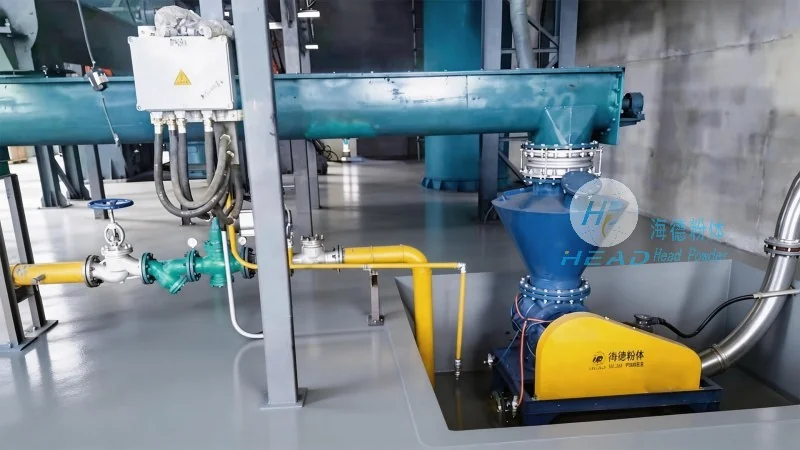
3. Adaptability to Complex Processes
The HeadPowder pneumatic conveying system is highly adaptable to various industrial processes and layouts. It can be integrated into existing production lines or designed as a standalone system, depending on the specific requirements of the application. The system can handle horizontal, vertical, and inclined transport, making it suitable for complex material handling scenarios. Additionally, the system can be customized to accommodate different material characteristics, such as varying particle sizes or moisture content, ensuring optimal performance in diverse operational conditions.
4. Low Maintenance and Operational Costs
HeadPowder's pneumatic conveying system is engineered for low maintenance and reduced operational costs. The use of high-quality materials and robust components minimizes wear and tear, extending the lifespan of the system. The closed pipeline design reduces the need for frequent cleaning and maintenance, as compared to mechanical conveyors that require regular inspection and replacement of parts. Furthermore, the system's energy efficiency, achieved through optimized air flow and pressure control, contributes to lower energy consumption and operational expenses over time.
Conclusion
Choosing the right calcined gypsum conveying method is essential for optimizing production efficiency and maintaining material quality. While mechanical conveyors like screw and belt systems have their applications, they often fall short in handling fine powders and controlling dust. Pneumatic conveying, particularly with advanced systems like HeadPowder's, offers a superior solution by providing high efficiency, low material loss, and adaptability. Shandong HeadPowder Engineering Co., Ltd. continues to innovate in material handling technology, delivering reliable and cost-effective solutions for calcined gypsum transportation that meet the evolving needs of modern industries.




