

Operation Process and Working Principle of Air-Driven Transport of Lithium Hexafluorophosphate Mater
Lithium hexafluorophosphate (LiPF6) is a critical electrolyte additive widely used in lithium-ion batteries, playing a vital role in enhancing battery performance and safety. The efficient and reliable transport of this material is essential for industrial production processes. This article provides an in-depth overview of the operation process and working principle of air-driven transport systems for LiPF6, highlighting the technical aspects and operational considerations.
About HeadPowder Engineering
HeadPowder, formally known as Shandong HeadPowder Engineering Co., Ltd., is a leading provider of specialized engineering solutions for the chemical and battery industries. With a focus on innovation and precision, the company has established itself as a trusted partner in delivering advanced material handling systems. HeadPowder’s expertise in air-driven transport technology ensures that clients receive high-quality equipment tailored to their specific production needs.
Working Principle of Air-Driven Transport Systems
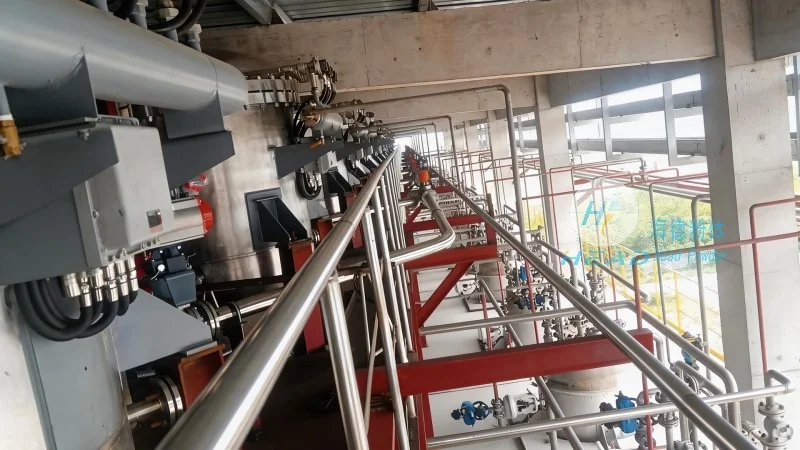
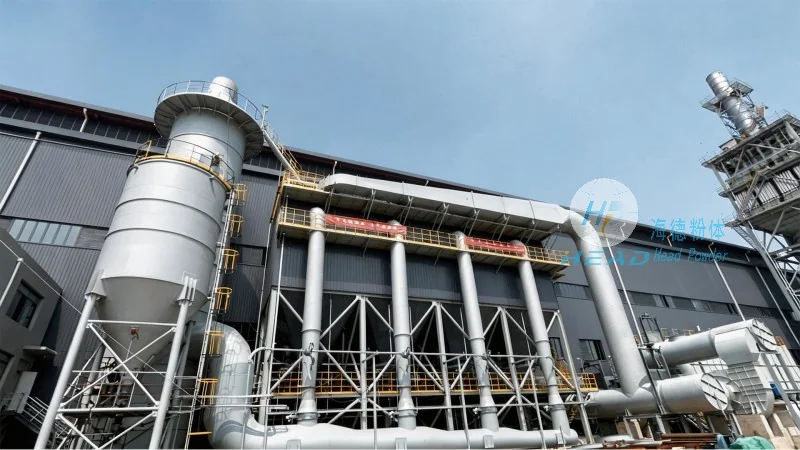
The air-driven transport system for LiPF6 operates on the principle of pneumatic conveying, where material is transported through a pipeline using compressed air. The system typically consists of a hopper, a feeder, a pipeline network, and a receiver. The process begins with the material being fed from the hopper into the feeder, which controls the flow rate. Compressed air is then introduced into the pipeline, creating a flow that propels the material particles forward. The velocity of the air and the particle size determine the conveying efficiency and system performance.
Operation Process of the Air-Driven Transport System
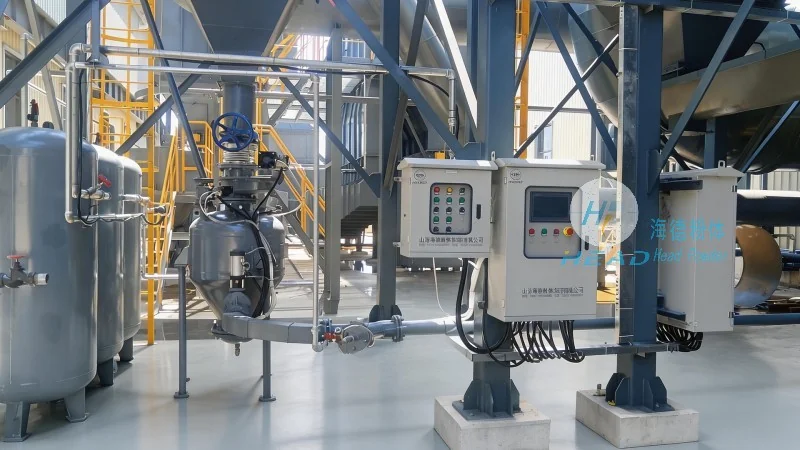
The operation process of the air-driven transport system for LiPF6 involves several key steps. First, the material is stored in a hopper, which is equipped with a level indicator to monitor the material inventory. The feeder, often a rotary valve or a screw feeder, regulates the material discharge rate, ensuring a consistent flow into the pipeline. Compressed air, generated by a blower or a compressor, is supplied to the pipeline at a controlled pressure and flow rate. The air and material mixture travels through the pipeline, with the material being carried by the air stream. The system may include intermediate silos or receivers to collect the material at the destination. The entire process is automated, with sensors and control systems monitoring parameters such as pressure, flow rate, and material level to maintain optimal operation.
Advantages and Features of the Air-Driven Transport System
HeadPowder’s air-driven transport system for LiPF6 offers several advantages over traditional material handling methods. The system is dust-free, reducing the risk of contamination and improving workplace safety. It also provides a closed-loop operation, minimizing material loss and environmental impact. The system’s flexibility allows for easy integration with existing production lines, and its compact design saves space in industrial facilities. Additionally, the system can handle a wide range of particle sizes and material types, making it suitable for various production scenarios.
Application Scenarios in Battery Manufacturing
The air-driven transport system is widely used in the battery manufacturing industry for the transport of LiPF6 from storage to production lines. It is particularly effective in applications where material needs to be transported over long distances or through complex pipeline networks. The system’s ability to maintain material purity and prevent contamination is crucial for ensuring the quality of the final battery products. HeadPowder’s customized solutions cater to the specific requirements of each client, ensuring that the system meets the stringent standards of the battery industry.
Maintenance and Operational Considerations
Proper maintenance of the air-driven transport system is essential to ensure its long-term performance and reliability. Regular checks of the blower, feeder, and pipeline components are necessary to prevent breakdowns and ensure optimal operation. The system should be cleaned regularly to remove any accumulated material or debris, which can affect the conveying efficiency. Operational personnel should be trained on the proper use and maintenance of the system to minimize downtime and maximize productivity. HeadPowder provides comprehensive support services, including maintenance contracts and technical assistance, to help clients maintain their systems in optimal condition.