

The Operation Process and Working Principle of Sawdust and Husk Powder Pneumatic Conveying
Shandong HeadPowder Engineering Co., Ltd. specializes in providing advanced solutions for the pneumatic conveying of sawdust and husk powders. This article delves into the detailed operation process and working principles of our systems, designed to ensure efficient and reliable material transport in industrial applications.
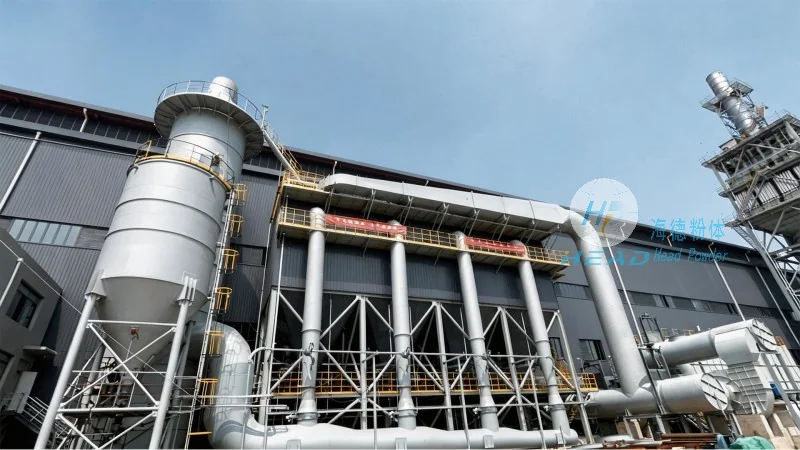
Introduction to Pneumatic Conveying Systems for Sawdust and Husk Powders
Our company, HeadPowder, is dedicated to delivering high-performance pneumatic conveying systems tailored for the transportation of sawdust and husk powders. These materials, commonly used in various industries such as woodworking, agriculture, and biomass energy, require specialized handling due to their light weight, fine particle size, and potential for dust explosion risks. The pneumatic conveying systems developed by HeadPowder address these challenges by offering a safe, efficient, and cost-effective method for material transport.
Key Components of the Pneumatic Conveying System
The pneumatic conveying system for sawdust and husk powders consists of several critical components that work in tandem to achieve reliable operation. These include the material hopper, feeder, air compressor, pipeline system, and control unit. Each component plays a vital role in the overall process, ensuring that the powders are transported smoothly from the source to the destination.
The Operation Process: Step-by-Step Overview
The operation of the sawdust and husk powder pneumatic conveying system begins with the loading of the material into the hopper. The hopper is designed to hold a sufficient quantity of the powder, allowing for continuous feeding without interruptions. Once the material is in the hopper, the feeder mechanism, typically a rotary valve or a screw feeder, starts to discharge the powder into the pipeline. The feeder controls the flow rate, ensuring a consistent and controlled amount of material is introduced into the system.
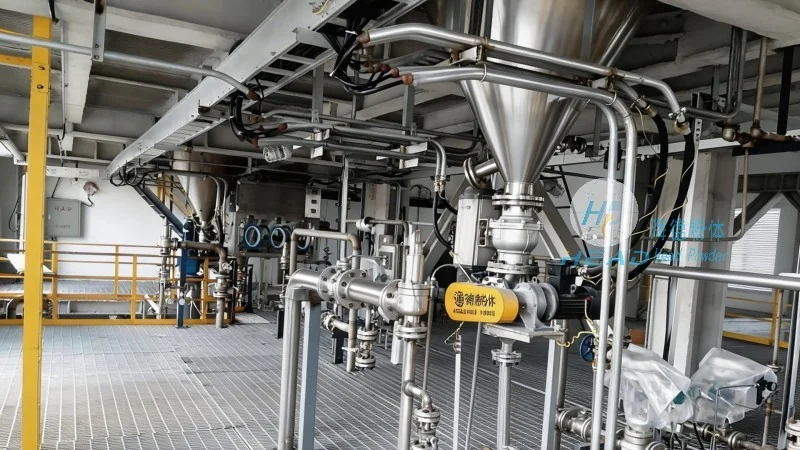
Simultaneously, the air compressor generates the necessary pressure and airflow to move the material through the pipeline. The compressed air is introduced into the pipeline at the inlet of the hopper, creating a pressure differential that propels the powder particles forward. The air and powder mixture travels through the pipeline, which may include bends, elbows, and other fittings, before reaching the discharge point. At the discharge end, the material is separated from the air, often using a cyclone separator or a filter, and collected in the receiving container.
Working Principle: How the System Transfers Material
The core working principle of the pneumatic conveying system relies on the interaction between the air flow and the powder particles. The system operates on the principle of fluidization, where the compressed air creates a turbulent flow that lifts and transports the powder particles. The velocity of the air is maintained at a level sufficient to overcome the gravitational force acting on the particles, ensuring that they remain suspended and move along the pipeline. The pressure drop along the pipeline is carefully managed to prevent excessive energy consumption while maintaining the required flow rate.
Advantages of Using Pneumatic Conveying for Sawdust and Husk Powders
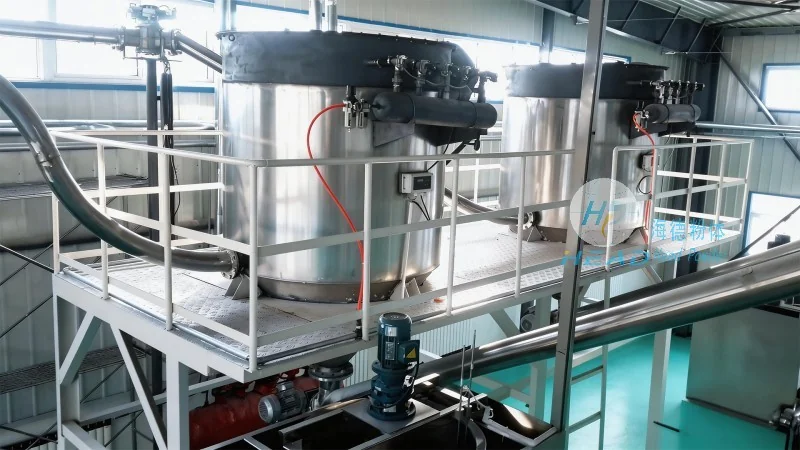
Employing pneumatic conveying systems for sawdust and husk powders offers several advantages over traditional methods like belt conveyors or manual handling. Firstly, it provides a dust-free and enclosed environment, reducing the risk of dust explosions and improving workplace safety. Secondly, the system is highly efficient, allowing for continuous and uninterrupted material transport, which increases productivity and reduces downtime. Additionally, the compact design of the system saves space in industrial facilities, making it suitable for both large-scale and small-scale applications. The low maintenance requirements and long service life of the components also contribute to cost savings over time.
Applications and Industries Served
The pneumatic conveying systems developed by HeadPowder are widely used in various industries that handle sawdust and husk powders. These include the woodworking industry, where sawdust is transported from sawmills to storage or processing facilities. In the agricultural sector, husk powders from crops like rice or wheat are conveyed to silos or processing plants. The biomass energy industry also utilizes these systems to transport biomass materials for combustion or gasification. Other applications include the production of animal feed, where husk powders are mixed with other ingredients, and the manufacturing of composite materials, where sawdust is used as a filler.
Conclusion: Reliable and Efficient Material Transport Solutions
Shandong HeadPowder Engineering Co., Ltd. offers comprehensive pneumatic conveying solutions for the efficient and safe transport of sawdust and husk powders. By understanding the detailed operation process and working principles of our systems, industries can enhance their material handling capabilities, improve productivity, and ensure compliance with safety regulations. Our commitment to quality and innovation ensures that our customers receive reliable and durable systems that meet their specific needs. With our headquarters in Shandong, China, HeadPowder continues to lead the industry in providing advanced pneumatic conveying technologies for the sustainable handling of agricultural and industrial powders.