

Principle and Working Scene Characteristics of Pneumatic Conveying Equipment for Graphite Powder
HeadPowder, a leading manufacturer based in Shandong, China, specializes in the design and production of advanced pneumatic conveying systems tailored for the handling of graphite powder. This article delves into the fundamental principles behind these systems and highlights the key characteristics of their operational environments.
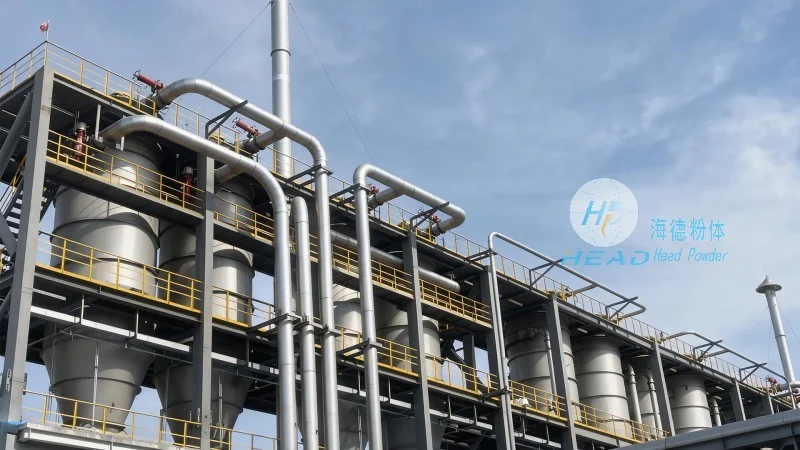
Company Profile and Background
Shandong HeadPowder Engineering Co., Ltd., commonly known as HeadPowder, is a reputable enterprise dedicated to providing high-quality solutions for material handling in various industrial applications. With a strong focus on innovation and precision engineering, the company has established itself as a trusted partner in the field of pneumatic conveying technology. HeadPowder's headquarters is located in Shandong, China, where the company leverages local expertise and resources to develop cutting-edge equipment that meets the evolving demands of the industry.
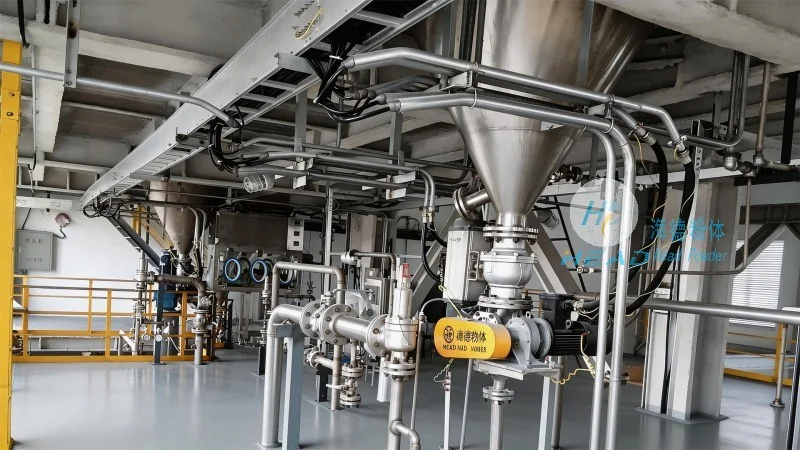
The Principle of Pneumatic Conveying for Graphite Powder
Pneumatic conveying equipment operates on the principle of transporting bulk materials, such as graphite powder, through a pipeline using a pressurized or suction air stream. The system typically consists of a hopper, a feeder, a conveying line, and a receiver. In the case of graphite powder, the material is first fed into the hopper, where it is then transferred to the feeder. The feeder controls the flow rate of the powder into the conveying line. As the air stream moves through the pipeline, it creates a negative pressure or positive pressure environment that propels the graphite particles forward. The design of the system, including the size of the hopper, the type of feeder, and the diameter and length of the conveying line, is crucial for ensuring efficient and reliable transport of the powder. The air velocity within the pipeline must be sufficient to overcome the resistance caused by the powder's density and the friction between particles and the pipe walls. Properly designed pneumatic conveying systems can achieve high transport rates while minimizing product degradation and contamination.
Key Working Scene Characteristics
The operational environment of pneumatic conveying equipment for graphite powder is characterized by several distinct features that influence system performance and efficiency. First, the material's properties, such as its particle size distribution, density, and flowability, play a critical role in determining the optimal conveying parameters. Graphite powder is often fine and can be prone to agglomeration, which may require additional measures, such as vibration or air agitation, to maintain consistent flow. Second, the system's layout and integration with other production processes are important considerations. Pneumatic conveying systems are commonly used in closed-loop or semi-closed-loop configurations to ensure minimal dust emission and environmental compliance. The choice between positive and negative pressure systems depends on the specific application and the need to handle materials with varying characteristics. For example, negative pressure systems are often preferred for applications where the material is sensitive to contamination or where dust control is paramount. Third, the system's scalability and adaptability are essential for meeting the changing demands of production lines. Modern pneumatic conveying equipment is designed to be modular, allowing for easy expansion or reconfiguration as production needs evolve. This flexibility ensures that the system can accommodate increased throughput or changes in material types without significant modifications.
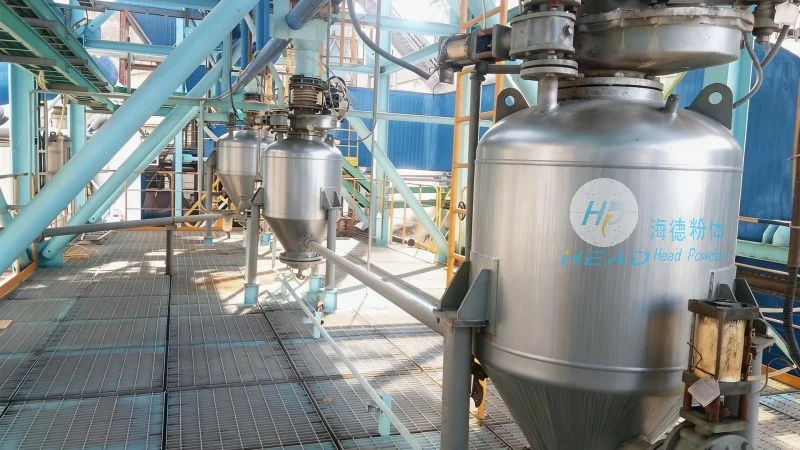
Advantages in Industrial Applications
The use of pneumatic conveying equipment for graphite powder offers several advantages in industrial settings. One of the primary benefits is the ability to transport materials in a closed system, which reduces dust exposure and improves workplace safety. This is particularly important for graphite powder, which can be hazardous if inhaled or if it comes into contact with skin. Additionally, pneumatic conveying systems can handle materials with high moisture content or those that are prone to caking, as the air stream helps to maintain the material's flowability. The equipment also offers high transport rates and can cover long distances with minimal energy consumption compared to traditional methods like bucket elevators or belt conveyors. Furthermore, the system's compact design allows for integration into existing production lines without requiring extensive space or structural modifications. This makes it an attractive solution for facilities with limited floor space or where space optimization is a priority. Overall, the combination of efficiency, safety, and adaptability makes pneumatic conveying equipment an ideal choice for the handling of graphite powder in various industrial applications.