

Principles and Classification Applications of PTA Powder Pneumatic Conveying
PTA (Polyethylene Terephthalate Acid) powder is a critical raw material in the production of polyester fibers and resins. Efficient and reliable transportation of PTA powder from storage to processing units is essential for maintaining production efficiency and product quality. Pneumatic conveying systems offer a versatile solution for handling PTA powder, leveraging air as the conveying medium to transport the material through pipelines. This article provides an overview of the working principles and classification of PTA powder pneumatic conveying systems, along with practical applications in industrial settings.
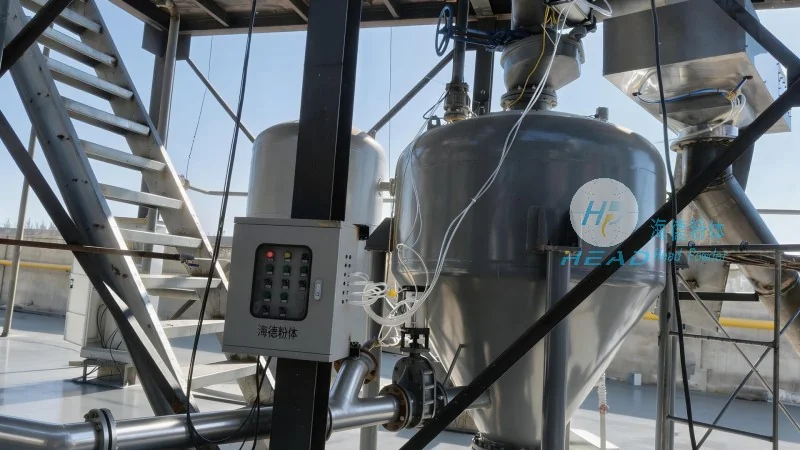
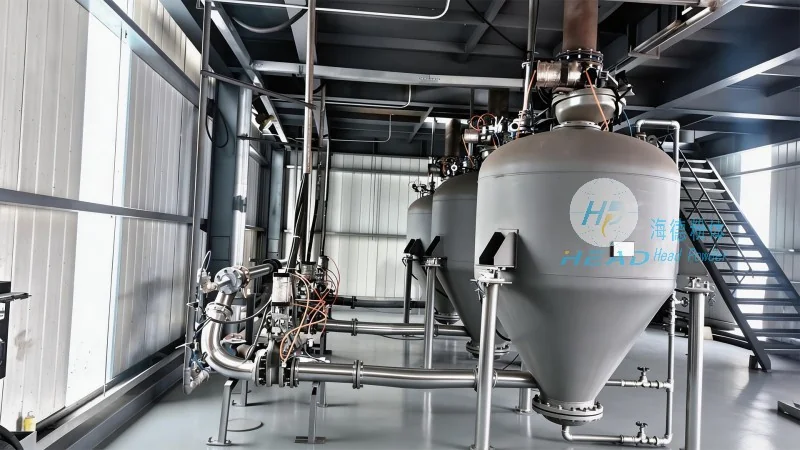
Basic Working Principle of PTA Powder Pneumatic Conveying
The core principle of pneumatic conveying for PTA powder involves the use of compressed air to create a flow that transports the powder particles through a pipeline. The system typically consists of a material hopper, a feeder, a conveying line, and a receiver. The PTA powder is first fed into the hopper, where it is then introduced into the conveying line via a feeder. Compressed air is introduced at one end of the pipeline, creating a pressure differential that propels the powder particles forward. The air velocity within the pipeline must be sufficient to overcome the gravitational force acting on the powder particles and to prevent particle deposition or clogging. The design of the conveying system, including the air pressure, flow rate, and pipeline dimensions, is critical to ensure stable and efficient transport of PTA powder.
Classification of PTA Powder Pneumatic Conveying Systems
PTA powder pneumatic conveying systems can be classified into several categories based on the air flow characteristics and the mode of operation. The primary classifications include:
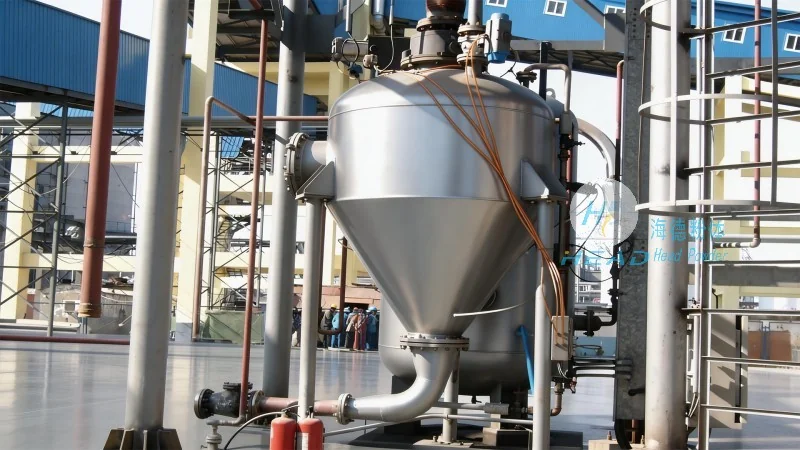
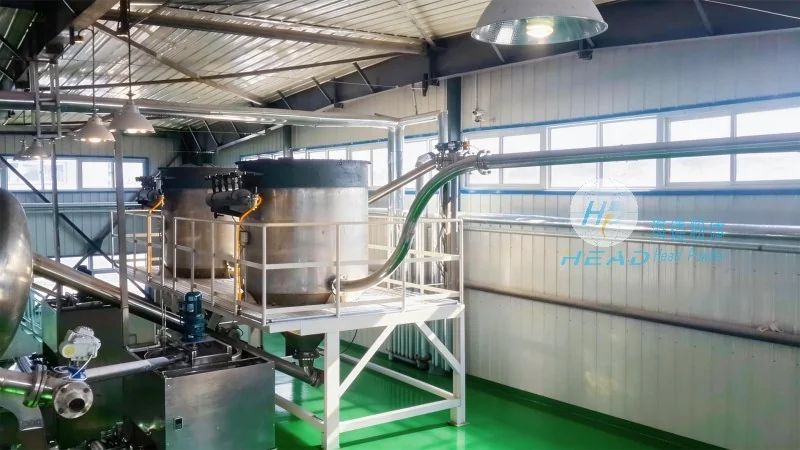
- Solids-Laden Flow (or Dense Phase): In this mode, the powder particles are carried in a dense phase, where the air velocity is relatively low, and the particles are in close contact with each other. This method is suitable for handling fine powders like PTA, as it minimizes particle degradation and reduces the risk of dust generation. The system operates at higher air pressures and lower air velocities compared to dilute phase systems.
- Dilute Phase Flow: This classification involves the transport of PTA powder in a dilute phase, where the particles are suspended in the air stream with a relatively low solid concentration. Dilute phase systems are typically used for longer conveying distances and at higher air velocities. They are often more cost-effective for shorter distances but may require higher air pressures and more robust equipment to handle the higher air flow rates.
- Vacuum Conveying: Vacuum conveying systems use a vacuum to draw PTA powder from a source into a receiver. This method is particularly useful for applications where the powder needs to be transported from a lower elevation to a higher one or when the material is to be collected from a dispersed source. Vacuum systems are often employed in situations where the material is sensitive to pressure changes or where the source is located in a confined space.
Key Factors Influencing PTA Powder Pneumatic Conveying Performance
Several factors influence the performance and efficiency of PTA powder pneumatic conveying systems. These include: