

Operation Process and Working Principle of Nanometer Calcium Carbonate Powder Pneumatic Conveying Ma
HeadPowder, a leading manufacturer based in Shandong, China, specializes in providing advanced solutions for material handling, particularly in the field of pneumatic conveying systems for nanometer calcium carbonate powders. This article delves into the operation process and working principle of the nanometer calcium carbonate powder pneumatic conveying machine, offering insights into its functionality and practical application.
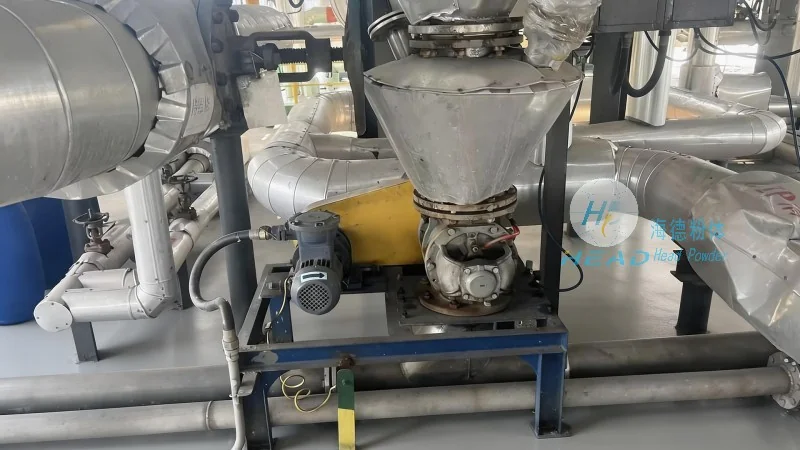
Introduction to Nanometer Calcium Carbonate Powder Pneumatic Conveying
Nanometer calcium carbonate (n-CaCO₃) is a widely used industrial filler and additive, valued for its high purity, fine particle size, and excellent dispersion properties. The efficient and reliable transport of n-CaCO₃ powders is crucial for maintaining product quality and operational efficiency in various industries, including plastics, coatings, and paper manufacturing. Pneumatic conveying systems offer a non-contact, low-cost, and flexible method for transporting such fine powders over short to medium distances, making them an ideal choice for n-CaCO₃ powder handling.
Working Principle of the Pneumatic Conveying Machine
The core of the nanometer calcium carbonate powder pneumatic conveying machine lies in the principle of air flow and particle suspension. The system operates by creating a pressure differential or vacuum to move the powder through a pipeline using compressed air or a suction fan. In a typical positive pressure system, compressed air is introduced into the material feed hopper, where it lifts the n-CaCO₃ powder and propels it through the conveying line. The air-particle mixture then travels to the discharge point, where the air is separated from the powder, often using a cyclone separator or a filter. In contrast, a negative pressure (suction) system draws the powder into the pipeline using a vacuum pump, which is particularly useful for handling powders in enclosed spaces or for long-distance transport where pressure drop is a concern.
Key Components and Their Functions
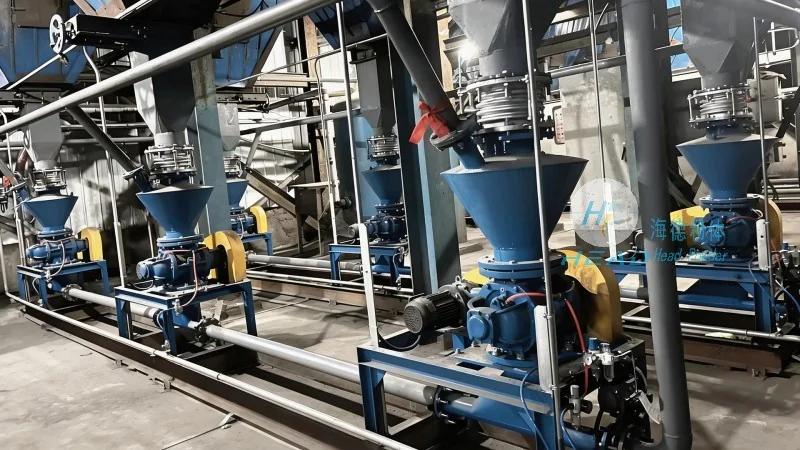
The nanometer calcium carbonate powder pneumatic conveying machine comprises several critical components, each playing a vital role in the overall operation. These include:
- Material Feed Hopper: A container that holds the n-CaCO₃ powder and provides a controlled feed to the conveying system. It often features a valve mechanism to regulate the flow rate and prevent material bridging or clogging.
- Air Compressor or Vacuum Pump: The power source that generates the necessary air pressure or vacuum to move the powder. The choice between a compressor and a vacuum pump depends on the system design, distance, and material characteristics.
- Conveying Pipeline: A network of pipes that transports the n-CaCO₃ powder from the feed point to the discharge point. The pipeline is typically made of corrosion-resistant materials like stainless steel or plastic to ensure durability and prevent contamination.
- Cyclone Separator or Filter: A device used to separate the air from the powder at the discharge end. The cyclone uses centrifugal force to separate particles from the gas stream, while filters may use fabric or cartridge elements to capture fine particles and ensure clean air release.
- Control System: An automated or manual control panel that monitors and regulates the operation of the system, including pressure, flow rate, and material level. This ensures safe and efficient operation, preventing overloading or system failure.
Operation Process of the Pneumatic Conveying Machine
The operation of the nanometer calcium carbonate powder pneumatic conveying machine follows a systematic sequence to ensure smooth and continuous transport. The process typically includes the following steps:
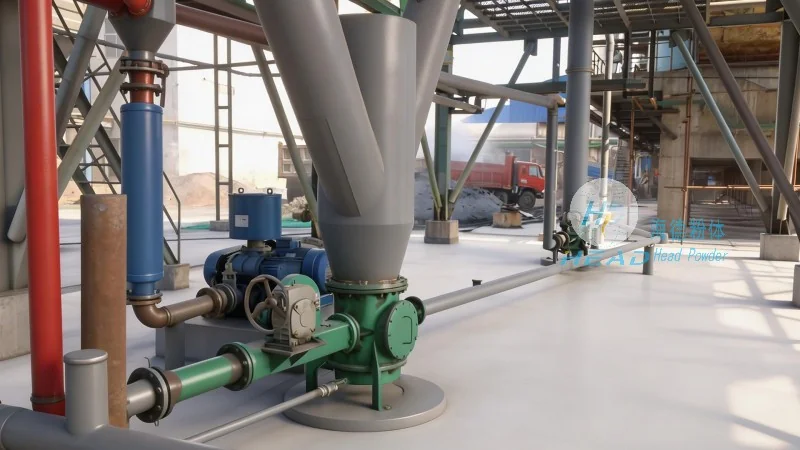
- Preparation and Startup: Before operation, the system is checked for any blockages or leaks in the pipeline and components. The air compressor or vacuum pump is started, and the pressure or vacuum is adjusted to the required level. The material feed hopper is filled with n-CaCO₃ powder, and the feed valve is opened to allow the powder to enter the system.
- Powder Suspension and Conveying: Once the air flow is established, the n-CaCO₃ powder is lifted from the hopper and carried through the pipeline by the air stream. The particle size and air velocity are carefully controlled to maintain a stable suspension, preventing particle agglomeration or deposition in the pipeline.
- Discharge and Separation: At the discharge point, the air-particle mixture enters the cyclone separator or filter. The centrifugal force in the cyclone separates the powder from the air, which is then discharged into the receiving container. The separated air is either vented to the atmosphere or recirculated back to the system, depending on the design.
- System Shutdown: When the material transport is complete, the feed valve is closed, and the air compressor or vacuum pump is turned off. The system is then allowed to return to a stable state, and any residual powder is cleared from the pipeline to prevent clogging or contamination.
Advantages of Using Pneumatic Conveying for Nanometer Calcium Carbonate
Employing a pneumatic conveying machine for nanometer calcium carbonate powder offers several advantages over traditional methods like belt conveyors or bucket elevators. These benefits include:
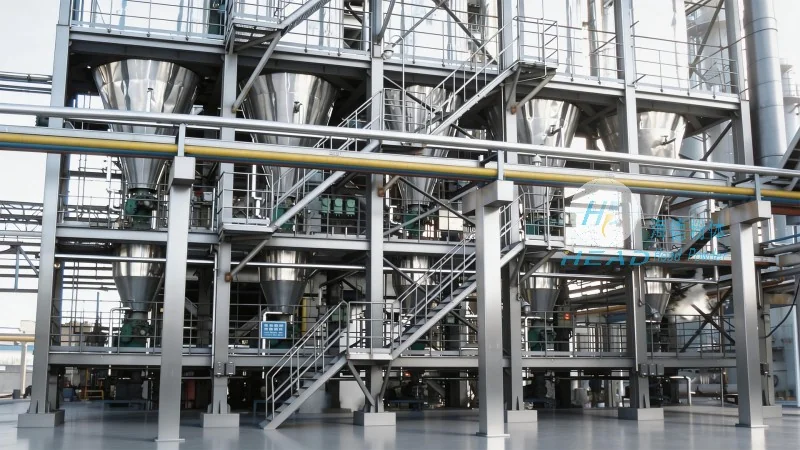
- Non-Contact Handling: The powder is transported without physical contact with the equipment, minimizing contamination and preserving the purity of the n-CaCO₃ particles.
- Flexibility and Scalability: The system can be easily modified or expanded to accommodate changes in production volume or material types, making it suitable for both small-scale and large-scale operations.
- Low Maintenance: Pneumatic conveying systems have fewer moving parts compared to mechanical conveyors, reducing the risk of wear and tear and lowering maintenance costs.
- Energy Efficiency: Modern pneumatic conveying systems are designed to be energy-efficient, with optimized air flow and pressure control that minimize energy consumption.
- Reduced Downtime: The absence of mechanical components like belts or chains reduces the likelihood of breakdowns and extends the operational life of the equipment.
Applications and Industry Impact
The nanometer calcium carbonate powder pneumatic conveying machine is widely used in various industries where fine powders need to be transported efficiently and reliably. In the plastics industry, it is used to add n-CaCO₃ as a filler to improve the mechanical strength and stiffness of plastic products. In the coatings industry, it enhances the opacity and whiteness of paints and coatings. In the paper industry, it is used to increase the brightness and strength of paper products. The consistent and clean transport of n-CaCO₃ powders via pneumatic conveying ensures that the final products meet the required quality standards and performance specifications.
Conclusion
Shandong HeadPowder Engineering Co., Ltd. provides high-quality nanometer calcium carbonate powder pneumatic conveying machines that combine advanced technology with reliable performance. By understanding the working principle and operation process of these systems, industries can optimize their material handling processes, improve product quality, and enhance overall operational efficiency. The use of pneumatic conveying for n-CaCO₃ powders represents a significant advancement in powder transport technology, offering a cost-effective and efficient solution for modern industrial applications.