

Operation Process and Working Principle of High-Alumina Fly Ash Pneumatic Conveying System Equipment
High-alumina fly ash, a byproduct from the combustion of coal in thermal power plants, presents unique handling challenges due to its fine particle size and abrasive nature. The pneumatic conveying system designed by Shandong HeadPowder Engineering Co., Ltd. addresses these challenges by providing an efficient, dust-free, and reliable method for transporting high-alumina fly ash from storage silos to processing or disposal sites. This system is engineered to handle the specific characteristics of high-alumina fly ash, ensuring optimal performance and minimal maintenance.
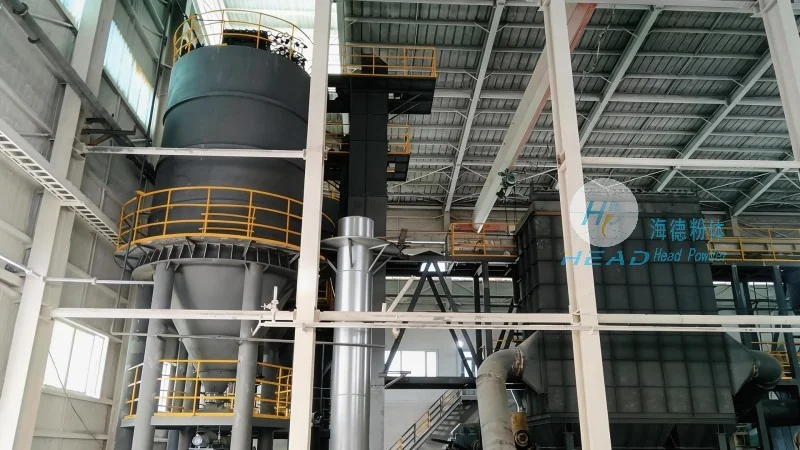
At the core of the system is a series of components that work in concert to achieve seamless material transport. The process begins with the feeding of high-alumina fly ash from a storage silo into the conveying line. A rotary valve or feeder is typically used to control the flow rate, ensuring a consistent and controlled feed into the system. This initial step is critical as it prevents blockages and maintains the integrity of the material flow.
Once the material is fed into the conveying line, it is introduced into a high-pressure air stream generated by a positive displacement blower or a rotary lobe pump. The air stream, often referred to as the conveying medium, is responsible for transporting the fly ash particles through the pipeline. The velocity of the air is carefully controlled to ensure that the particles remain suspended and do not settle, which is essential for maintaining the efficiency of the conveying process.
The conveying line itself is constructed from materials that are resistant to abrasion and corrosion, such as stainless steel or high-grade plastic, to withstand the harsh conditions of high-alumina fly ash. The pipeline is typically arranged in a loop or a series of straight sections, with appropriate bends and elbows that are designed to minimize pressure losses and prevent material accumulation. The system may also include a series of check valves or airlocks to prevent backflow and ensure unidirectional flow of the material.
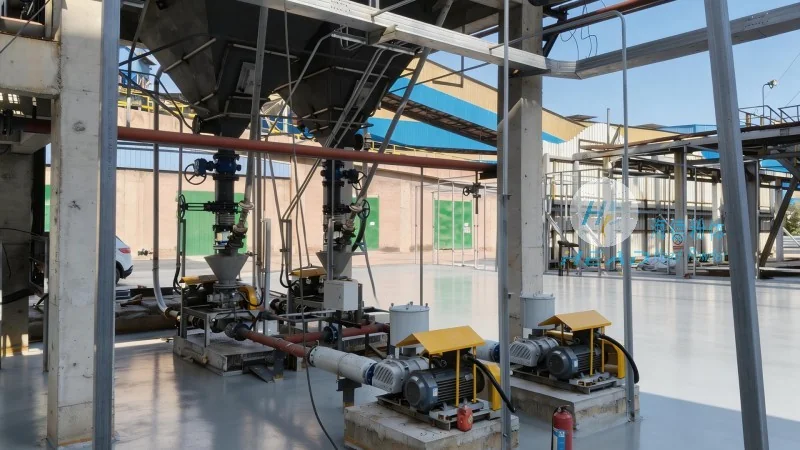
As the high-alumina fly ash travels through the conveying line, it is transported to the discharge point, which may be a processing facility, a storage silo, or a disposal site. At the discharge point, a rotary valve or a dust collector is used to separate the fly ash from the air stream. The air is then filtered and discharged, while the fly ash is collected and processed according to the specific requirements of the application.
The working principle of the pneumatic conveying system is based on the principle of fluidization and suspension. The high-pressure air stream creates a turbulent flow within the pipeline, which suspends the fly ash particles and allows them to be transported over long distances without the need for mechanical components like conveyors or elevators. This method not only reduces the risk of material spillage and contamination but also minimizes the need for manual handling, enhancing safety and operational efficiency.
Shandong HeadPowder Engineering Co., Ltd., a leading manufacturer in the field of pneumatic conveying systems, specializes in designing and manufacturing equipment tailored to the unique needs of high-alumina fly ash. The company's expertise lies in understanding the properties of different fly ash types and adapting the system design to optimize performance. With a focus on durability, reliability, and energy efficiency, the company's systems are built to withstand the demanding conditions of industrial applications and provide long-term operational benefits.
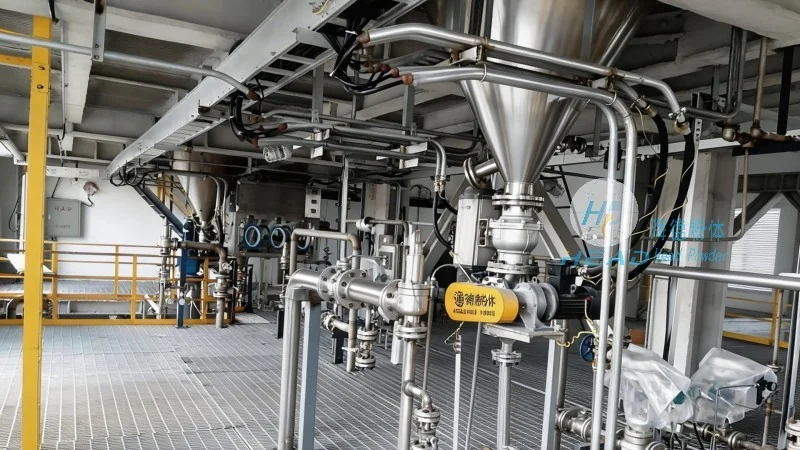
The operation of the high-alumina fly ash pneumatic conveying system involves several key steps that are coordinated to ensure smooth and continuous material transport. The system starts with the feeding of the fly ash from the storage silo, where the material is stored under controlled conditions to prevent moisture and agglomeration. The feeder then regulates the flow rate, ensuring a consistent feed into the conveying line. The high-pressure air stream is then introduced, creating a suspension of the fly ash particles that are carried through the pipeline.
The conveying line is designed with appropriate dimensions and materials to minimize pressure losses and ensure that the air velocity remains above the minimum required to keep the particles suspended. The system may include intermediate silos or surge tanks to buffer the flow and prevent overloading of downstream equipment. These components help to maintain a stable flow rate and prevent fluctuations that could affect the performance of the system.
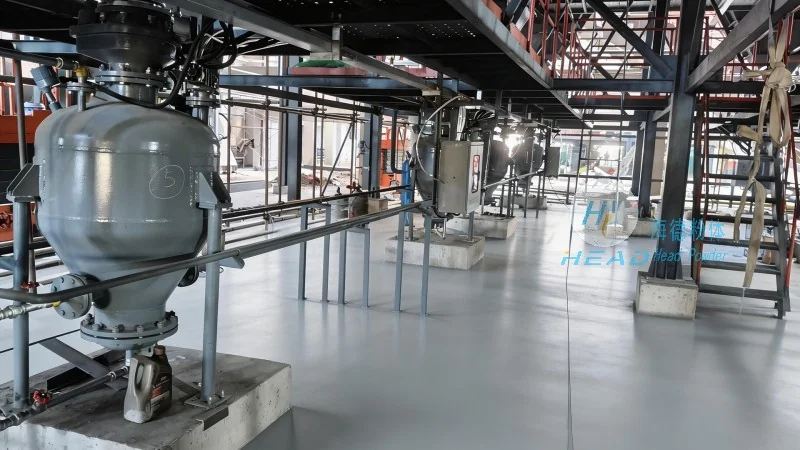
At the discharge end, the system uses a dust collector or a cyclone separator to separate the fly ash from the air stream. The air is filtered and discharged, while the fly ash is collected and processed. The collected fly ash can be used in various applications, such as cement production, concrete additives, or as a raw material for other industrial processes. This not only reduces the environmental impact of fly ash disposal but also provides economic benefits by recycling the material.
The maintenance of the high-alumina fly ash pneumatic conveying system is an important aspect of its operation. Regular inspections and maintenance are required to ensure that all components are functioning properly and to prevent any potential issues. The system includes features such as pressure sensors, flow meters, and alarms that help to monitor the operation and alert operators to any abnormalities. The company, Shandong HeadPowder Engineering Co., Ltd., provides comprehensive maintenance services and spare parts to ensure that the system operates at peak efficiency and has a long service life.
In conclusion, the high-alumina fly ash pneumatic conveying system developed by Shandong HeadPowder Engineering Co., Ltd. offers an efficient and reliable solution for transporting high-alumina fly ash. By understanding the unique properties of the material and designing a system that addresses these challenges, the company has created a product that meets the demands of modern industrial applications. The system's operation, based on the principles of pneumatic conveying, provides a safe, clean, and cost-effective method for handling high-alumina fly ash, contributing to both environmental sustainability and operational efficiency.