

Working Principle and Features of Bauxite Pneumatic Conveying Systems
For industrial applications involving the transport of bauxite, a reliable and efficient conveying system is essential. Bauxite, a key raw material in the production of aluminum and various chemical products, requires specialized handling to ensure minimal loss and optimal processing. The bauxite pneumatic conveying line, developed by Shandong HeadPowder Engineering Co., Ltd., represents a cutting-edge solution that addresses these challenges through advanced engineering and design.
Company Introduction
HeadPowder, as the professional manufacturer of bauxite pneumatic conveying systems, is committed to providing high-quality equipment tailored to the specific needs of the mining and chemical industries. With a strong focus on innovation and customer satisfaction, the company has established itself as a leading provider of pneumatic conveying solutions. HeadPowder’s headquarters is located in Shandong, China, where its team of experts continuously researches and optimizes conveying technologies to meet evolving industry demands.
Working Principle of Bauxite Pneumatic Conveying Systems
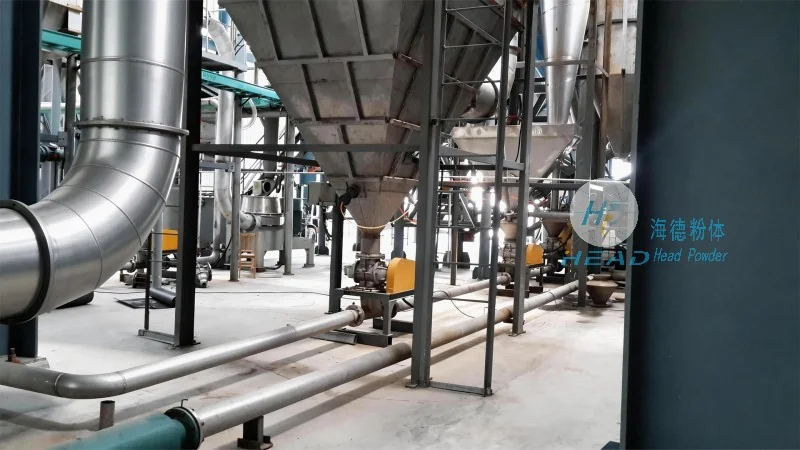
The core of a bauxite pneumatic conveying system lies in its ability to transport bulk materials like bauxite through a pipeline using air or gas as the conveying medium. This process, known as pneumatic conveying, operates on the principle of creating a pressure differential within the system. By generating either positive or negative pressure, the system can draw or push the material along the pipeline. The system typically consists of several key components, including a hopper for material storage, a feeder to control the flow rate, a conveying line (often equipped with bends and valves), and a receiver to deposit the material at the destination. The air compressor or vacuum pump provides the necessary pressure to move the bauxite particles, which are often mixed with a small amount of air or gas to reduce friction and prevent blockages. This method allows for a continuous, dust-free, and efficient transport of bauxite from the source to the processing plant.
Key Features and Advantages
Bauxite pneumatic conveying lines offer several distinct advantages that make them preferable to traditional mechanical conveying methods. Firstly, they provide a dust-free environment, which is crucial for maintaining workplace safety and compliance with environmental regulations. Unlike belt or screw conveyors, pneumatic systems do not generate dust, reducing the risk of respiratory issues among workers and minimizing the need for extensive dust control measures. Secondly, these systems offer high efficiency and flexibility. They can handle a wide range of bauxite particle sizes and moisture contents, adapting to varying production conditions. The ability to adjust the air flow rate and pressure allows for precise control over the conveying speed, ensuring that the material is transported without excessive wear or degradation. Additionally, pneumatic conveying systems are compact and can be installed in confined spaces, making them suitable for plants with limited floor area. The lack of moving parts in the pipeline reduces maintenance requirements, leading to lower operational costs and increased system reliability over time. Another significant feature is the ability to integrate multiple conveying lines into a single system, enabling the transport of bauxite from various sources to different processing units within the facility. This integration enhances operational efficiency and streamlines the overall production workflow.
Application in Bauxite Processing
In the bauxite processing industry, the pneumatic conveying line plays a critical role in moving raw material from storage silos to crushing and grinding equipment. The system ensures that the material is delivered in a controlled manner, preventing overloading of processing machinery and maintaining consistent feed rates. This consistency is vital for optimizing the performance of downstream processes, such as grinding and chemical extraction. By eliminating the need for manual handling or mechanical conveyors, the pneumatic system reduces labor costs and minimizes the risk of material spillage or contamination. The efficiency of the system also contributes to lower energy consumption, as the air flow is optimized to minimize pressure loss and energy waste. Furthermore, the dust-free operation of the system helps maintain the quality of the bauxite, as fine particles that could affect the chemical properties of the material are contained within the system. This ensures that the final product meets the required specifications for aluminum production or other chemical applications.
Conclusion
Shandong HeadPowder Engineering Co., Ltd. specializes in the design and manufacturing of bauxite pneumatic conveying systems that leverage advanced technology to provide reliable and efficient material transport solutions. By understanding the working principles and key features of these systems, industries can make informed decisions about implementing pneumatic conveying in their operations. The benefits, including dust-free handling, flexibility, and reduced maintenance, make bauxite pneumatic conveying lines an attractive choice for modern bauxite processing facilities. HeadPowder’s commitment to quality and innovation ensures that their systems meet the highest standards, delivering long-term value and performance to their clients in Shandong, China, and beyond.