HeadPowder Engineering Co., Ltd., a leading enterprise based in Shandong, China, specializes in the design and manufacturing of advanced material handling systems tailored for the lithium-ion battery industry. This article delves into the critical aspects of lithium-ion battery positive electrode material material handling, exploring the fundamental design principles that ensure efficiency, safety, and precision in the production process.
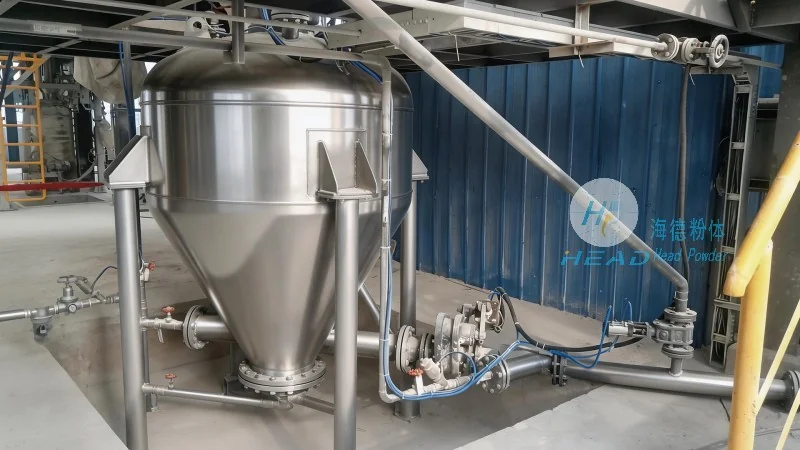
Understanding Material Handling in Lithium-Ion Battery Positive Electrode Production
In the lithium-ion battery manufacturing sector, the positive electrode material is a key component that directly impacts the battery's performance and lifespan. Efficient material handling is essential to maintain consistent quality, optimize production throughput, and minimize operational risks. Material handling systems for positive electrode materials involve the movement, storage, and processing of raw materials, intermediates, and finished products throughout the production line. These systems must be designed to handle various types of materials, such as active materials, binders, conductive agents, and additives, with precision and reliability.
Key Design Principles for Lithium-Ion Battery Positive Electrode Material Handling Systems
The design of material handling systems for lithium-ion battery positive electrode materials is governed by several critical principles that ensure optimal performance and adaptability to production demands. First, the system must prioritize material integrity and contamination control. This involves using clean, dust-free environments and equipment that minimize particle loss or cross-contamination. For instance, enclosed conveyor systems and sealed storage vessels are commonly employed to maintain material purity, which is crucial for achieving high battery energy density and cycle life.
Second, the design must emphasize energy efficiency and operational cost reduction. Modern material handling systems incorporate energy-saving technologies, such as variable frequency drives (VFDs) for conveyor motors, and optimized flow paths to reduce unnecessary movement of materials. This not only lowers electricity consumption but also extends equipment lifespan by minimizing wear and tear. Additionally, the system should be scalable to accommodate future production expansions, allowing for easy integration of new equipment or increased material throughput without major overhauls.
Third, automation and control are central to the design. Advanced material handling systems utilize programmable logic controllers (PLCs), sensors, and robotics to automate material movement, inventory management, and quality monitoring. For example, automated feeding systems can precisely meter active materials and binders, ensuring consistent mixing ratios, while sensors detect blockages or deviations in the flow, triggering alerts or corrective actions. This level of automation enhances production consistency and reduces the risk of human error, which is particularly important in high-volume manufacturing environments.
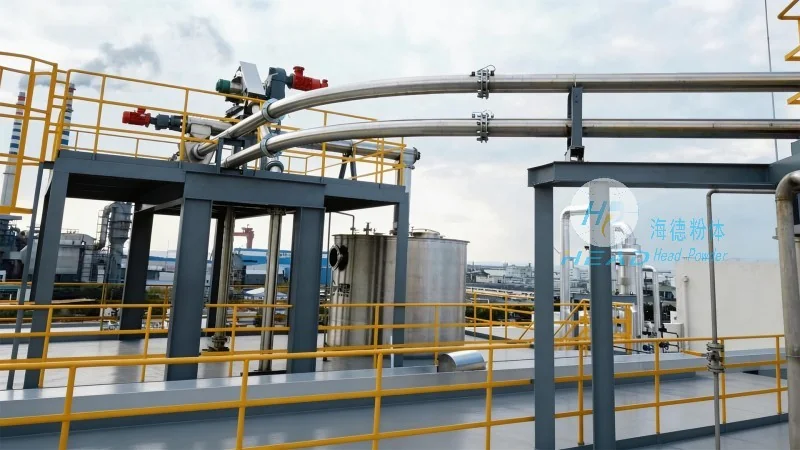
Fourth, safety and compliance are integral design considerations. Material handling systems must adhere to industrial safety standards and regulations, including proper ventilation for dust control, emergency stop mechanisms, and protective enclosures to prevent accidental contact with moving parts. The design also takes into account the physical properties of the materials, such as their dust explosion hazards, by incorporating explosion-proof components and dust collection systems. Compliance with local and international safety guidelines ensures that the system operates within legal and operational boundaries, protecting both personnel and equipment.
Components and Technologies in HeadPowder's Material Handling Solutions
HeadPowder Engineering Co., Ltd. integrates a range of advanced components and technologies into its material handling systems for lithium-ion battery positive electrode materials. These components are carefully selected to meet the specific requirements of the production process, ensuring reliability and performance. Key components include:
1. **Conveyor Systems**: HeadPowder offers a variety of conveyor types, such as belt conveyors, screw conveyors, and bucket elevators, tailored to the material's characteristics and handling needs. Belt conveyors are ideal for transporting bulk materials over long distances with minimal friction, while screw conveyors are suitable for vertical or inclined material movement, ensuring smooth and consistent flow. Bucket elevators are used for vertical transport of powders and granules, providing high capacity and efficient material transfer.
2. **Storage and Feeding Equipment**: The company designs and manufactures high-capacity storage silos and feeding systems that maintain material quality and ensure stable feed rates. These systems often include agitators or mixers to prevent material bridging or caking, which can disrupt the production process. The feeding equipment, such as rotary valves or vibratory feeders, precisely controls the flow of materials into the processing equipment, maintaining consistent mixing ratios and preventing overloading or underloading.
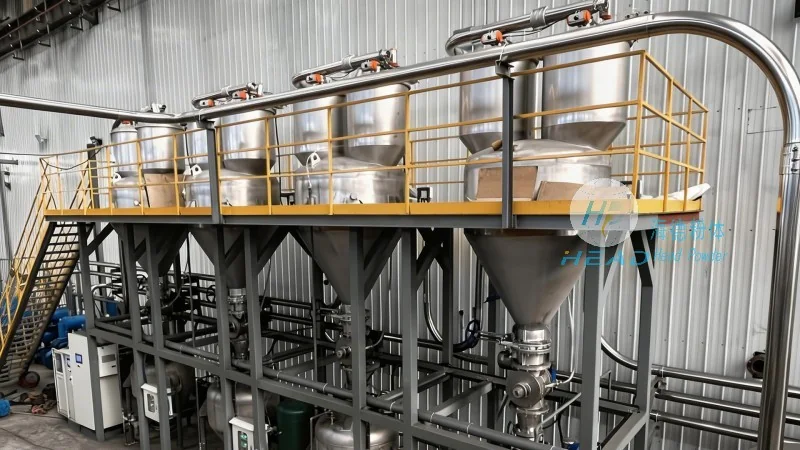
3. **Automation and Control Systems**: HeadPowder's material handling solutions incorporate advanced automation technologies, including PLCs, sensors, and human-machine interfaces (HMIs). These systems enable real-time monitoring of material flow, inventory levels, and equipment status, allowing operators to make informed decisions and quickly respond to any issues. The automation also enhances data collection capabilities, providing valuable insights into production efficiency and material usage, which can be used for process optimization and quality improvement.
4. **Dust Control and Safety Systems**: To address the dust explosion hazards associated with lithium-ion battery materials, HeadPowder integrates comprehensive dust control measures. This includes dust collection systems, explosion-proof motors, and sealed equipment to prevent dust accumulation. Additionally, safety features like emergency stop buttons, interlocked enclosures, and fire suppression systems are incorporated to protect personnel and equipment from potential hazards.
Benefits of Implementing HeadPowder's Material Handling Solutions
Adopting HeadPowder Engineering Co., Ltd.'s material handling systems for lithium-ion battery positive electrode materials offers several significant benefits for manufacturers. First, the systems enhance production efficiency by optimizing material flow and reducing downtime. The automated feeding and control systems ensure consistent material delivery, minimizing bottlenecks and improving overall throughput. This leads to higher production capacity and reduced lead times, which are critical in meeting market demands for lithium-ion batteries.
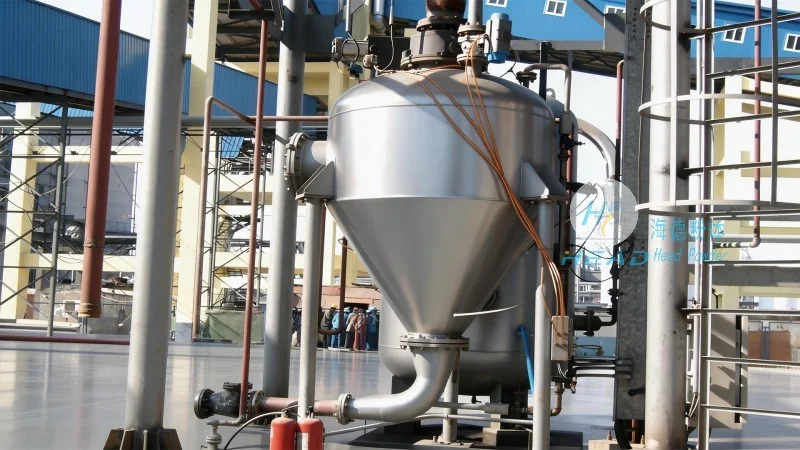
Second, the systems improve product quality and consistency. By maintaining material purity and controlling mixing ratios precisely, the systems help achieve uniform battery performance across batches. This consistency is essential for meeting customer specifications and ensuring the reliability of the final battery products. Additionally, the automation reduces human error, which can lead to variations in material handling and affect battery performance.
Third, the systems enhance operational safety and compliance. The integrated safety features and dust control measures minimize the risk of accidents and ensure that the production process adheres to regulatory requirements. This not only protects employees but also reduces the risk of fines or production shutdowns due to non-compliance.
Fourth, the scalability and adaptability of HeadPowder's solutions allow manufacturers to grow their operations without significant disruptions. The modular design of the systems enables easy expansion or modification to accommodate increased production volumes or new material types. This flexibility is particularly valuable in the rapidly evolving lithium-ion battery industry, where manufacturers need to stay competitive and responsive to market changes.
Conclusion
Efficient material handling is a cornerstone of lithium-ion battery positive electrode material production, and the design principles employed by HeadPowder Engineering Co., Ltd. ensure that manufacturers can achieve optimal performance, quality, and safety. By integrating advanced technologies, automation, and robust safety measures, HeadPowder's material handling systems provide a reliable and scalable solution for the demanding requirements of the battery industry. For companies seeking to enhance their production processes and improve battery performance, HeadPowder's expertise in material handling offers a strategic advantage in the competitive landscape of lithium-ion battery manufacturing.




