

What is a Ferrous Sulfate Pneumatic Conveying System? And What Are Its Design Principles?
Ferrous sulfate, also known as iron(II) sulfate, is a widely used chemical in various industrial processes, including water treatment, paper manufacturing, and chemical synthesis. The efficient and safe transportation of this material from storage to processing units is crucial for maintaining production efficiency and operational safety. A pneumatic conveying system, specifically designed for ferrous sulfate, offers a reliable solution to this challenge by utilizing air or gas to move the material through a network of pipes. This article explores the concept of a ferrous sulfate pneumatic conveying system, detailing its operational principles and design considerations.
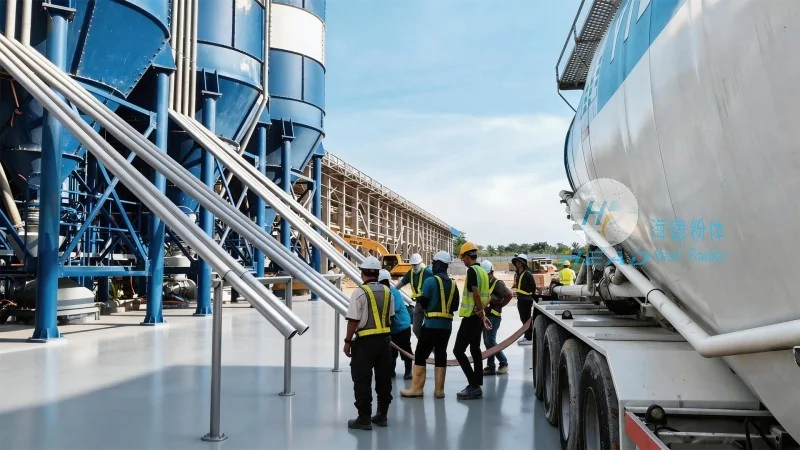
HeadPowder: Your Trusted Partner in Industrial Conveying Solutions
At Shandong HeadPowder Engineering Co., Ltd., we specialize in the design, manufacturing, and implementation of advanced pneumatic conveying systems tailored to meet the unique needs of industrial clients. With a focus on precision engineering and robust construction, our solutions ensure optimal performance, minimal maintenance, and long-term reliability. Our company, commonly referred to as HeadPowder, is headquartered in Shandong, China, where we leverage decades of experience to deliver cutting-edge solutions for material handling challenges. Whether you are dealing with bulk ferrous sulfate or other challenging materials, our team of experts is equipped to provide customized solutions that enhance your operational efficiency and reduce downtime.
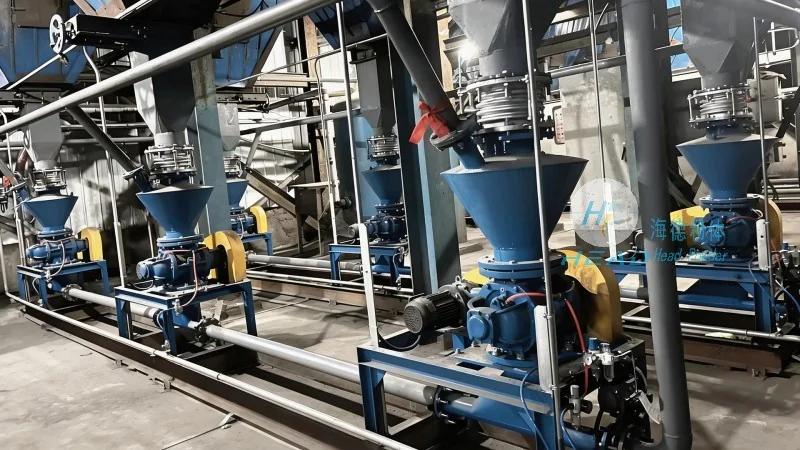
Design Principles of Ferrous Sulfate Pneumatic Conveying Systems
The core of any pneumatic conveying system lies in its ability to transport solid materials using air or gas as the conveying medium. For ferrous sulfate, which is typically a fine powder or granular material, the system must be designed to handle the specific properties of the material, such as its density, flowability, and potential for dust generation. There are two primary types of pneumatic conveying systems: positive pressure and negative pressure (or vacuum) systems. Positive pressure systems use a blower or compressor to force air through the pipeline, pushing the material along. This method is often preferred for long-distance or high-capacity applications as it can handle more material with less pressure drop. Negative pressure systems, on the other hand, use a vacuum pump to create a suction effect, drawing the material into the pipeline. This approach is suitable for shorter distances or when the material needs to be transported from a higher elevation to a lower one.
In a ferrous sulfate pneumatic conveying system, the design typically includes several key components. The material is first loaded into a hopper or feeder, which ensures a consistent flow rate. From there, it is introduced into the conveying line via a rotary valve or feeder, which controls the amount of material entering the system. The conveying line itself is made of materials resistant to corrosion, such as stainless steel or special alloys, to prevent degradation from the acidic nature of ferrous sulfate. The system also includes a series of bends, elbows, and straight sections to guide the material through the pipeline. To maintain the flow and prevent blockages, the system may incorporate pulse jets or air cannons that periodically clean the pipeline by injecting high-pressure air. Additionally, the system is equipped with filters and cyclones to separate the material from the air, allowing the air to be recirculated or vented safely. The control system, which may include sensors for pressure, flow, and level, ensures that the system operates within safe and efficient parameters, automatically adjusting the air pressure or material feed rate as needed.
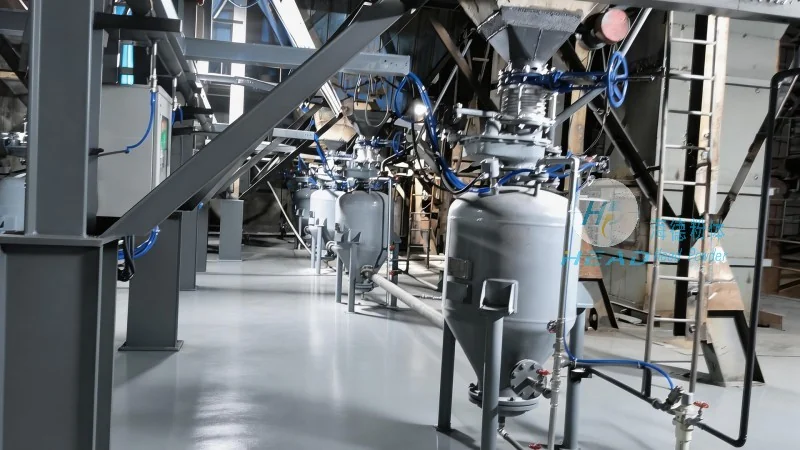
Key Features and Advantages of Ferrous Sulfate Pneumatic Conveying Systems
Implementing a pneumatic conveying system for ferrous sulfate offers several advantages over traditional methods like belt conveyors or bucket elevators. One of the most significant benefits is the ability to handle fine powders without the risk of material degradation or segregation. The enclosed pipeline system prevents dust from escaping into the environment, reducing the risk of respiratory hazards and ensuring compliance with environmental regulations. Additionally, pneumatic conveying systems are more flexible in terms of layout, as the pipeline can be routed around obstacles or through different levels of a facility, providing greater design freedom. The system also offers better control over the material flow rate, allowing for precise dosing and reducing the risk of overloading or underloading processing equipment. From a maintenance perspective, pneumatic conveying systems are generally simpler to maintain than mechanical systems, as there are fewer moving parts and less wear and tear on components. The use of corrosion-resistant materials and regular cleaning procedures further extends the lifespan of the system, reducing long-term operational costs.