

Principle of Dust Collection Gas-Solid Pneumatic Conveying Equipment
Gas-solid pneumatic conveying equipment is a critical technology in industrial dust collection and material handling, designed to transport collected dust or fine particulate matter through a pipeline using pressurized or suction air. This equipment plays a vital role in maintaining air quality and ensuring efficient material transport in various industrial processes.
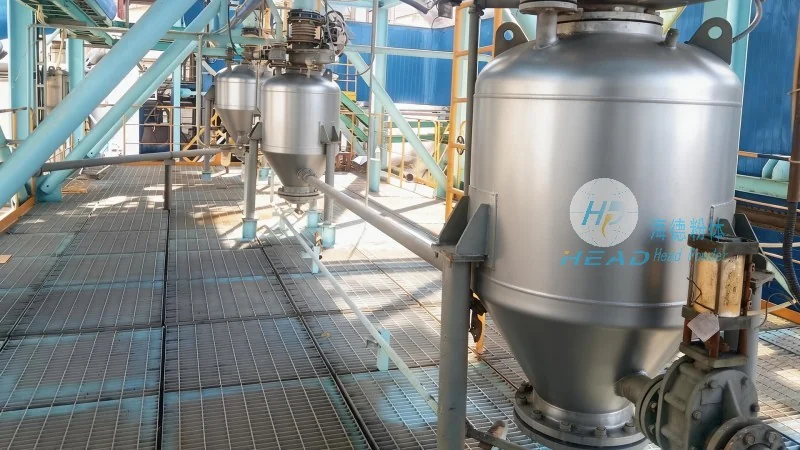
Introduction to Dust Collection Gas-Solid Pneumatic Conveying Equipment
At Shandong HeadPowder Engineering Co., Ltd., we specialize in the design, manufacturing, and application of advanced gas-solid pneumatic conveying systems tailored for dust collection applications. Our equipment is engineered to handle diverse types of collected dust, including fly ash, bottom ash, and other fine particulates, ensuring reliable and efficient transport from collection points to disposal or recycling facilities.
Working Principle of the Pneumatic Conveying System
The core principle of gas-solid pneumatic conveying involves the use of a fluid (air) to transport solid particles. In a typical system, a blower or fan generates a flow of air, which is directed into a pipeline. The collected dust is introduced into the pipeline, either by gravity or through an inlet feeder, and is entrained by the moving air stream. The air and particles travel together through the pipeline to the discharge point, where a separator or filter separates the particles from the air. The cleaned air is then either recirculated or released, while the dust is collected for further processing.
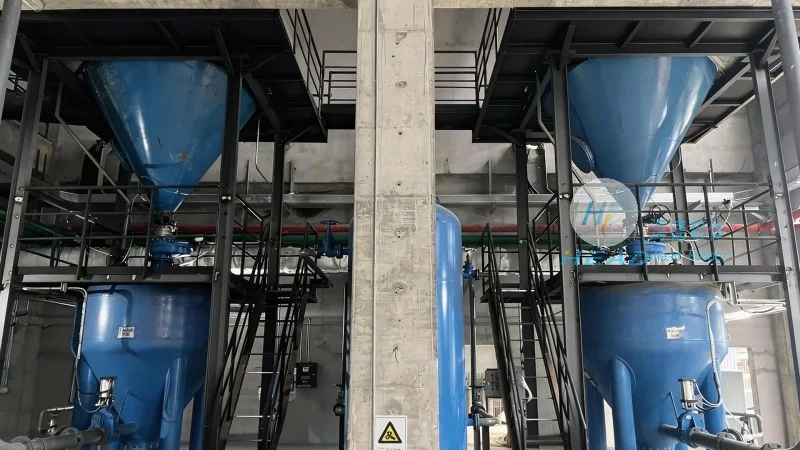
Key Components and Their Functions
Several key components work in tandem to ensure the smooth operation of the pneumatic conveying system. The primary components include:
- Feeder: This component introduces the collected dust into the conveying line. Common types include rotary valves (star valves) or screw feeders, which control the flow rate and prevent backflow.
- Pipeline: The main conduit for transporting the air and particles. The pipeline is typically made of stainless steel or other corrosion-resistant materials to withstand the abrasive nature of the dust.
- Separator: Located at the discharge end, the separator separates the dust from the air. This can be a cyclone separator, which uses centrifugal force to separate particles, or a bag filter, which captures fine particles for final disposal.
- Blower/Fan: Provides the necessary air pressure and flow rate to move the particles through the system. The choice of blower (positive pressure or negative pressure) depends on the application and system design.
- Control Valves: Regulate the air flow and pressure within the system, ensuring stable operation and preventing system overpressure or underflow.
Advantages of Gas-Solid Pneumatic Conveying for Dust Collection
Gas-solid pneumatic conveying offers several advantages over traditional mechanical conveying methods for dust collection:
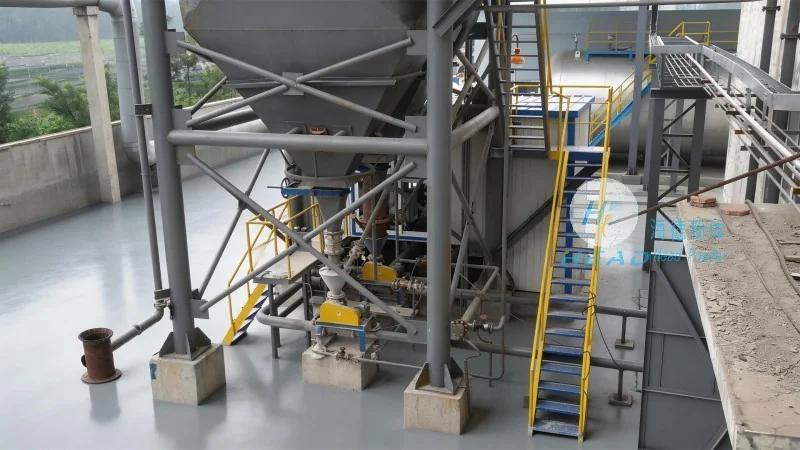
- Environmental Benefits: By containing dust within a closed system, the equipment minimizes dust emissions and improves workplace air quality, aligning with environmental regulations.
- Efficiency and Flexibility: The system can transport dust over long distances and through complex layouts, with the ability to handle varying particle sizes and flow rates.
- Reduced Maintenance: With fewer moving parts compared to mechanical conveyors, the pneumatic system requires less maintenance and has a longer service life.
- Cost-Effective: Over time, the operational costs are lower due to reduced energy consumption and lower replacement part needs.
Application Scenarios in Industrial Settings
Our gas-solid pneumatic conveying equipment is widely used in various industrial sectors, particularly in facilities that generate significant amounts of collected dust:
- Power Plants: Transporting fly ash and bottom ash from electrostatic precipitators or bag filters to storage silos or disposal sites.
- Cement and Concrete Industries: Handling raw materials like limestone and clinker, as well as byproducts such as cement dust.
- Steel and Metallurgical Plants: Conveying dust from sintering, smelting, and other processes to recycling or disposal facilities.
- Waste-to-Energy Plants: Transporting ash from incineration processes to landfills or recycling centers.
Customization and Technical Support from HeadPowder
At Shandong HeadPowder Engineering Co., Ltd., we understand that each industrial application has unique requirements. Our team of engineers provides tailored solutions, considering factors such as dust characteristics, distance to be covered, and environmental regulations. We offer comprehensive technical support, including system design, installation, and after-sales service, ensuring that our clients achieve optimal performance and compliance with industry standards.