When it comes to handling nanoscale calcium carbonate, selecting the appropriate material transport method is crucial for efficiency and safety. Two primary approaches are widely used: positive pressure and negative pressure systems. Understanding the distinctions between these methods is essential for industries such as plastics, coatings, and rubber, where precise control over nanoparticle flow is critical. This article explores the key differences between positive and negative pressure for nanocalcium carbonate handling, providing insights into how to choose the right system for your application.
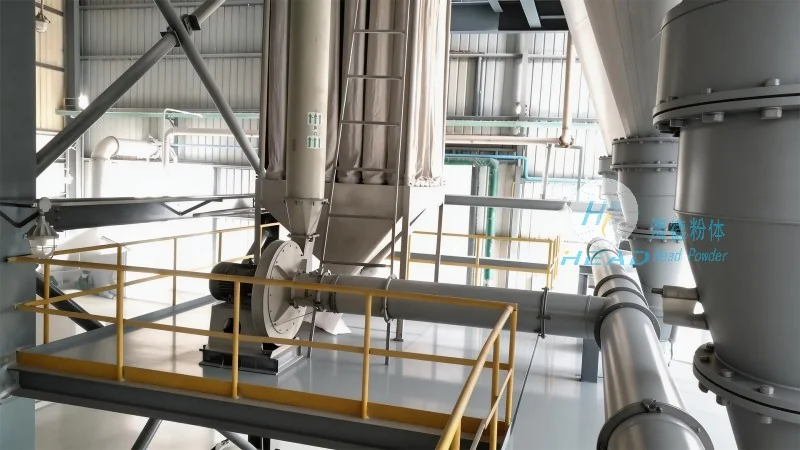
Introduction to Nanocalcium Carbonate Handling
Nanocalcium carbonate is a fine powder with particle sizes typically ranging from 0.1 to 5 micrometers. Its unique properties, including high surface area and excellent dispersion, make it a valuable additive in various industrial applications. However, due to its fine particle size and tendency to agglomerate, transporting this material requires specialized equipment and techniques. The choice between positive and negative pressure systems depends on factors such as material characteristics, system design, and operational requirements.
Positive Pressure Systems for Nanocalcium Carbonate Transport
Positive pressure systems, also known as pressure-fed systems, operate by forcing material through a pipeline using compressed air or gas. In this method, the conveying medium (air or gas) is introduced under pressure at the inlet of the material hopper or silo. The pressure differential drives the material forward through the pipeline, ensuring consistent flow and preventing clogging. This approach is particularly effective for handling dry, free-flowing powders like nanocalcium carbonate, as it maintains a stable flow rate and minimizes the risk of particle segregation.
Key advantages of positive pressure systems include high conveying capacity, the ability to handle long distances and multiple branches, and reduced risk of material degradation due to minimal contact with the conveying medium. However, these systems require robust sealing and pressure control mechanisms to prevent air leakage and maintain system efficiency. Proper maintenance of the air compressor and filter system is also essential to ensure consistent performance.
Negative Pressure Systems for Nanocalcium Carbonate Transport
Negative pressure systems, or suction systems, operate by creating a vacuum at the material outlet, drawing the material from the source into the pipeline. The vacuum is generated by a fan or blower located at the end of the conveying line, creating a pressure differential that pulls the material forward. This method is often preferred for applications where the material source is elevated or when handling materials that are prone to dust generation.
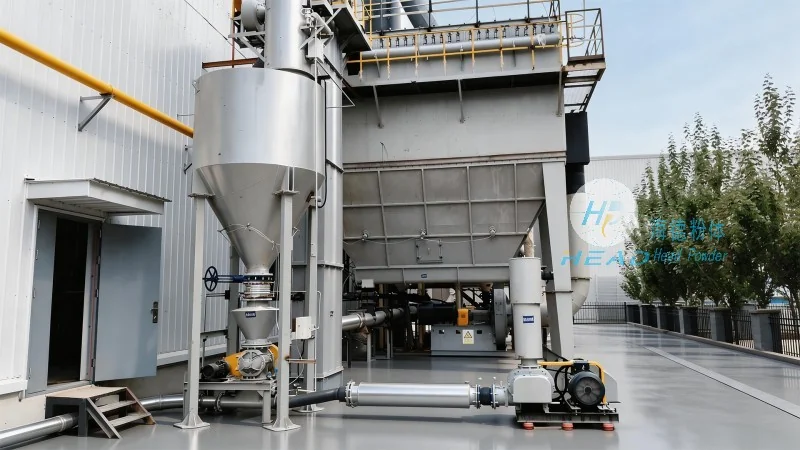
Advantages of negative pressure systems include lower initial cost compared to positive pressure systems, as they do not require high-pressure air compressors. Additionally, they are suitable for handling materials that are sensitive to high pressure or temperature, as the conveying medium is typically ambient air. However, negative pressure systems have limitations, such as lower conveying capacities, increased risk of dust emissions, and higher energy consumption due to the need for continuous vacuum generation.
Distinguishing Between Positive and Negative Pressure Systems
When deciding between positive and negative pressure for nanocalcium carbonate handling, several factors must be considered. The first is the material's flow characteristics and particle size. Positive pressure systems are generally more suitable for fine powders with good flowability, as they maintain consistent pressure and prevent agglomeration. Negative pressure systems may be preferred for materials that are more cohesive or prone to dust, as the vacuum helps to keep particles suspended and reduce clogging.
System design and operational requirements also play a critical role. Positive pressure systems are ideal for long-distance conveying and complex network configurations, as they can handle multiple branches and maintain high flow rates. Negative pressure systems are better suited for short-distance transport or when the material source is at a higher elevation, as the vacuum helps to draw material upward.
Another key consideration is the environmental impact and safety. Positive pressure systems are generally safer as they do not release dust into the environment, while negative pressure systems may require additional dust collection equipment to comply with environmental regulations. The choice also depends on the available infrastructure, such as the presence of an air compressor for positive pressure or a fan for negative pressure.
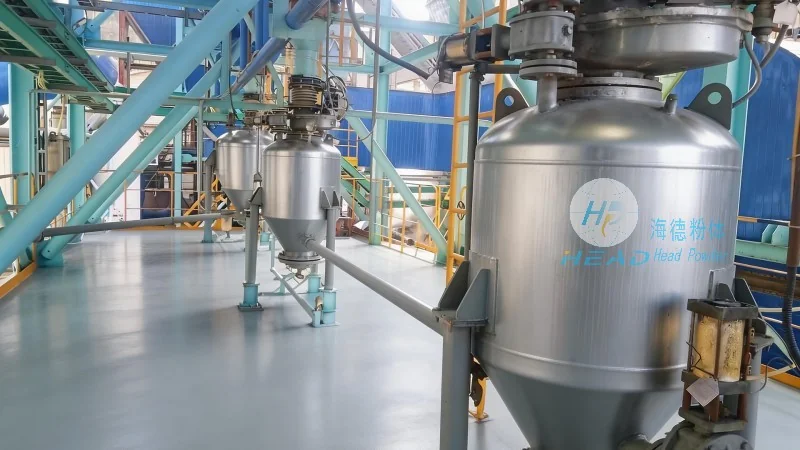
Application Examples in Industry
In the plastics industry, nanocalcium carbonate is commonly used as a filler to improve mechanical strength and reduce cost. Positive pressure systems are often used in production lines where the material is transported from a storage silo to a mixing or extrusion unit. The consistent flow provided by positive pressure ensures that the filler is added uniformly, resulting in high-quality end products. For example, in the manufacturing of PVC pipes, a positive pressure system is used to convey nanocalcium carbonate from a bulk storage tank to the extrusion machine, maintaining a stable feed rate and preventing variations in product density.
In the coatings industry, nanocalcium carbonate is used to enhance the opacity and whiteness of paint. Negative pressure systems may be employed when the material is stored in an elevated hopper, as the vacuum helps to draw the powder into the conveying line without the need for additional lifting equipment. This approach is particularly useful in facilities where space is limited or where the material source is located above the processing area.
Conclusion and Recommendations
Choosing between positive and negative pressure for nanocalcium carbonate handling requires a careful evaluation of material properties, system requirements, and operational constraints. Positive pressure systems offer higher conveying efficiency and better control over material flow, making them suitable for high-volume applications and long-distance transport. Negative pressure systems, while less expensive initially, may be more appropriate for short-distance or elevated material sources, but require additional measures to control dust and energy consumption.
When selecting a system, it is essential to consider the specific characteristics of the nanocalcium carbonate being handled, including particle size distribution, moisture content, and flowability. Consulting with experts from companies like Shandong HeadPowder Engineering Co., Ltd., a leading provider of material handling solutions, can help in designing an optimal system that meets both performance and safety standards. By understanding the distinctions between positive and negative pressure systems, industries can ensure efficient and reliable transport of nanocalcium carbonate, ultimately improving product quality and operational efficiency.




