

Principles and Application Scenarios of Air-Driven Transport for Wet Ammonium Nitrate
Wet ammonium nitrate, a critical raw material in the fertilizer industry, often requires efficient and reliable transport methods to ensure smooth production and supply chain operations. Air-driven transport, also known as pneumatic conveying, has emerged as a preferred solution for handling this material due to its ability to manage moisture content and maintain product integrity. This article explores the fundamental principles behind air-driven transport for wet ammonium nitrate and highlights the key application scenarios where this technology excels.
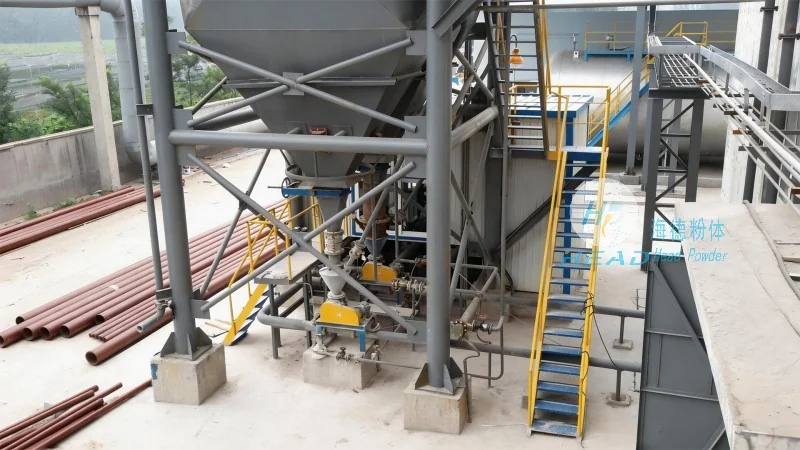
Understanding the Principles of Air-Driven Transport for Wet Ammonium Nitrate
At its core, air-driven transport involves the use of compressed air to move bulk materials like wet ammonium nitrate through a pipeline system. The process typically relies on a combination of positive and negative pressure to create a flow of material. In positive pressure systems, air is forced into the pipeline, pushing the material forward. Negative pressure systems, on the other hand, create a vacuum that pulls the material through the line. For wet ammonium nitrate, which contains a certain level of moisture, the design of the conveying system must account for the material's density, flowability, and potential for caking or blockage. The air velocity and pressure must be optimized to prevent material degradation and ensure consistent flow rates.
Key Factors Influencing Air-Driven Transport Performance
Several critical factors determine the effectiveness of air-driven transport for wet ammonium nitrate. First, the moisture content of the material directly impacts its bulk density and flow characteristics. Higher moisture levels can lead to increased material viscosity and a higher risk of pipeline blockages. Therefore, the conveying system must be equipped with appropriate drying or conditioning mechanisms to maintain optimal moisture levels. Second, the particle size distribution of wet ammonium nitrate plays a significant role. Finer particles tend to create more friction and can lead to higher energy consumption, while larger particles may cause uneven flow. The system design must accommodate the specific particle size to ensure efficient transport. Third, the pipeline layout and system configuration are crucial. The length, diameter, and number of bends in the pipeline affect the pressure drop and required air volume. Proper system sizing and layout are essential to minimize energy costs and maximize conveying efficiency.
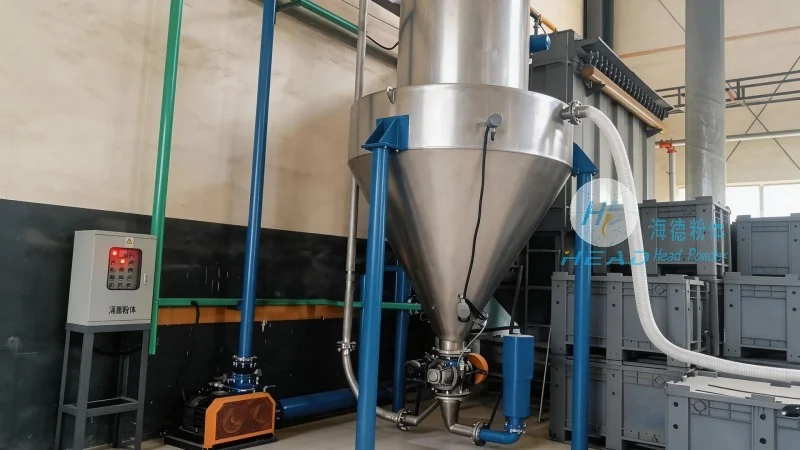
Application Scenarios Where Air-Driven Transport Excels
Air-driven transport for wet ammonium nitrate is particularly effective in several industrial settings. One primary application is in fertilizer manufacturing plants, where wet ammonium nitrate is transported from storage silos to processing units or packaging lines. The ability to handle large volumes of material with minimal labor and equipment is a significant advantage. Another key scenario is in bulk material handling facilities, such as ports or terminals, where wet ammonium nitrate is transferred between storage tanks and shipping containers. The technology's flexibility allows for vertical and horizontal transport, making it suitable for complex layouts. Additionally, in agricultural supply chains, air-driven transport can be used to move wet ammonium nitrate from production sites to distribution centers, ensuring timely delivery to farmers. The system's ability to maintain product quality and prevent contamination is vital in these applications.
Advantages of Air-Driven Transport Over Traditional Methods
Compared to traditional transport methods like belt conveyors or trucks, air-driven transport offers several advantages for wet ammonium nitrate. First, it provides a closed system, which helps prevent dust emissions and environmental contamination. This is particularly important for ammonium nitrate, which can be a respiratory hazard if released into the air. Second, the system is more energy-efficient, especially for long-distance or vertical transport. The use of compressed air can be more cost-effective than mechanical conveyors in certain scenarios. Third, air-driven transport allows for greater flexibility in system design, enabling the integration of multiple transport lines and processing units. This adaptability is beneficial for plants that need to scale their operations or adjust their production processes. Finally, the technology reduces labor costs by automating the material handling process, minimizing the need for manual intervention and associated risks.
Challenges and Mitigation Strategies in Air-Driven Transport
Despite its benefits, air-driven transport for wet ammonium nitrate comes with challenges that must be addressed. One major challenge is the risk of pipeline blockages due to moisture accumulation or material caking. To mitigate this, the system can include features such as in-line mixers, vibration devices, or heated sections to prevent material buildup. Another challenge is the high energy consumption associated with maintaining air pressure, especially in long-distance conveying. Implementing energy-efficient compressors and optimizing system design can help reduce operational costs. Additionally, the need for regular maintenance and cleaning of the pipeline and air filters is essential to ensure consistent performance. Proper maintenance schedules and the use of high-quality materials for the pipeline can extend the system's lifespan and reduce downtime.
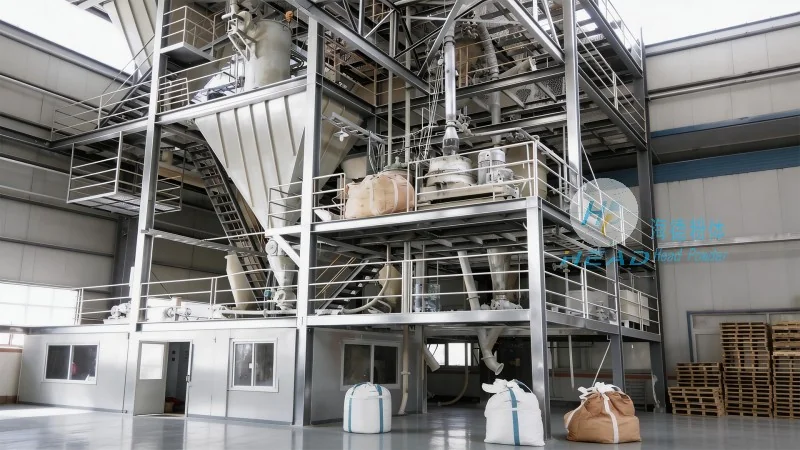
Case Study: Successful Implementation by Shandong HeadPowder Engineering Co., Ltd.
Shandong HeadPowder Engineering Co., Ltd., a leading provider of bulk material handling solutions, has successfully implemented air-driven transport systems for wet ammonium nitrate in several industrial projects. One notable case involved a fertilizer plant in China where the company designed and installed a positive pressure conveying system to transport wet ammonium nitrate from storage silos to the granulation unit. The system was tailored to handle the specific moisture content and particle size of the material, ensuring a smooth and continuous flow. The implementation resulted in a 20% reduction in energy consumption compared to traditional methods and a 15% increase in production efficiency. Another project involved a port terminal where HeadPowder engineered a negative pressure system to transfer wet ammonium nitrate from bulk carriers to storage tanks. The system's ability to handle large volumes and maintain product quality was critical for meeting tight shipping schedules. These successful implementations highlight the expertise and reliability of HeadPowder in providing customized air-driven transport solutions for wet ammonium nitrate.
Conclusion: The Role of Air-Driven Transport in Modern Industrial Operations
In conclusion, air-driven transport for wet ammonium nitrate is a sophisticated and effective technology that addresses the unique challenges of handling this moisture-rich material. By understanding the fundamental principles and optimizing system design, industries can achieve efficient, reliable, and cost-effective transport solutions. The application of this technology not only improves operational efficiency but also enhances product quality and safety. As the demand for wet ammonium nitrate continues to grow, the role of air-driven transport will remain crucial in ensuring the smooth flow of this vital fertilizer component. With companies like Shandong HeadPowder Engineering Co., Ltd. leading the way in innovation and implementation, the future of air-driven transport for wet ammonium nitrate looks promising, offering sustainable and efficient solutions for industrial needs.