Water-containing powders are widely used in various industrial applications, and the efficient transportation of these materials is crucial for maintaining production efficiency and product quality. Among the various conveying methods available, selecting the right approach depends on factors such as material properties, distance, and operational requirements. This article explores common water-containing powder conveying methods, with a particular focus on the advantages and applications of pneumatic conveying systems.
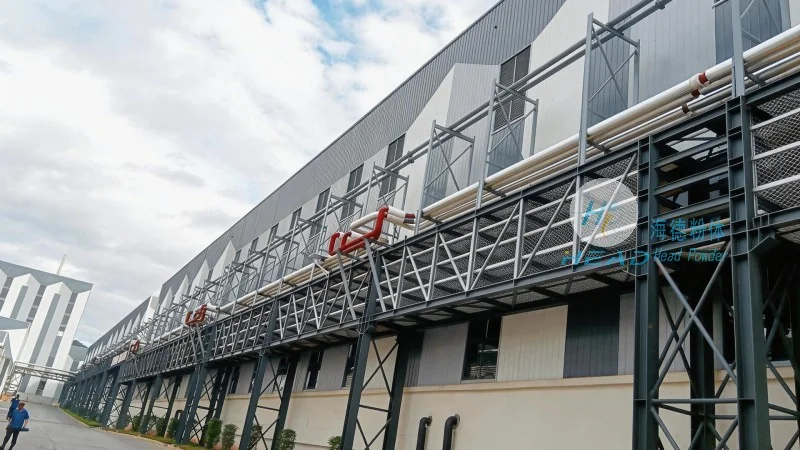
Overview of Water-Containing Powder Conveying
Water-containing powders, also known as slurry or wet powders, consist of fine particles suspended in a liquid medium. These materials are often encountered in industries like mining, chemical processing, and food production. The primary goal of conveying such materials is to move them from one location to another without degradation or separation of the solid-liquid mixture. Traditional methods include gravity flow, mechanical pumping, and pneumatic systems, each with its own set of advantages and limitations.
Gravity Conveying for Water-Containing Powders
Gravity conveying relies on the natural force of gravity to move water-containing powders through a sloped pipeline. This method is simple and cost-effective for short distances and low flow rates. However, it is limited by the need for a steep incline to ensure sufficient flow and may not be suitable for long distances or high-viscosity slurries. The system typically consists of a hopper at the source, a sloped pipe, and a discharge point at the destination. The liquid and solid particles move together under the influence of gravity, maintaining the mixture's integrity. For applications where the material is relatively free-flowing and the distance is short, gravity conveying can be an effective solution.
Pump-Mediated Conveying Systems
For applications requiring higher pressure or longer distances, pump-mediated systems are commonly used. These systems utilize pumps, such as centrifugal or positive displacement pumps, to transport water-containing powders through pipelines. The pump creates the necessary pressure to overcome friction losses and maintain flow. This method is particularly useful for high-viscosity slurries or when the material needs to be pressurized for downstream processing. The pump can be integrated with a mixing tank to ensure the powder and liquid are well combined before transport. However, pump systems require regular maintenance and can be more complex to operate compared to gravity or pneumatic systems. They also have higher energy consumption and may cause wear on pump components due to the abrasive nature of some powders.
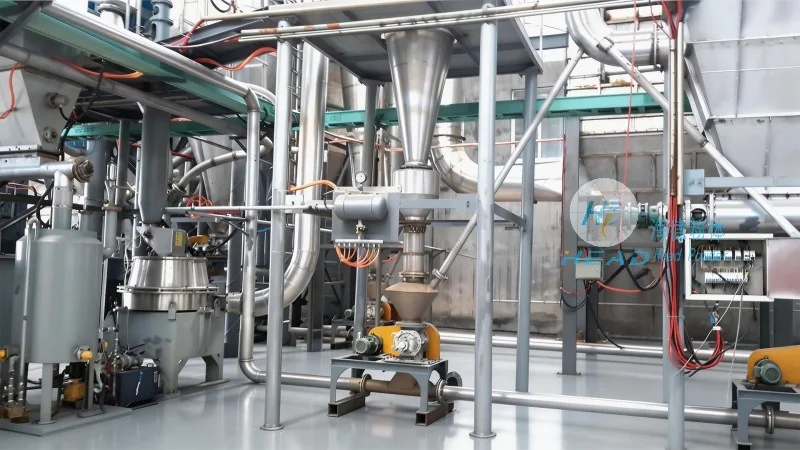
Pneumatic Conveying: The Preferred Method for Many Applications
Pneumatic conveying, or air-assisted transport, is a versatile method that uses compressed air to move water-containing powders through a pipeline. This technology offers several advantages, including the ability to handle a wide range of particle sizes and flow rates, maintain the integrity of the solid-liquid mixture, and operate over long distances. There are two main types of pneumatic conveying systems: pressure and vacuum. Pressure systems use compressed air to push the material forward, while vacuum systems use a vacuum to pull the material from the source. Both types can be further classified as dilute-phase or dense-phase, depending on the air-to-material ratio.
Dilute-Phase Pneumatic Conveying
Dilute-phase pneumatic conveying operates at higher velocities, typically 20-30 meters per second, and uses a low air-to-material ratio (around 5-10). This method is suitable for short to medium distances and low to medium flow rates. The material is suspended in the air stream and transported as a cloud. The system is efficient for transporting fine powders and can handle relatively long distances with minimal pressure drop. However, it may not be suitable for high-viscosity slurries or materials that are prone to segregation. The equipment required includes a blower, a hopper, and a pipeline with appropriate fittings. The system is relatively simple and can be easily scaled up or down based on the application requirements.
Dense-Phase Pneumatic Conveying
Dense-phase pneumatic conveying operates at lower velocities, typically 5-10 meters per second, and uses a high air-to-material ratio (around 10-20). This method is ideal for transporting high-viscosity slurries, abrasive materials, or materials that are prone to segregation. The material is conveyed as a dense stream, with the air acting as a carrier rather than a suspension medium. This approach reduces wear on the pipeline and equipment, extends the service life of components, and minimizes material degradation. The system is more complex than dilute-phase systems, requiring additional components such as a rotary valve, a metering device, and a pressure regulator. However, the benefits in terms of material handling and equipment longevity make it a preferred choice for many industrial applications.
Advantages of Pneumatic Conveying for Water-Containing Powders
Compared to other conveying methods, pneumatic conveying offers several key advantages for water-containing powders. First, it maintains the homogeneity of the solid-liquid mixture, preventing separation of particles or liquid during transport. This is critical for applications where the ratio of solid to liquid must be consistent, such as in chemical processing or food production. Second, pneumatic systems can handle a wide range of particle sizes and flow rates, from fine powders to coarse slurries. Third, they can operate over long distances without the need for intermediate storage or transfer points, reducing the risk of material loss or contamination. Fourth, the system is relatively flexible, allowing for changes in flow rate or direction without significant modifications. Finally, pneumatic conveying can be integrated with other processing equipment, such as mixers or reactors, to create a continuous production line.
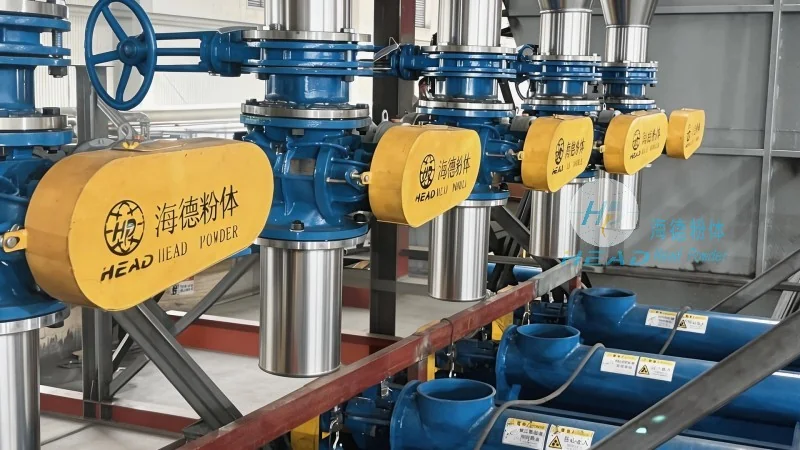
Applications of Pneumatic Conveying in Industrial Settings
The versatility of pneumatic conveying makes it suitable for a wide range of industrial applications involving water-containing powders. In the mining industry, pneumatic systems are used to transport tailings or ore slurries from processing plants to storage facilities or disposal sites. The high flow rates and long distances required for these applications make pneumatic conveying an efficient solution. In the chemical industry, pneumatic systems are used to transport slurry materials between reactors, mixers, and storage tanks. The ability to maintain the material's consistency and prevent contamination is crucial for chemical reactions that require precise ratios of solid and liquid. In the food industry, pneumatic conveying is used to transport wet powders such as dairy products or fruit purees from processing lines to packaging facilities. The hygienic design of pneumatic systems ensures that the materials remain safe and free from contamination, meeting regulatory standards for food production.
Choosing the Right Conveying System for Your Needs
When selecting a conveying system for water-containing powders, it is essential to consider several factors to ensure optimal performance and efficiency. First, the properties of the material, including particle size, density, and viscosity, must be evaluated. Fine particles and high viscosity may require dense-phase pneumatic conveying, while coarse particles and low viscosity may be suitable for dilute-phase systems. Second, the distance and flow rate requirements must be determined. Long distances and high flow rates may necessitate pressure systems, while short distances and low flow rates may allow for vacuum systems. Third, the operational environment and safety considerations must be taken into account. Pneumatic systems can be designed to meet specific safety standards, such as explosion-proof or dust-proof, depending on the application. Fourth, the cost and maintenance requirements of the system should be evaluated. While pneumatic systems may have higher initial costs, they often offer lower long-term maintenance and operational costs compared to pump or gravity systems.
Conclusion
Water-containing powders are essential materials in many industrial processes, and the choice of conveying method significantly impacts production efficiency and product quality. Gravity conveying and pump-mediated systems have their place in certain applications, but pneumatic conveying, particularly dense-phase systems, offers superior performance for many industrial needs. By maintaining the integrity of the solid-liquid mixture, handling a wide range of materials, and operating over long distances, pneumatic conveying systems provide a reliable and efficient solution for transporting water-containing powders. For businesses seeking to optimize their material handling processes, pneumatic conveying is a technology worth considering. As a leading provider of engineering solutions, Shandong HeadPowder Engineering Co., Ltd. specializes in designing and manufacturing customized pneumatic conveying systems tailored to the specific needs of industrial applications. With a focus on quality and innovation, headpowder helps clients improve their production efficiency and ensure the consistent quality of their products.




