When it comes to transporting ore and sand in industrial settings, selecting the right conveying method is crucial for efficiency, cost-effectiveness, and operational safety. Various technologies are available, each with distinct characteristics that make them suitable for different applications. This article provides a detailed comparison of common ore and sand conveying methods, highlighting their advantages and disadvantages to help industrial operators make informed decisions.
1. Belt Conveyor Systems
Belt conveyors are among the most widely used methods for transporting bulk materials like ore and sand. They consist of a continuous loop of belt that moves over rollers or pulleys, carrying the material from one point to another. The primary advantage of belt conveyors is their high capacity and ability to transport materials over long distances with minimal maintenance. They are particularly effective for handling large volumes of material and can be integrated with other processing equipment. However, belt conveyors have limitations, such as their susceptibility to damage from heavy or abrasive materials, which can lead to increased downtime and repair costs. Additionally, they require regular tension adjustments and cleaning to maintain optimal performance.
2. Screw Conveyors
Screw conveyors, also known as auger conveyors, use a rotating screw to move material through a tube or trough. This method is ideal for transporting materials that are free-flowing and non-abrasive, such as sand or fine ore particles. One of the key advantages of screw conveyors is their compact design, which allows for installation in confined spaces. They are also relatively simple to operate and maintain, with fewer moving parts compared to other systems. The main drawback is their lower capacity compared to belt conveyors, making them less suitable for high-volume applications. Furthermore, screw conveyors can experience wear and tear from abrasive materials, leading to reduced efficiency over time.
3. Pneumatic Conveying Systems
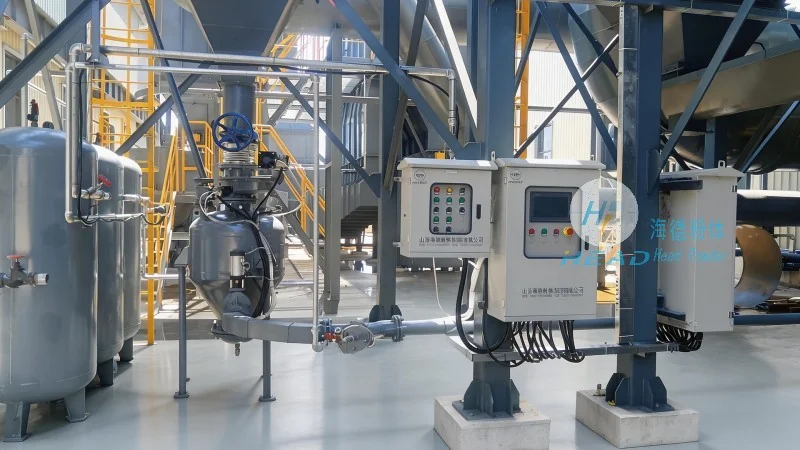
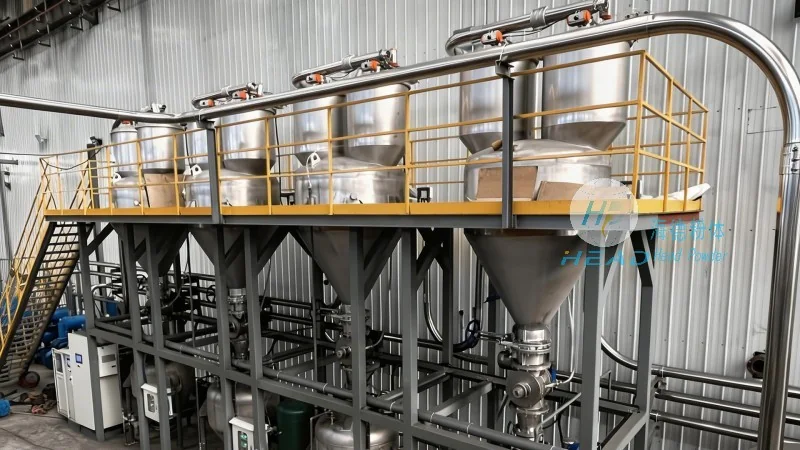
Pneumatic conveying systems use air or other gases to transport materials through a pipeline. This method is particularly effective for handling fine or dusty materials, as it can prevent contamination and dust exposure. The primary advantage of pneumatic conveying is its ability to transport materials vertically and horizontally, offering flexibility in system design. It also allows for enclosed transport, which enhances safety and environmental compliance. However, pneumatic systems have higher energy consumption compared to mechanical systems, as they require significant air pressure to move materials. Additionally, they may not be suitable for very heavy or large particles, as the system may not be able to handle the material's density or size.
4. Hydraulic Conveying
Hydraulic conveying systems use water or other liquids to transport materials through a pipeline. This method is commonly used in mining operations for transporting ore slurry from mines to processing plants. The main advantage of hydraulic conveying is its ability to handle high volumes of material, especially in wet conditions. It is also relatively simple to install and maintain, with fewer mechanical components compared to other systems. However, hydraulic systems have limitations, such as the need for water treatment to prevent clogging and corrosion. Additionally, they may not be suitable for transporting dry materials, as the liquid can cause material degradation or loss.
5. Gravity Conveyors
Gravity conveyors rely on the natural force of gravity to move materials from a higher elevation to a lower one. This method is ideal for transporting materials over short distances and in applications where the material's density allows for natural flow. The primary advantage of gravity conveyors is their low energy consumption, as they do not require any external power source. They are also simple to install and maintain, with minimal moving parts. The main drawback is their limited application, as they are only suitable for materials that can flow freely and are not too heavy or abrasive. Additionally, they require careful design to ensure proper slope and alignment to maintain material flow.
6. Comparison Summary
Each conveying method has its own set of advantages and disadvantages, and the choice of system depends on several factors, including the type of material, volume, distance, and operational environment. Belt conveyors are best for high-volume, long-distance transport of bulk materials. Screw conveyors are suitable for smaller volumes and confined spaces. Pneumatic systems excel in enclosed transport of fine materials. Hydraulic systems are ideal for wet ore slurry transport. Gravity conveyors are efficient for short-distance, low-volume applications. Understanding these differences helps industrial operators select the most appropriate method to optimize their operations.
Conclusion
Choosing the right ore and sand conveying method is a critical decision for industrial operations, as it directly impacts productivity, cost, and safety. By evaluating the advantages and disadvantages of each method, operators can make informed choices that align with their specific needs. For more information on ore and sand conveying solutions, contact Shandong HeadPowder Engineering Co., Ltd., a leading provider of engineering solutions based in China.




