

Operation Process and Working Principle of Calcium Carbide Slag Powder Pneumatic Conveying Line
The calcium carbide slag powder pneumatic conveying line is a specialized system designed for the efficient transportation of calcium carbide slag, a byproduct commonly generated in the production of calcium carbide. This system leverages pneumatic conveying technology to move the fine powder material over long distances with minimal operational complexity and reduced maintenance requirements. As an essential component in industrial waste management and material handling, such lines are crucial for optimizing the flow of slag from production sites to disposal or processing facilities. The following sections will detail the operational process and underlying working principles of this system, providing a comprehensive understanding of its functionality and application.
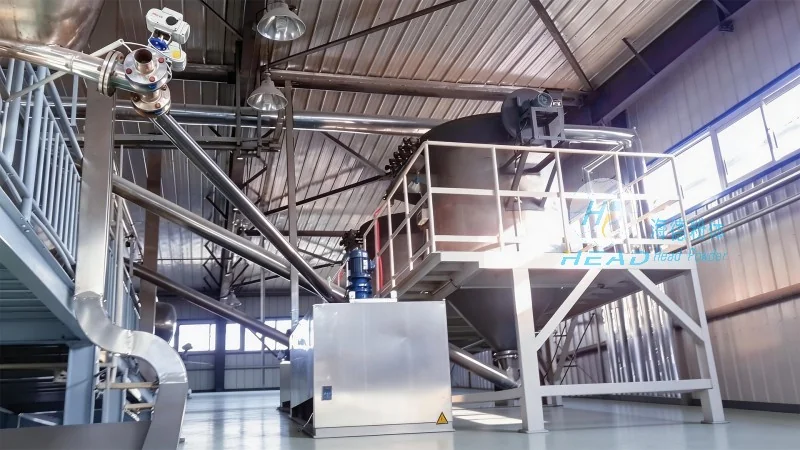
About HeadPowder: Shandong HeadPowder Engineering Co., Ltd.
HeadPowder, formally known as Shandong HeadPowder Engineering Co., Ltd., is a leading engineering firm based in Shandong, China. With a focus on innovative solutions for material handling and industrial processes, the company specializes in the design, manufacturing, and installation of pneumatic conveying systems tailored to various industrial needs. HeadPowder's expertise lies in developing customized solutions that enhance operational efficiency, ensure material integrity, and meet stringent safety and environmental standards. The company's headquarters and operational base are located in Shandong, China, where it serves clients across diverse industries, including chemical, metallurgy, and waste management sectors.
Overview of the Operational Process
The operation of a calcium carbide slag powder pneumatic conveying line typically involves several sequential steps, each contributing to the smooth and continuous movement of the material. The process begins with the collection of calcium carbide slag from the production or processing equipment. The slag is then fed into a hopper or storage silo, where it is stored until it is ready for transportation. From the storage silo, the material is transferred to the conveying line's main components through a series of feed mechanisms, such as rotary valves or screw feeders, which control the flow rate and ensure consistent material delivery.
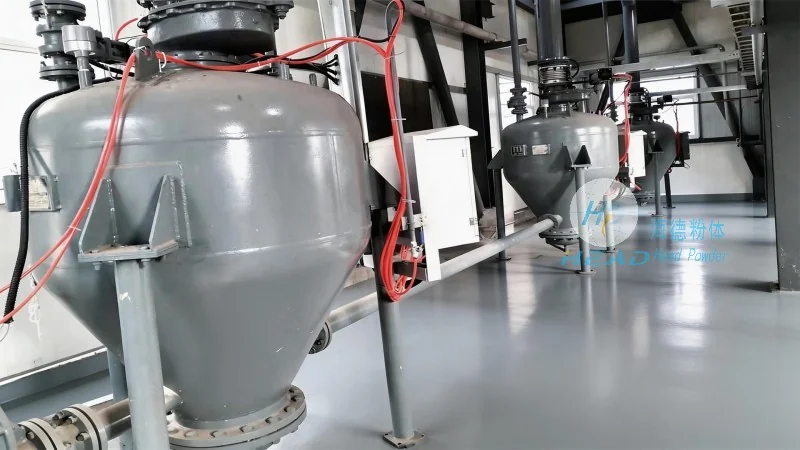
Once the material is introduced into the conveying line, it is mixed with a carrier gas, usually air or a mixture of air and other gases, in a venturi or a similar gas-liquid mixing device. The high-pressure gas creates a turbulent flow, entraining the fine powder particles and propelling them through the pipeline. The conveying line consists of a network of pipes, bends, and fittings that guide the material from the source to the destination. At the receiving end, the material is separated from the gas using a cyclone separator or a filter, allowing the slag to be deposited in a designated container or processing unit. The separated gas is then either recycled back into the system or vented to the atmosphere, depending on the system design and environmental regulations.
Working Principle of Pneumatic Conveying
The core working principle of the calcium carbide slag powder pneumatic conveying line is based on the physics of fluid dynamics and particle transport. Pneumatic conveying systems operate by using a gas stream to transport solid particles through a pipeline. There are two primary types of pneumatic conveying: positive pressure (or pressure) systems and negative pressure (or vacuum) systems. In a positive pressure system, the conveying air is pressurized and forced through the pipeline, carrying the material along. This method is suitable for long-distance and high-capacity applications, as it can maintain a consistent flow rate and handle abrasive or corrosive materials like calcium carbide slag.
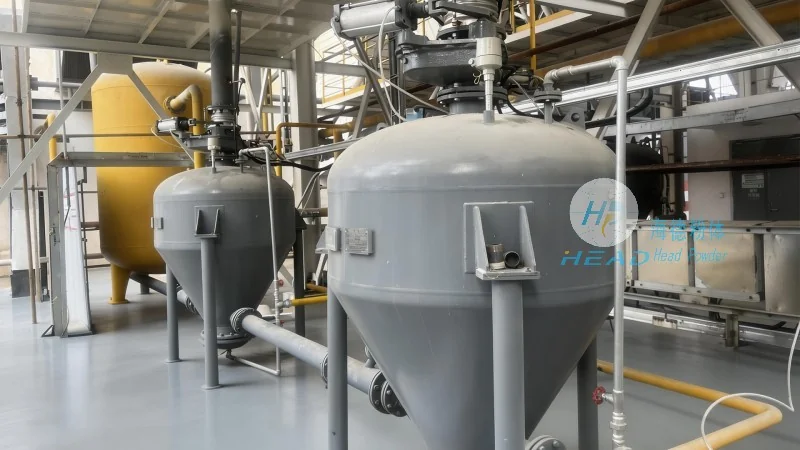
In the context of calcium carbide slag, a positive pressure system is often preferred due to the material's fine particle size and potential for dust generation. The system's components work in concert to create a stable and efficient conveying environment. The venturi or gas-mixing device at the inlet generates a high-velocity gas stream, which entrains the powder particles. The pipeline's design, including the angle of bends and the diameter of the pipes, is optimized to minimize pressure drop and prevent particle deposition or blockage. The cyclone separator at the outlet uses centrifugal force to separate the solid particles from the gas, ensuring that the slag is collected efficiently and the gas is cleaned before potential recycling.
Key Components and Their Functions
Several critical components are integral to the proper functioning of a calcium carbide slag powder pneumatic conveying line. These include the hopper or storage silo, which stores the material and provides a consistent feed; the rotary valve or screw feeder, which controls the material flow rate and prevents backflow; the venturi or gas-mixing device, which mixes the material with the carrier gas and initiates the conveying process; the pipeline system, which transports the material from the source to the destination; the cyclone separator or filter, which separates the material from the gas at the receiving end; and the gas handling system, which manages the carrier gas, including recycling or venting.
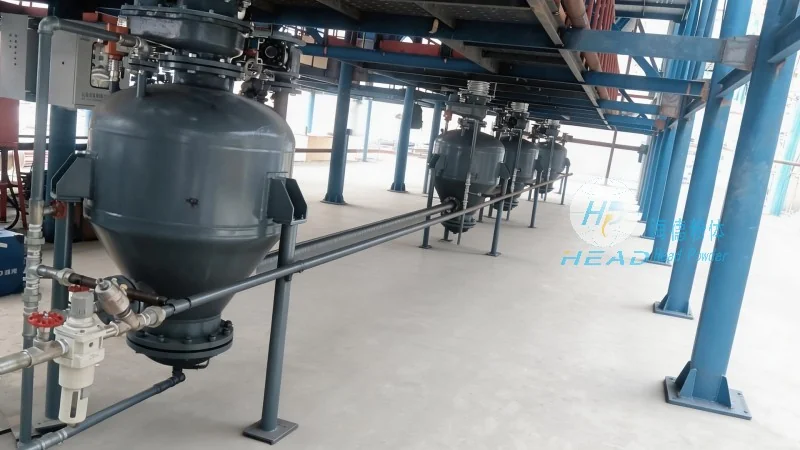
Each component is designed to withstand the specific characteristics of calcium carbide slag, such as its fine particle size, potential for dust generation, and possible corrosive properties. For example, the hopper and silo may be constructed from materials like stainless steel or corrosion-resistant alloys to prevent material degradation and ensure long-term durability. The rotary valve and screw feeder are typically equipped with wear-resistant liners to handle the abrasive nature of the slag, while the venturi and pipeline are designed with smooth surfaces to minimize friction and pressure loss. The cyclone separator is engineered to handle high volumes of fine particles, ensuring efficient separation and preventing clogging.
Operational Considerations and Maintenance
Effective operation of a calcium carbide slag powder pneumatic conveying line requires careful consideration of several factors, including material properties, system design, and maintenance protocols. The fine particle size of calcium carbide slag can lead to issues such as dust generation, which may affect air quality and system performance. To mitigate this, the system may include dust collection and filtration components, such as bag filters or electrostatic precipitators, to ensure compliance with environmental regulations and maintain a clean working environment.